What Should We Do When There’s Clamour?

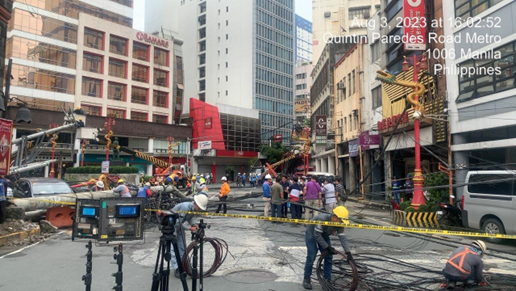
In November 2022, this happened:

One month earlier, in Manila, Philippines (and similarly in other places around the world), this also happened: 

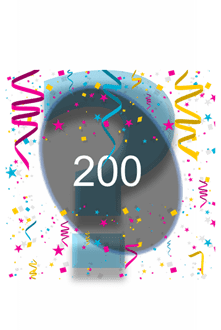
  • Apple’s iPhone 14 debut.  In October 2022, two hundred (200) people waited in line outside the Apple re-seller PowerMac store at Manila, Philippines, to get their hands on the newly released Apple iPhone 14.  Despite a premium sticker price of PhP 61,000 ($USD 1,033) that was way higher than competing smartphones, people from all over the country flocked to Apple re-seller stores hoping to buy the new iPhone model;

And from mid-year 2022 to April 2023, as demand for travel spiked after many countries lifted three (3) years of coronavirus pandemic restrictions: 

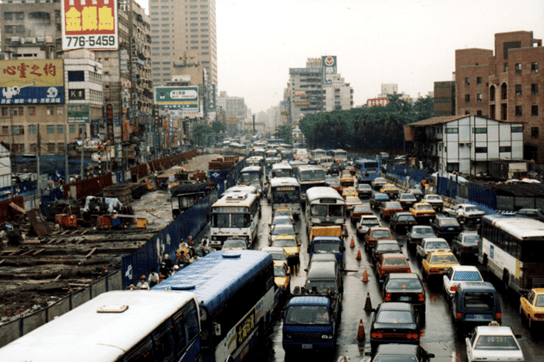
  • A Dutch court overruled a plan by Schipol Airport authorities at Amsterdam, Netherlands to cap the number of flights per day from 2023 to 2024.  The court ruled that airport authorities did not follow the correct procedure and should consult all affected parties.  The Dutch government wants to limit the number of flights through their international airport to minimise noise and environmental pollution although airport authorities have also complained about staff shortages and long passenger queues.  Airlines have opposed the flight cap plan citing their commitments to meet climate change standards.  But the real controversy is demand.  Passenger traffic at Schipol spiked in 2022 and any cap would disrupt airlines’ abilities to serve surging global travel traffic which is expected to increase in 2023. 

When demand for products & services and enterprises are unable to fulfil that demand, clamour occurs.  Customers cry out.  They get angry.  Suppliers scramble to serve whatever they can.  Systems crash.  Everyone comes out frustrated.  Promises are made that it won’t happen again.  Only that it does. 

Clamour is a common occurrence for many products & services:

  • A highly reputable law firm stops accepting new clients because it did not have enough attorneys or staff to accommodate new cases;
  • A pharmaceutical firm comes under public pressure as it runs out of stock of a critical prescription drug that doctors & patients found effective for weight-loss and diabetes;
  • Supermarkets and vendors run out of eggs due to consumers’ fear of possible price increases;
  • Real estate brokers are frustrated searching for warehouses for clients seeking storage for their products;
  • A small-business metal fabrication enterprise works around the clock to finish orders for stainless steel pipes from several construction contractors who want the items immediately. 

Clamour is demand in which customers seek items or place orders which cumulatively exceed the suppliers’ capabilities.  Customers insist on obtaining items even if suppliers tell them they can’t fulfil what they want or need in the time they ask. 

Clamour is a dream come true for marketers and entrepreneurs, but it can and is a nightmare for the demand fulfilment professionals. 

From 2020 to 2022, multinational industries cited supply chains as a key reason for delivery failures.  Just about every industry—automotive, aerospace, agricultural, appliance, construction, consumer goods, telecommunications, and logistics—blamed supply chain problems for shortages or delays in product availabilities.  Economic analysts pointed to issues such as the coronavirus pandemic and the Russian-Ukrainian war as underlying reasons for supply failures.

The same analysts also mentioned surges in demand for products & services that outstripped supply.  Pent-up demand from consumers emerging from coronavirus pandemic restrictions had resulted in clamour for many products & services. Industry leaders responded by promising that they’ll improve their supply-side operations.

Our job as supply chain professionals is to fulfil demand we can capably satisfy.  We evaluate orders before we accept and deliver them.  We study the market and forecast what our customers will buy.  We plan with marketers & salespeople to determine how much to invest in additional capabilities.  We build inventories and we schedule production or operations to ensure availability of items.  We hire additional people to safeguard the quality of our services. 

But when clamour occurs, reality sets in.  We run out of items and materials.  Delays happen.  Systems collapse.  We get stressed and we burn out.  Customers complain and insist we fulfil their demands. 

No matter how much planning we did, clamour overtakes our capabilities to deliver. 

Clamour occurs when we underestimate demand.  We either failed to forecast accurately or we just didn’t want to accept the probability that whatever we’re marketing would sell better than what we expected. 

Whether we are executive or entrepreneurs, we hesitate to complement on capabilities we fear might not be utilised.  We hire only enough staff to save on salaries.  We are reluctant to put in more money for new machines.  We are afraid to stock more inventories which may end up expired or obsolete.  We don’t want to risk not getting the returns from whatever we invested in. 

Instead, we push ourselves beyond our limits to accommodate the clamour.  We work overtime and weekends.  We defer preventive maintenance to maximise uptime of our machines.  We push our vendors to deliver more materials and earlier than we originally requested.  We get stressed.

We often blame our supply chains for their inability to accommodate clamour.  Never mind if the demand exceeded supply.  We could do better.  We should have done better.  We make promises that we will do better.  But that’s a mistake.  Because we can only do so much if we didn’t plan for it in the first place.   

We don’t realise that there are two (2) sides to addressing clamour: 

  1. Having enough supply for it;
  2. Anticipating it. 

Clamour happens as a result of failure in demand forecasting just as much as it is a result of not having enough supply for it. 

Overcoming clamour requires the ability to forecast demand accurately just as much as it requires the versatility to supply. 

Forecasting demand entails predicting what our customers will buy.  Some enterprises forecast via mathematical algorithms using historical data; in other words, they make calculated guesses.  A calculated guess is an oxymoron—two words in conjunction that contradict each other.  We can’t calculate a guess and vice versa.  Forecasting via calculated guessing just leads us back to where we began:  uncertainty

We also muddle forecasts with sales targets such that we present numbers which estimate demand that would likely be much lower than what customers will really buy.  Many of us don’t want to over-commit targets even if forecasts in the first place aren’t targets but predictions. 

When we have very wrong forecasts, we end up with very wrong supply plans.  As the adage goes:  garbage in, garbage out.  The plans we make to supply demand we wrongly forecast turn out to be of no value.  And often, it would turn out, we supplied too little for demand we should have known would be higher than what we forecasted. 

It’s true we can’t predict the future and we can’t expect demand forecasts to be accurate.  But we should also recognise that getting an idea of how much customers will buy sometimes just needs some common sense.

Customers, for one, are our best resource to predict demand.  If we want to know what customers are going to buy (or what they prefer to buy), we should, simply ask them.  It’s a bit illogical to rely on algorithms and so-called calculated guesswork when we can simply ask our customers what they plan to purchase. 

If we worry that there are too many customers to ask (such as in fast-moving consumer goods), we can always ask a few from the different groups we are selling to.  We can sample and extrapolate via basic statistical tools.  Statistical tools allow us to estimate what a population would prefer based on the trends of a sampled few. These tools aren’t rocket science that need artificially intelligent (AI) complex algorithms; they’re formulae based on math we can understand. 

Forecasts are also not sacred cows that we can’t change.  We can revise them as often as we like based on new information that come our way.  It’s sensible to update our demand forecasts when we get new customers and what & how much they plan to buy.  If our customers are opening new store branches or expanding to new territories, we of course would find out how big the expected demand would be.  We’d ask the people who we’d be selling to. 

We plan supply based on what we forecast.  Forecasts are predictions which we use to anticipate, i.e., calculate contingencies, buffers, and allowances.  We set inventory targets from forecasts and we in turn schedule production & operations. 

We can build up large inventories of items (such as for commodities) when we forecast speculative swings in demand in coming months.  We also can invest in high-capacity machines and assets, and hire & train extra staff, to respond quickly with needed operational capacity without having to stock expensive inventories. 

But we don’t do this.  We instead welcome the clamour and do what it takes to fulfil it.  Never mind if we don’t have the immediate capacities, we’ll just work overtime or schedule extra shifts on weekends.  We’ll hire temporary workers and lease needed equipment.  We’ll do whatever is needed to deliver the orders.

We accommodate clamour because we fear a backlash from customers that may harm our reputation and compromise our share of the market.   We also desire the potentially high windfall revenue that comes from it.  It’s what we’d coin the “good problem,” a situation where we’re getting more demand that’s challenging our means to deliver. 

Clamour is the result of poor forecasting which leads to poor supply planning.  We can improve our forecasting and our supply planning but we don’t, because we somehow believe we can tackle the clamour as it comes.  We don’t realise we have our limitations, more so in the supply chains we manage and depend on. 

Just as much as forecasting can never be 100% accurate, we can anticipate demand and head off the clamour by simply becoming familiar with what our customers will likely buy in the near future.  And we can update the information as the preferences change. 

Clamour is a phenomenon that we may think is a good problem.  But just like calculated guesses, a good problem is an oxymoron—a contradiction that really means a problem that isn’t good.  

We can do better before clamour comes.  But only if we plan better via common sense forecasting and building our capabilities.

About Ellery’s Essays

What Our Superiors Expect

Customers expect perfection in service. 

But what do our superiors expect?

For those among us who are supply chain professionals or managers, we answer to our employers, our superiors or bosses, the owners and executives who rule the enterprises we work for. 

And as much as customers expect us to be perfect in serving them, our superiors expect us to be productive. 

Supply chain management is a two-pronged job.  Not only do we aim to perfectly fulfil the promises made to our customers and clients, but we also are expected to productively perform for our employers. 

The complexity of supply chains doesn’t make it any easier for those of us who work in the operations side of the enterprise.  We must be familiar with just about everything that happens because we are expected to.  Our performance counts on it and it’s a challenge that we perform for two audiences:  customers and superiors. 

We aim for perfect fulfilment or perfect orders in the management of our supply chains.  For our superiors, we shoot for productivity

Productivity in demand fulfilment is about achieving results which lead to attainment of our enterprises’ strategic objectives.  It’s about meeting goals we as operations managers have set and we have made ourselves accountable for.  These goals usually fall under the four (4) priorities of the enterprises:

  1. Accumulating Wealth
  2. Gaining Competitive Advantage
  3. Getting a Good Reputation
  4. Growth in Influence

We promise our employers to be productive via the goals we set that shall support these priorities and their related strategic objectives. Being productive, therefore, is about making & keeping promises we make to our employers, bosses, or superiors. 

Unlike the flagship metric of perfect orders that gauge how we perform for customers, productivity comes with multiple measures that cover the four (4) priorities of the enterprise. 

The following are some typical key performance areas that determine how productive our supply chains are: 

  • Total Delivered Cost

Total delivered cost is the sum of all expenses and purchasing costs directly & indirectly related to the value of items at point of service to the customers. 

  • Distribution

Distribution is the spread, allocation, and availability of items and services in an enterprise’s target market. 

  • Risk Mitigation

Risk Mitigation is how well supply chain operations not only respond but also prevent incidences stemming from seen and unseen risks.  Risk covers the areas of safety, security, and internal control. 

  • Responsiveness

Responsiveness is how supply chains not only react but also pro-act to change, especially towards adverse disruptions.  Adverse disruptions not only encompass external events such as natural disasters or socio-political turmoil but also seemingly mundane issues such as changes in local laws and the rise of entrepreneurial upstarts competing with our products & services. 

From these key performance areas, we formulate metrics tailored to our operations to monitor and measure how we progress towards supporting our enterprise’s overall objectives.  The sum of all these measures and how they add up for the performance areas we deem important is how we then evaluate our productivity.

Productivity, unlike perfection in customer service, can therefore be complicated to assess especially if we put in too many metrics to measure and work against.  The idea is to focus on those few areas our superiors believe are important and concentrate our efforts there.

Our superiors expect us to be productive in achieving what they see as important.  That’s the reality we as subordinates must accept, just as much as we need to accept that customers demand we keep the promises of service perfection. 

What do our superiors expect? Productivity in meeting goals.  Nothing less. 

About Ellery’s Essays

What Our Customers Expect

What do our customers expect from us?

The Total Quality movement from the 1980’s preached that the people we work with are either “suppliers” or “customers.”  We played the role of either one.  The idea of TQM was to do the right thing right the first time when we, as “suppliers,” serve our “customers.”  We would expect the same from our “suppliers” when we become “customers.” 

In the context of supply chains, however, customers are the downstream users of our products and services.  They obtain and consume the items we sell in recognition of the value we put in them. Our customers are where demand for our products and services originate, and in which we strive to fulfil. 

In contrast to TQM, supply chain flows are predominantly one-way from “supplier” to “customer.”  As merchandise flows from one link to the next, we add value to the items via the operations we own and manage.  Demand from our customers determines the value of what we sell and deliver. 

We create demand via the marketing of products & services in which we entice customers to buy what we’re selling.  The sale marks the final stage of demand creation. 

When we make a sale, we convince customers to not only buy items for their characteristics or specifications, but we also persuade them to accept the terms & conditions that come with the items.  A sale finally happens when customers agree to the terms & conditions of the sale, obtain the items they are buying, and pay for them.     

When we sell to our customers, we form a pact with them.  Customers would agree to buy our items given the specifications and terms & conditions that accompany them.  Examples of terms & conditions are price, terms of payment (e.g. cash-on-delivery, credit approvals), and warranties.  In turn, we commit to supply the items to our customers based on agreed schedules or promised availabilities. 

The pacts we make with our customers come in different forms.  They can be two-way, that is, both vendor and customer formulate an agreement for the supply of items or services.  Examples of two-way pacts are:

  • material supply contracts between vendors and buyers such as for mining ore, drilling petroleum;
  • magazine, newspaper, Internet, streaming media subscriptions;
  • utility service agreements such as for electricity & water;
  • purchase of automotive vehicles or household appliances where buyers & vendors negotiate final pricing & terms before delivery or pick-up;
  • contract for the construction of a residence, or the building of an airplane or shipping vessel.

Pacts can also be one-way, that is, enterprises pitch items to would-be buyers with promises of benefits, services, and/or availabilities.  Customers buy into the pacts via order & purchase of the items. Examples of one-way pacts are:

  • E-commerce portals where vendors advertise items with accompanying promises of availability, delivery, and pricing;
  • Product advertisements & promotions such as where fast-moving consumer goods (FMCG) corporations pitch brand benefits and availabilities at retail outlets like supermarkets & stores;
  • Purchase of merchandise (e.g., food, hardware, household goods) at retail stores in which vendors display items on an as-is where-is basis.    

Execution of the pact between we as vendors and our customers starts with the order. The order is the final step in the demand creation process and the trigger to demand fulfilment.  The order quantifies what the customer wants to buy and formalises our obligations as “suppliers” to its fulfilment.  The order lays out the pre-agreed terms & conditions of the pact we made to our customers and formalises our obligations in supplying the items.   

In one-way pacts between we the vendors and our customers, the order and the pact are virtually the same. Examples are:

  • Clicking the check-out confirmation on the e-commerce portal;
  • Picking or retrieving items from the store shelf and checking them out for payment at the store cashier.

In two-way pacts, the order is either the customer’s requisition or the vendor’s supply schedule as per the pact.  Examples are:

  • Customers’ purchase orders or buying requisitions;
  • Subscription’s schedule of deliveries (e.g. daily newspaper deliveries, emailed newsletters);
  • Clicking buttons to stream subscribed on-demand media such as movies, television shows, games;
  • Claiming of products, gifts, packages as per customers’ signed up agreements with vendors. 

Customers expect us to keep our end of the pacts we make with them.  They expect us to honour our obligations, not just a few or some, but all of them.

And this is why the perfect order is the supply chain professional’s key performance metric.

The principle of the perfect order measure is straightforward:  fulfil orders completely, on-time, at the right quality, and at the mutually agreed service level.  All four (4) elements:  completeness, timeliness, satisfactory quality, agreed service level, should be present.  All four must be done right together; otherwise, it’s not a perfect order. 

The perfect order is the jumping point to the perfect payment. When we supply perfectly, customers are obliged to honour their side of the pact and pay us.  The sale closes when customers become fully satisfied with the items they bought and pay us.

The perfect order is what we as enterprise owners and supply chain professionals shoot for.  It measures how well we keep our promises to our customers, in which we should be able to do so without exception. 

We create demand by captivating customers with the items we market. In so doing, we realise sales via the pacts we make with our customers and the orders they place.  Pacts and orders spell out our obligations as suppliers to fulfil our obligations to supply our customers with the items they agreed to buy. 

The fulfilment of our customers’ orders is the essence of demand fulfilment.  As the order wraps up the task of demand creation, it triggers the process of demand fulfilment. 

Many enterprises don’t fulfil demand perfectly.  It has become more of the norm than the exception that we don’t supply items in accordance with the pacts we make with our customers.  We simply have not been keeping our promises with our customers.

It’s a tragedy but not one that we should live with.  Instead, we should take it as a challenge to improve what we’re doing.  We can be perfect in demand fulfilment.  The adage: nobody’s perfect, does not apply. 

Perfect orders are goals as much as they are measures.  Pursuing them requires the highest standards and comprehensive excellence in the processes that underlie demand fulfilment. 

But it begins first with the commitment to those standards and to the notion that we can excel.  A lot of hard work will of course be required and all we need to do to start is to gain the confidence we are up to the task.   

What do customers expect from us?  Perfection in keeping promises and serving their orders.  Nothing less.

About Ellery’s Essays

Two Kinds of Customers

Two (2) occupants of two (2) condominium residences were refusing to pay their share of association and water bills.  They, in fact, haven’t paid for over a year despite repeated follow-ups from the condominium’s treasurer.  The rationale of both occupants (who happen to be sisters, by the way) was that the condominium association wasn’t legal, i.e, it didn’t have any legitimate authority to exist and therefore collect from the residents. 

There are two (2) kinds of customers we deal with in business: the ones who pay and the ones who don’t pay. 

We welcome the former; we avoid (and hate) the latter. 

Customers who don’t pay include:

  1. Tenants who don’t pay on the due date;
  2. Shoppers who try to shoplift items out of a store;
  3. Buyers who use items but return them with excuses to get refunds;
  4. Clients who don’t reimburse us for services and threaten us if we attempt to follow them up. 

Ideally, we sell only to the customers who will pay.  Otherwise, we’d be spending a lot of time, resources, and effort trying to collect from the ones who don’t. 

Unfortunately, in real life, we somehow end up dealing with recalcitrant customers. And we often see ourselves preoccupied most of our time trying to get these people to pay what’s due us.  As much as we try to avoid them, these undesirable customers slip by and become issues we get stuck with.

Enterprises deal with non-paying customers differently. 

Credit card companies can be lax when they accept applications.  Sometimes they approve applications outright to build their cardholder base.  Credit card companies, however, write off a percentage of cardholders’ debt every year.  They rather not pursue credit card holders who outright are impossible to collect from.  They figure that the number of people who will not pay will be a small fraction of new applicants who would and thus, they would still be able to build their business profitably.  The credit card companies, of course, would blacklist deadbeat cardholders to make sure they won’t open new accounts in the future.    

Retailers lay out their stores so shoppers will need to pass through check-out counters before they can exit.  Security measures such as guards and closed-circuit television cameras (CCTVs) screen for would-be shoplifters. 

We interview potential tenants before we rent our residences or offices.  We prepare ironclad contracts that would give us legal avenues to evict tenants who don’t pay. 

Some of us demand down-payments to cover the costs of our products & services when we are unsure about the credit-worthiness of our customers.  It won’t hurt as much when customers don’t pay the balance of their bills. 

The adage, “customers are always right,” only applies when we accept them and when they pay up.  If we believe they won’t pay, we don’t welcome them. 

Some customers pretend to be good payers.  They later delay their payments and stop altogether.  This was the case of the two (2) sisters who refused to pay the association dues of the condominium building.  They started out paying on time, but then after several years delayed payment.  They later paid only after several follow-up statements.  Finally, they stopped paying and threatened legal action if the association pursued them.

The association countered with its own threat to cut off services to the two (2) sisters but the latter is unperturbed.  The two (2) sisters obviously have no intention to pay for the services & utilities of the condominium building.  For the paying members of the association, it’s unfair. 

There are two (2) kinds of customers.  The ones who can & will pay and the ones who will not pay.  We appreciate the former; we dislike & avoid the latter.  We invest in the means to accept the former and screen off the latter.  We often find ourselves, however, spending much time & effort with the few who slip through.  We end up either writing them off, blacklisting them, or legally acting against them. 

We don’t classify anyone as customers until we accept them and they pay, agree, and comply to mutually beneficial terms & conditions. 

About Ellery’s Essays

We are Consumers in a Take-It-or-Leave-It World

I’ll never fly, Emirates, the Dubai-based airline, ever again.  At least I’ll avoid it as much as I could. 

The Emirates flight I took from Manila to Dubai was horrible. I had a economy seat in which I could not get the in-flight entertainment system to work.  The flight attendants ignored my requests for assistance.  The obese male passenger beside me had a smelly hairy arm that kept invading my space.  The plane was an older model Boeing 777 and the cabin & restrooms were not clean or well maintained.  Ventilation was poor.  I could not sleep. 

I also would not want to ever go to the Dubai airport.  While waiting in transit for my connecting flight, the waiting area was packed with people.  There were hardly any available places to sit.  It was very hot even though it was 4am in the morning, local time (the airport air-conditioning was no match for the Dubai desert heat).  The restrooms were also very bad; floors were wet and the tap & toilet water was boiling hot (even from faucets marked cold). 

In fairness to Emirates, my connecting flight to Frankfurt, Germany, via the Airbus A380 was more comfortable, roomier, and much, much cleaner.  The in-flight videos were of excellent quality.

It was the same with my return trip.  Nice Airbus plane via Dubai, and a lousy long flight again on a decrepit Boeing 777 on the way back to Manila.

It was obvious that Emirates deployed older and not-well-kept planes for flights between Dubai and the Philippines and assigned newer & nicer planes for European and American destinations.  It was apparent Emirates didn’t care too much to serve passengers from the Philippines with the same quality of service as they did for those heading to first-world countries.

From that experience, I never booked Emirates ever again.  I have opted other airlines like Cathay Pacific Airways or Singapore Airlines which had way better service and planes serving Manila. 

We have expectations when we book with an airline, especially one that advertises its world-class service and a very modern fleet of planes, coupled with an airport said to rank with the best in the world. 

When we book flights on an airline, especially for the first time, we rely on what other passengers have experienced and written about.  In the case of Emirates, the airline has received much positive reviews and awards from travel groups.  It has been touted for its sterling service, amenities, and its very roomy cabins.  The Dubai airport, where Emirates is based, also receives very good feedback.  Emirates advertises these positive reviews and passengers naturally would have high expectations. 

We therefore become terribly disappointed when our expectations are not met.  We book our tickets, pay the fare, and instead of the excellence we expect, we encounter inconvenience and poor service.  And since we are already in our seat in a flight that takes as long as nine (9) hours, we have but no choice but to endure the experience.

We can complain, sure.  I did and the Emirates flight crew simply ignored me.  But it’s already irrelevant.  The deed has been done.  We’re left to deal with what has been given to us, never mind if it didn’t meet our expectations.  


Every yuletide season, Starbucks offers a promotion for customers buying their coffee. 

In November 2022, Starbucks Philippines rolled out its 2023 Starbucks Traditions Promo. The mechanics of the promo was simple: collect stickers for every purchase of any coffee beverage and claim rewards upon accumulating the minimum number of stickers. 

The promo promised planners, tumblers, and cups in which the customers can choose any one when claiming their rewards.  I wanted the tumbler.  The promo advertised the tumbler as a “15oz leak proof flask that comes in gunmetal grey colour with sleek matte finish with a modern Siren interpretation.” 

By end of December, right before the New Year of 2023, I had enough stickers to claim my reward.  When I went to the Starbucks branch I regularly go to in the first week of January, the baristas said they had no more stock of the tumbler.  But they promised there would be a re-supply by end of January 2023.  A sign on the counter said the same message. 

When I returned at the end of January, the baristas said there were still no more stock of tumblers. When I asked again one week later, the baristas said there will be no more tumblers coming.  The warehouse was depleted.  I can still get the planner, however.

I would have considered a planner if the baristas in the first place told me in early January that I had no hope of getting a tumbler.  But they didn’t and instead said that there would be supply.  One can imagine the let-down; I was wishing for the tumbler.  Getting a planner in February would give me little value. 

I emailed Starbucks to complain.  In a prompt reply, Starbucks apologised for the inconvenience and stated that items were on a first-come first-serve basis and it is so stipulated in their terms & conditions of the promo (it’s not).  Starbucks advised I could check other branches if there are still available tumblers and gave me a link to their directory of stores. 

I went to three (3) different Starbucks branches and the respective baristas confirmed there would likely be no more tumblers forthcoming.  There was scant hope I would get the tumbler.  There were still planners available, however. 

I contemplated rebutting Starbucks but decided not to. There was no point to waste more of my time. 

The Starbucks tumbler experience, just like Emirates, was a disappointment, I bought enough Starbucks coffee for the promo and I expected a reward I could get as advertised.  I didn’t. 


Once we book a flight, enrol into a promo, buy a product, or engage a service, we have expectations. 

We expect good quality, service, and delivery for the price we paid and for what has been advertised.

Enterprises sometimes clarify those expectations via rules, terms, & conditions in fine print contracts that accompany the items or services we are buying.  They remind us to beware that there are limitations we should be aware of in our purchases.

Nevertheless, contracts don’t completely clarify all of what we should expect.  We rely a great deal on what the enterprises pitch to us.  If Emirates advertises excellent service, a world-class airport, and state-of-the-art amenities in their airplanes, we will then expect nothing less.  If Starbucks says we can choose and claim tumblers, we expect we can do so. 

We live in a world where enterprises raise our expectations to make us choose their products & services.  When we do buy what they’re selling, we experience and respond uniquely as individuals.  What one of us may say is nice may be felt differently by another.  Passengers who didn’t mind an Emirates plane’s broken in-flight entertainment system may give a good review of their experience versus those who were annoyed with the inconvenience.  Customers who preferred and got their planners would give high satisfactory remarks for the Starbucks Traditions promotion versus those who were counting on but never got the tumbler.

For enterprises, business is about wealth accumulation, competitive advantage, esteem, and growing influence in their businesses.  Hence, they look to the responsiveness of markets, not our feelings as individuals

If they are succeeding in their goals with their markets, they could care less what a few individuals experience on their own.  We as individuals who become dissatisfied but won’t matter to their bottom lines would just have to either take what enterprises give or just shut up and move on. 

Enterprises, in the past, have attempted to satisfy individual expectations in the hope of boosting their mass market priorities.  They tried mass customisation, in which companies would tailor items to individual customers but still produce them in numbers to achieve economies of scale.

E-commerce, as pioneered by Amazon, offer thousands of items and multiple delivery & payment options to cater to varying customer expectations. 

Restaurants & fast-foods offer different variants in their menus.  Starbucks offers up to 255 items to its customers. 

There can be so many different shampoo, beverage, and hardware items.

Fast-fashion retailers like Zara and Uniqlo offer deliveries to individuals who couldn’t find the available right-size clothes at their stores. 

Enterprises can’t satisfy everybody, however, what more with all of our individual expectations.  In the end, they simply tell us to take what’s available or leave it.

Emirates and Starbucks made promises they really could not keep to everyone. In fairness, we could say they did all they could to satisfy everyone. 

It’s one thing to pitch promises and raise expectations even for just a few individuals who may not really matter.

It’s another thing when they can’t keep those promises and, in the end, just tell us to simply take it or leave it. 

About Ellery’s Essays

Attaining Flow via Systems & Platforms

We complain how little time we have.  Or we complain about how long we have to wait.  Either time is too short or too long.

We lose track of time when we’re engrossed in a task.  But we use a lot of it when we distract ourselves from our jobs. 

Time is an intangible resource that we spend even if we don’t use it.  Once it’s passed, it’s gone.  We cannot get back what time we lost.

We put a lot of effort into extending our lifetimes.  We spend much time today to improve our health and earn money which we aim to use in the future. 

At the same time, we expend a lot of time today doing things that we know are not important or not urgent.  We play games, watch videos, and browse through social media for hours on our personal devices.  We eat out, go to bars or clubs, or just sit and chat with acquaintances over a few beers. 

And then we end up complaining that we don’t have enough time to finish the things we want done by deadlines we personally had set.

In the 1980’s, we marvelled how fast we can send a document from one place to the next via overnight courier.  In the 2020’s, we’d complain if our smartphone doesn’t send a scanned document in a few seconds. 

We have built machines to be faster, but we remain impatient with the platforms and systems where these machines are working in. 

If we aim to be more productive with our time, we need to do two things:

  1. Attain a state of “flow;”
  2. Build systems & platforms that would support “flow.”

Mihaly Csikszentmihalyi (pronounced Me-High-Chick-Sent-Me-High) wrote the book, Flow: The Psychology of Optimal Experience, which described a “state of concentration or complete absorption with the activity at hand and the situation.”  It is a state where we are so engrossed in a task or job that we lose track of time. 

In an interview with Wired magazine, Csíkszentmihályi described flow as ‘being completely involved in an activity for its own sake. The ego falls away. Time flies. Every action, movement, and thought follows inevitably from the previous one, like playing jazz. Your whole being is involved, and you’re using your skills to the utmost.

When we are in flow, we are at our most productive state.  We are focused to finish or achieve a goal and we are using just about 100% of our faculties to get it done.  Time may seem to fly but it’s time worth used, just as long as we are sure of our goal, and we end with a sense of worthy accomplishment. (Two of the most upsetting and frustrating outcomes from a flow state are [1] we realise we’ve been working on the wrong goal [2] we lose our work due to unforeseen circumstances such as a crashing computer or a dog eating our homework). 

Flow happens when we not only have the prepared state of mind but also have the right setting, tools, materials, and data available.  It happens not only when we are psyched but also when we have supportive platforms and systems.

We can’t be at the best state of flow if we are mentally ready but will only have a few minutes of privacy.  We can’t have flow if we plan to do a research paper but don’t have the resources to access data.  We can’t work to sculpt a masterpiece if we don’t have the tools and the plaster.

In the enterprises we manage, systems and platforms are very important in the attainment of flow and achievement of goals.

Car companies in North America are investing heavily in setting up charging stations along highways and roads in the United States to support the growth of electric cars and trucks.  Electric vehicle sales remain almost non-existent in Asia as corporations and nations fall behind in building a similar network.

Supply chains have become a global issue as industries and governments realised that seaports, airports, and railways have not kept up with high-capacity, deeper-draft shipping vessels, more airplanes of varying sizes, and changing train transport models (e.g. high-speed trains, railroad safety, labour standards).

Even the custodians of information technologies have found themselves at a loss as their platforms & systems are not equipped with safeguards against disinformation and cyber-crime. 

We should aim to have flow in what we do and what we work on.  Getting to flow is not only attaining a state of mind but also having the support of systems & platforms to help us get there. 

In a world where we work hardly as individuals but greatly as connected communities, systems & platforms have come to matter a lot in ensuring our productivity.      

About Ellery’s Essays

Three (3) Real-Life Cases of Demand Fulfilment

We fulfil demand in different ways. 

For instance, we make products available such as at store shelves.  Another example is we customise and deliver based on what our customers order. 

We encounter challenges in fulfilling demand, however.  And we sometimes don’t know we do.     

  1. The Case of the Missing Dumpling

I went to a newly opened convenience store one Sunday morning.  I wanted to buy a siopao (an oversized steamed dumpling).  Despite the advertisements posted, the store attendants said there was no siopao available.  When I looked for a hotdog sandwich instead, the attendant also said there was none.  I ended up just buying a bottle of water. 

The convenience store attendants said that the central warehouse that supplies all the store branches had not yet delivered the items they requested and thus, they were unable to restock the shelves.  The attendants, however, were not apologetic and they just shrugged their shoulders when I asked when they would receive their items.  The attendants didn’t know, and they didn’t care.  I left the store with a bad impression and I had been reluctant to go back to the store ever since.  Meanwhile, the president of the convenience store company brags on social media that their business has been growing rapidly. 

The convenience store failed to fulfil my demand.  That was obvious.  It didn’t make available the items as advertised.

The question is:  who’s at fault?  Is it the store, the warehouse that supplies the store, or the vendor that delivers to the warehouse? 

The answer to the question is: all of them.  The store, the warehouse, and the vendor are links in the supply chain and they each are responsible in fulfilling the demand of the consumers at the end of the chain. 

But as much as we may blame all three for any fulfilment failure, solving the issue starts with all three working together to see what went wrong. 

2. The Case of the Cancelled Flight:

My sister-in-law booked a flight from Manila to Taipei on New Year’s Day.  She checked in at the airline counter at 10am for a 12nn departure.  But an equipment failure at the airport’s traffic control centre at 9:45am forced her and all other flights to be delayed indefinitely.  The airline insisted she and the other passengers wait.  She decided to cancel and rebook.  The airline’s ground staff helped her reclaim her luggage and exit the airport.  I picked her up from the airport arrival area and she was able to depart the next day to Taipei. 

My sister-in-law was very impressed with the assistance of the airline staff.  Aside from the help they gave to speedily leave the airport, the ticketing call agents were fast in finding another flight for her to rebook and leave Manila for Taipei the next day. 

It wasn’t the airline’s fault that the air traffic control system failed that New Year’s Day but the staff did all they could to assist the passengers.  The airline, however, didn’t notify passengers of the equipment failure and possible flight delay as the latter were checking in.  And the airline didn’t tell passengers until hours later (and hours after my sister-in-law left the airport) that their flight was cancelled. 

Airlines have a basic demand fulfilment mission:  fly passengers to their destinations.  Airlines, however, are at the mercy of disruptions beyond their control.  Bad weather and air traffic control glitches can ruin any flight’s schedule and airlines would be unable do anything about them. 

But airlines can mitigate the impact via the services and support they can provide and have control over.  As much as we passengers just want to go wherever we are going at the fastest means possible, we also want our travel to be convenient.  We want to book & get our tickets easily, we want to ride in planes with comfortable seats, and we want to be informed about any changes.    

Demand fulfilment in air travel isn’t just about conveyance, it’s about the process of conveyance meeting the terms & conditions of what the airline advertised and in the ticket we bought.  Airline tickets dictate limitations in case of disruption, but they also advertise comfort and service.  We as passengers therefore expect that comfort and service to include some support & up-to-date information when our flights get cancelled. 

3. The Case of the Suit That Wasn’t Done and Wasn’t Needed

I went to a clothing alteration shop to have my suit re-fitted.  The tailor said he can have my suit altered and ready in ten (10) days, which would be on a Friday.  I said that was all right as I told the tailor that I would need the suit two (2) days from then, a Sunday, to wear in a wedding I will attend.  I advanced my payment and promised to be back in ten (10) days.  I caught the CoVid virus, however, and because I was ill, I was unable to get my suit that Friday, ten (10) days later, and I did not attend the wedding the following Sunday.  When I went to pick up my suit on Monday, the tailor said the suit was not ready.  He never worked on it at all. 

I didn’t need my suit anymore, so I no longer needed my suit to be altered.  The tailor didn’t have enough cash to refund my advanced payment, so we ended up agreeing to have the suit altered anyway.  In a week, I had my suit altered and returned.

The tailor failed to serve my order but did I deserve a refund? 

As a customer, I believe I did deserve a refund even if I no longer had demand for an alteration of my suit.  I had a pending order and the tailor agreed to the terms & conditions and schedule for service of the order.  He didn’t fulfil the order such that I didn’t get my money’s worth from the advance payment.  It doesn’t matter that I no longer needed my suit; the tailor didn’t meet his end of the bargain. 

But as much as there was failure on his part, the tailor made the effort to negotiate and offer to do my suit within a week.  He also offered to alter any other attire I may bring to his shop equivalent to the value of my advanced payment.  It didn’t make up for his failure to serve my order but I did appreciate his offer.  We ended up settling to just have my suit altered anyway. 

Demand fulfilment success, from our perspective as customers, depends on three (3) factors:

  1. on-time & complete delivery
  2. product quality
  3. service

In all three (3) aforementioned cases, the suppliers failed to deliver. 

The convenience store in Case #1 failed to deliver and didn’t really do much more for me, the customer. 

In Case #2, the airline’s ground staff assisted my sister-in-law when her flight was cancelled but the airline could have done better in the way of notifications and information.  The airline didn’t really provide convenience for their customers, which they constantly advertised.    

In Case #3, the tailor offered to alter my suit within a week or alter any of my other attire to make up for the value of my advanced payment.  He could have simply returned my suit and told me to come back to get a refund.  Instead, we negotiated for a compromise in which both I and the tailor came out satisfied. 

Demand fulfilment, indeed, can be complicated what with we as customers look for and the disruptions & limitations we and our suppliers experience. 

We may not be perfect when we as suppliers fulfil our customers’ demands.  We may not deliver completely and on-time all the time and we may have issues with disruptions that affect the quality of our products & services, but we can make it up or at least mitigate our imperfections via the services we provide and which we agreed with our customers.

It’s not so much as going out of our way to help our customers when there are failures in fulfilment.  Sometimes, just doing what we are supposed be doing as we agreed and advertise can be enough. 

About Ellery’s Essays

Demand Fulfilment Begins Before the Order, Not After

As managers of our enterprises. we entice our customers to select our products & services.  Once our customers show interest in the items we are selling, the demand creation process comes closer to ending, and the demand fulfilment comes closer to beginning.  Hence, we don’t wait for customers to order when we start the fulfilment process.  We act to make available our products and services as soon as customers indicate their preferences for them. 

Customers (i.e., clients, buyers, patrons) show preference for our products and services in different ways, depending on the business we’re in.  Examples are:

  1. contracts, or written agreements;
  2. requests for quotations;
  3. items in online shopping carts;
  4. a shopping list of groceries
  5. a winning bid for a service or product. 

When customers choose the items we are selling such as via these examples, our job as operations managers is to make those items available.  We do so first and foremost via planning. 

Planning involves the scheduling of production and services, the procurement of requirements such as materials, labour, & supplies, and the preparations for needed operating capacities. 

Planning is not dependent on orders, which are final manifestations of the customers’ choices for our products and services.  The purpose of planning is to anticipate the orders and make ready the products & services consistent with the terms & conditions of the customers’ orders. 

Planning speculates on the actual demand manifest by orders; hence we tend to build in allowances or contingencies.  When it comes to tangible products, these allowances or contingencies are in the form of inventories.  When it comes to services, these allowances or contingencies come in the form of preparations of resources such as labour, equipment, utilities, and supplies. 

In the fast-moving consumer goods (FMCG) industry, companies would rely on demand forecasting or market research surveys of consumers.  The companies would produce and stock items at the shelves of retailers such that consumers can immediately avail of products.  Success in FMCG demand fulfilment therefore depends on the complete availability of items that the FMCG is selling.  Out-of-stock and the consumer’s inability to avail the item is a lost opportunity as much as it is a failure to fulfil demand. 

Managers of job shops, like woodworking and machine shops, would stock up on raw materials such as lumber and steel bars based on the requests for quotations of potential customers.  Quotations would include the times of availability as much as it would include the prices and quantities of the items customers are requesting quotations for.  Lead times of job shops are significantly shorter when they have the raw materials ready once customers make their orders and this can be competitively advantageous versus rival shops who procure materials only when they receive orders. 

Utility companies, like those which distribute electricity to consumers, forge contracts with power generation enterprises.  The utility companies look at trending demand and negotiate agreements for the supply of power to their grids.  The utility companies would agree to a minimum power supply available during the day and pay for it regardless of whether their consumers use all the electricity or not.  On one hand, utility companies would like to ensure consumers have electricity at the flick of a switch; power failures are not an option.  On the other hand, the utility companies would want to minimise any excess unused power they would have to pay for and avoid having to pass it on to consumers sensitive to what they would be charged for.   

Online sellers of tangible products like groceries and hardware invite and accredit multiple vendors to ensure there would be a high chance of items available for buyers who likely would instantly order.  Online sellers also monitor the online shopping carts and wish lists of buyers who have yet to click the order button.  The data from these yet-to-be-purchased items provide some basic information on future demand. 

Demand fulfilment begins as soon as our customers indicate a preference for our products and services.  We don’t wait for orders.  We plan materials and operations as we await the orders which we believe will be coming.  We do speculate what we think customers will order so we build in contingencies and allowances, such as inventories for tangible items and labour & supplies for our operations. 

How we plan varies from industry to industry, enterprise to enterprise, but in a nutshell, we anticipate the orders from the contracts, the market research surveys, and the quotations which our customers request.  We then prepare for the orders and fulfil them completely and on-time to what our customers expect, and much better than what our rivals would. 

About Ellery’s Essays

The Order-Winning Operations Strategy

We, whether we are executives, entrepreneurs, or employees, face challenges and disruptions every day.  Most of us have goals or at least have things we want to realise or get done.  We hate it when we run into obstacles.  We therefore develop strategies to anticipate and overcome them, if not get around them.

Goals are what we keep an eye on when we work.  Otherwise, we risk becoming aimless.   One thing we shouldn’t be is lost. Getting lost is not a good thing.  Imagine finding ourselves lost in a forest.  We don’t know where to go, what to do, and night is coming.  Fear sooner than later sets in.  It’s not only an unpleasant fear that takes hold of us but also the sense of futility as we expend whatever we have left trying to get out.

For many months from early 2020 to late 2022, we had been lost in a forest of fear, futility, and frustration from the coronavirus pandemic and subsequent disruptions caused by wars, natural disasters, political strife, and inflation. 

Like a broken record, we had experienced waves of bad news about supply chain shortages, transportation delays, inventory overruns, out-of-stock, and tighter trade policies.  We also felt the despair of enterprise owners who had to throw away rotting fruits & vegetables, cull sick livestock, dispose excess vaccines, lose precious cargo from ocean-freight mishaps, deal with labour conflicts & understaffed organisations, comply with stricter laws, and resign to runaway prices of just about everything. 

Many of us were fire-fighting crisis after crisis in supply chains that had become burning platforms.  We felt we were in an unwinnable battle. 

To win in a game like chess, we should first gain the initiative.  We should be calling the shots, not taking them.  We should always have the upper hand. 

Many of us don’t have the upper hand in our supply chains and we suffer as a result.  And a reason for this is we don’t have an operations strategy, an order-winning operations strategy

An operations strategy should win orders, not just qualify for them. 

We fashion our operations strategies based on what our customers want.  We first make sure our operations will qualify, that is, meet prerequisites & standards set by customers, clients, industrial groups, agencies, etc. 

The common mistake we make is we end there.  We formulate strategies to qualify, to comply, but we don’t formulate strategies to win repeat orders, to generate new demand. 

The ideal operations strategy not only meets customers’ requirements but also pleases the people served such that we become the preferred suppliers.  The operations strategy doesn’t close the cycle of demand creation to fulfilment but instead, regenerates it. 

An order-winning operations strategy addresses six (6) competitive priorities, or those that contribute directly to value for customers, clients, and end-users: 

Delivery deals with the timeliness and completeness of demand in terms of product volume or services rendered. 

Quality is the level of satisfaction of specifications or standards agreed to with customers.

Cost is the expense for resources, activities, overhead, and capital investments that contributes to the value of products and services. 

Service is how well we adapt and respond to customer needs.   It’s not to be confused with services in the delivery of products.  It pertains to how we communicate with our customers, responding to changes in requirements, and in how we tailor our items toward specific needs. 

Risk is our level of readiness and responsiveness to disruption, those that not only originate particularly from adversity but also those that result from any abrupt unexpected change in our surroundings.  Risk expands from the management of safety & security to anything that potentially challenges our status quo. 

Environmental-Social-Governance (ESG) is about sustainability and being ethical in the things we do.  It’s how we manage limited resources and collaborate with communities in ensuring mutually beneficial relationships. 

It is from these six competitive priorities that we formulate the operations strategy, one that not only qualifies us to customers’ expectations but also wins their favour. 

The operations strategy puts together our offensive plan to overcome obstacles and win repeating demand from customers, which manifest in more orders.  It is the compass and the lamp that provides direction when we feel lost. 

About Ellery’s Essays

Formulating the Operations Strategy

Every enterprise has a strategy.  Not all have an operations strategy. 

A strategy is not a vision nor is it a mission.  A strategy is also not a goal and nor is it an action plan. 

A vision is a desired future state.  Where do we want to be 1 to 5 years from now?

Example:  We want to be a publicly listed corporation that sells a billion dollars of widgets annually. 

A mission is a statement of purpose. What is it that we do or want to do?  What and who for? 

Example:  We sell state-of-the-art widgets for families to use to clean their homes.   

Goals are objectives and targets.  They are accomplishments we aim for on the way to meeting our missions and fulfilling our visions. 

Example:  We will sell a million dollars of widgets in the first year of our business. 

Action plans are the things to do, the steps to achieve goals.  They are defined methods to get something specific done by a certain time by an individual or group. 

Example:  The marketing team will finalise an advertisement proposal for approval by Monday

A strategy is a game plan.  How are we going to do the mission and achieve the vision?  Strategy narrates the how in getting what we want and to where we want to be.  How are we going to make our dreams come true?

When we do a strategy, we outline a methodical plan that considers challenges and realities.  As visions describe our dreams, strategies bring us back down to Earth. 

A strategy is the path we take to reach milestones and achieve our goals on the way towards fulfilling our vision, mission, and ultimate objectives.  Milestones are the points on the strategic path that tell us how far we’ve reached towards our vision, our destination.  Goals are what we aim to achieve or attain at every milestone we reach. 

Selling a million cases of product, for example, is a milestone.  Selling a million cases of product at 10% profit margin is a goal.  The next milestone could be selling two (2) million cases.  Selling two (2) million cases at a 12% profit margin one (1) year from the first milestone could be the succeeding goal. 

We can reach a milestone but don’t meet a goal.  If we sold a million cases at 5% profit margin, instead of the targeted 10%, we didn’t meet the goal.  We’d have to do better before the next milestone and goal of two (2) million cases at 12% margin.  If we believe it’s too hard, we’d have to revise our strategy. 

We formulate overall strategies that cover functions such as marketing, finance, operations, and people—the four basic (4) pillars of management.  Aside from these, we may have strategies for research & development, engineering, sustainability, and governance. 

For those of us who are entrepreneurs, we tend to break into our markets by first and foremost developing marketing strategies.  Naturally, this is because we want to seize market share and grow sales quickly as we start up our businesses.  Strategies for finance and people would follow as we accumulate wealth and grow our organisations. 

What often is last on our list in strategic planning is operations.  Sometimes, we don’t even form one.

Operations consists of those activities that fulfil demand.  Whereas marketing works toward creating or generating demand, the operations function is about fulfilling it.  Fulfilment happens when the segment of the trade the enterprise serves expresses satisfaction and an ongoing preference for its products and services. 

The operations strategy is not a mere offshoot of an overall strategy.  It is not subordinate to marketing or the other pillars of the business. It’s a key component in which without it, the strategy becomes incomplete and meaningless. 

Some of us treat operations as subservient to sales, finance, marketing, and research & development.  This is specifically typical when we sell in competitive markets such as consumer goods, insurance, and banking.  But it can also be prevalent in industries which are heavy in operations. 

An energy generation corporation, for example, emphasised financial performance even though it was heavily invested in operations to source fuel and generate electrical power.  Management’s mandate for operations was to scrimp on expenses to maximise profits.  The corporation’s purchasing department, therefore, favoured cheap supplies and parts which resulted in frequent equipment breakdowns. 

A conglomerate that manufactures an assortment of appliances, industrial equipment, and elevators had detailed strategies in selling and marketing but very little in demand fulfilment.  The company mandated lower costs in its operations but neglected action on inventory management and customer orders processing.  To this day, it has a warehouse full of non-moving equipment & parts that have become obsolete and ripe for scrapping. 

An absence of an operations strategy causes the enterprise to react to demand, not plan for it.  It’s one thing to market products & services and attract customers; it’s another thing to serve them. 

The method to make an operations strategy does not differ from that of formulating an enterprise’s overall strategy or those for marketing, finance, and people.  The operations strategy narrates how we will fulfil demand consistent with the provisions of the overall strategy. 

For most products and services, a supply chain strategy is the best model for an operations strategy.  Supply chains encompass all the activities from the procurement of raw materials at their origin to the deliveries of products & services to end-users. They cover all enterprises, from vendors, manufacturers, traders, retailers, to delivery services.  A supply chain strategy considers all parties and thus consists of not only how we manage our internal operations but also how we collaborate with those that we transact with. 

Operations strategies vary per the products and services of different enterprises in different industries, and to the manner of marketing each enterprise undertakes.

An operations strategy of a multinational consumer goods corporation, for instance, may focus on a build-to-stock strategy, in which operations gear towards buying materials and mass-producing & distributing products to build inventories that ensure items will always be available. 

On the other hand, a small upstart enterprise may resort to same-day deliveries of food and non-food items via customers ordering through an e-commerce portal or smartphone app.  The upstart enterprise would procure goods that match demand to save on working capital and conserve cash.  The upstart enterprise would compete with established multinationals via price and speed of delivery. 

An important facet of the operations strategy is its comprehensiveness.  The operations strategy is effective only as far as its coverage.  Leave an activity out and the operations strategy would be deemed incomplete and in risk of failure. 

For example, a dental laboratory has an operations strategy that stresses product quality excellence.  The laboratory’s organisation from the technicians who painstakingly assembled dental products to the general manager who personally inspected and approves every finished product for shipment made sure that every item delivered will meet customer specifications.  The laboratory’s strategy, however, failed to factor in maintenance of its facilities.  Air-conditioning and machines broke down and caused downtime and delays in operations.  As much as the laboratory made excellent quality products, it suffered cost overruns in repairs. 

The operations strategy lays the foundation for policies and procedures in the demand fulfilment activities of the enterprise.  Policies in inventories, customer services, and quality assurances stem from the operations strategy.  They provide guidelines for operations professionals in their day-to-day decision-making.

The absence of a clear comprehensive operations strategy practically explains why our supply chains get messed up whenever there are disruptions.  An operations strategy is after all a plan for progress in anticipation of challenges.  Many of us have lost a lot of money because we didn’t develop operations strategies. 

Every enterprise has a strategy.  Strategies are methodical plans that answer how we will execute our mission, accomplish its objectives, and realise our vision.  

Operations strategies differ from enterprise to enterprise, industry to industry.  They rank just as important as those for marketing, finance, and people. 

We cannot have a strategy without provisions for operations.  An operations strategy at least should mention how activities to fulfil demand will be structured, developed, supported, and executed. 

When we make an operations strategy, it is highly recommended we consider the supply chain operations we oversee and relate with. 

It should encompass everything that directly involves the fulfilment of demand. 

About Ellery’s Essays