Where is the ‘How’ in Fixing Problems?

Opinion-editorial writers fill newspaper columns with what they believe are wrong with the world.  They cite theories and recommend what needs to be done, which may range from legislating news laws, kicking out incompetent people from political office, to reducing red tape.

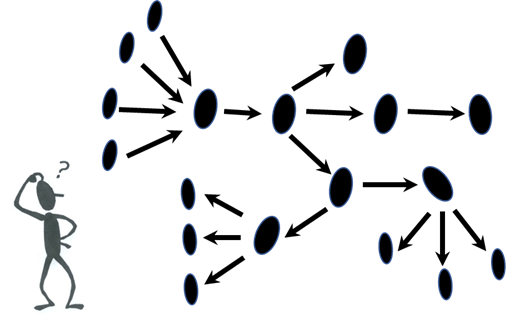
Absent in many of these op-eds is the how. How would what these op-ed writers are recommending be done?   

It’s one thing to say leaders must enact new laws, hire talented people, and make services simpler.  It’s another to say how that would be achieved. 

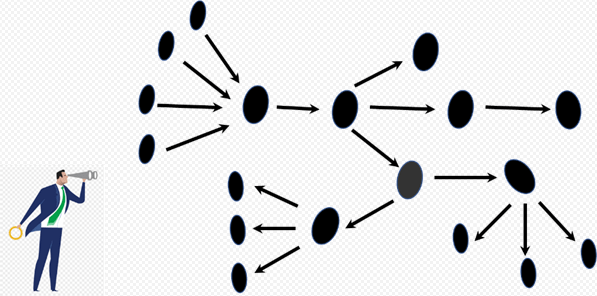
Systems & structures underlie the activities of society.  It’s easy to point to problems for leaders to fix but it becomes a challenge to tell them how.   

Find Ellery

Paperless Productivity is a Myth

To pay for my company’s taxes, my accountant logs into the Bureau of Internal Revenue (BIR) website and types into forms on the computer screen.  Once filled, she checks and mouse clicks a button to submit the form.  She logs out of the BIR website and then tells me to log into the company’s bank portal so that I can pay for the tax online. 

It’s supposed to be more convenient.  It’s supposed to save time.  Instead of filling out paper forms by hand, preparing checks, having the forms & checks signed by authorised parties, and travelling to & falling in line at the nearest bank branch to pay, my accountant & I can file and remit taxes in a jiffy from one place (or from any place for that matter). 

I don’t need to file paper forms in file cabinets.  I could download the submitted tax forms with acknowledged receipts and file them away in my computer’s hard drive without having to print them.  I save on paper and office storage space. 

It’s similar when I pay for my company’s electric and phone bills. The electric & phone companies email to notify me bills are ready to download & pay for at their respective portals.  I log in, download, and pay for the bills online. Just as with the BIT, I supposedly save time not having to wait for paper bills, not preparing bank checks, not having them signed by authorised parties, and not falling in line to pay at the respective electric or phone company’s payment centres. 

I could never go back to manual paper transactions but that is more because the BIR, the utility companies, and the banks will no longer let me.  It has become standard policy to pay online.  Processing paper transactions have been rendered obsolete and is seen as an unproductive activity relative to online transactions. 

It’s not totally true, however, that online transactions had become more productive. 

Taxpayers & consumers, or users in general, require e Internet access.  If an internet service provider (ISP) does not provide high-speed services, users could find themselves staring at their device screens, spending time waiting for portals to respond. 

It’s also not necessarily getting what you pay for. ISPs don’t guarantee the highest data speeds, and they made sure that no-guarantee is in their subscribers’ contracts. 

Users also need to regularly update their apps and invest to ensure their devices’ hardware are state-of-the-art, or at least compatible with app programming requirements.

Banks and utility companies had also implemented stringent security requirements when accessing and transacting their portals.  Some demand users submit one-time passwords (OTPs) on top of log-in credentials.  Every month I find myself logging in multiple times to one phone company’s portal because the OTP would arrive late. 

The bank where I pay my BIR taxes doesn’t allow online transactions after 6pm or on weekends & holidays.  I can only pay taxes during the daytime which means I don’t have the convenience of paying whenever I want to before deadlines. 

Banks also often schedule “maintenance” downtimes during weekends, in which their portals go offline for hours such as from Saturday evening to Sunday morning.  Not only I wouldn’t be able to pay taxes or utility bills during these periods, I also won’t be able to use my cash or credit cards too. 

The BIR website also sometimes “hangs” or goes offline especially close to tax filing deadlines.  And the BIR policy makers have a bad habit of implementing new regulations at very short notices.  Many taxpayers therefore deliberately don’t file early because if a new rule comes out, they’d have to re-file and re-submit proofs of payment.  Sometimes, the BIR would tell taxpayers to submit paper forms to the nearest BIR office as a workaround during transitions between old and new rules.  And then tell taxpayers to re-file online.  Taxpayers end up filing twice. 

The utility companies’ portals seldom “hang” but they’d still push deadlines at very short notices, like within a week or two.  They’d slap penalties or threaten disconnections if users pay late.  I and my staff, therefore, don’t have the convenience to schedule payments throughout a calendar month.  Most of the time, we’d be rushing to pay online the first two (2) weeks of every month. 

The BIR also from time to time requires taxpayers to reconcile their transactions against the agency’s records.  BIR auditors ask taxpayers to submit hard copies of documented transactions & payments.  Taxpayers end up printing and submitting paperwork which was supposed to had been eliminated. 

Online transactions benefit the hosts, not the users.  Banks & utility companies gain productively because users do the work their tellers & cashiers formerly did before the Internet revolution.  The BIR does not need to hire employees to receive and check forms; the taxpayers do that job for them.  The banks, utilities companies, and the BIR save money; the users do not, as they do the same work which they had always been doing albeit online instead of manually on paper.

And because users must often go through multiple steps for purposes of security, for workarounds versus offline schedules & glitches, and to beat short-notice deadlines, any convenience or so-called productivity savings are never really felt. Users end up paying at least the same in terms of time and resources for work where the host institutions reap the advantages. 

Paperless productivity from online transactions is a myth, at least to users.  I and many others who have not much choice to transact online, don’t experience any savings or gains.  I wouldn’t ask institutions to share the benefits but I’d implore them to at least continuously improve their portals to make it easier for us users to work with. 

Find Ellery

The Challenges & Benefits of The Physical Count

A finance executive of a metals manufacturing corporation wanted a physical count of all items at the company’s plants.  And he wanted it done in two (2) days. 

A physical count consists of a team identifying, counting, and tagging items, such as products, work-in-process, and raw materials.  The purpose of a physical count is to reconcile company inventory records with what are actually there at the company’s facilities.  The idea is to ensure inventory records are accurate such that financial statements reflect the true value of merchandise which make up a significant part of the company’s assets. 

The finance executive dispatched a team of accountants & managers, and asked operations supervisors to assist via making available workers and equipment to help.  The finance executive with the blessing of the metals manufacturer’s owners authorised a budget for transportation and food good for the planned two (2) day physical count.

The physical count lasted more than a week and was never completed.  Hardly all the items were counted.  It was a complete failure. 

The company produced metal tubes, pipes, sheets, & plates of different grades of steel and at different lengths or sizes.  The accountants couldn’t tell one from the other when they first arrived at the company’s warehouses.  Products were mixed up on racks and on pallets.  There were no visible identification on the racks or pallets to say what item was what.  It didn’t help that there were also unfinished or work-in-process items among the products. 

Teams also had to sort items to be able to count.  Because items were heavy, they relied on workers, forklifts, and cranes, which were never available outright.  Teams often were found idle as they waited for available workers and equipment who were often busy on the production lines. 

Frustrated, the finance executive stopped the counting.  The food and transportation expenses exceeded budget.  The accountants hardly tallied items for an accurate physical count.  At the end of the day, the company’s owners didn’t know what the true inventory of items was. 

The finance executive blamed the company’s operations managers for the failure.  The operations managers accused the finance executive of being ignorantly unfamiliar with the company’s products, not to mention his poor planning. 

Physical counts may look easy, but most aren’t.    

Physically counting items or merchandise is not a straightforward affair.  It isn’t like numbering items one, two, three, and tallying them.

The key word is physical.  When people do a physical count, they not only identify, tally, and tag, they also move, sort, and organise items. 

And if items are bulky and heavy, the chores can be daunting. 

The operations managers were right in that the finance executive was unfamiliar with the company’s items in that he didn’t consider the nature of the items he wanted physically counted.  The company’s metal products were not trinkets; they consisted of heavy merchandise in which most needed to be lifted via forklifts or cranes.

Operations managers, however, share in the fault for the fact that the warehouse was a disorganised mess, and that they did not satisfactorily cooperate with the finance executive by making available people to assist the physical count team.    

The silver lining from the physical count failure is that it laid bare glaring gaps in the metals manufacturer’s management of inventories. 

Items were mixed up.  Some were not identifiable.  And for those that were identified, many didn’t exist in the records.  Some didn’t have matching item codes or weren’t listed as items at all. 

Managers also learned that they had plenty of idle stock, as in significant quantities of work-in-process and finished product. 

The metals manufacturer’s owners hired a new operations executive in which she initiated a sale of most of the company’s idle inventories.    Within months, she was able to salvage cashflow from the selling which helped prop the company’s finances. 

As inventories were reduced, the company’s operations management team was able to get a better handle of inventories which contributed a more accurate picture of the firm’s working capital. 

Physical counts are not simple tasks that can be done quickly.  They require preparation and planning.  Teamwork is essential in that departments such as finance & accounting and operations need to work together to ensure the success of a physical count. 

Physical counts not only bring about more accuracy to inventory data.  They also expose how well inventories are managed. 

When people physically count inventories, they learn the value of the items they have stewardship over.  They unmask issues and identify problems which need to be solved for better business results. 

Find Ellery

Inventory Record Accuracy:  A Step to Supply Chain Improvement

Managers of a large food condiments manufacturer bragged that their finished products Inventory Record Accuracy (IRA) was 99%.  They added that they met this level constantly, not just when I as a consultant was there auditing the manufacturer’s supply chain operations.   

How do you compute the IRA?  I asked the warehouse manager. 

The warehouse office staff every morning printed the inventory records of every product item or stock-keeping unit (SKU), the manager replied.  A team would then go out to the warehouse and count the SKUs and match them with the records. 

If the staff catches a discrepancy, then they’d quickly either seek the missing item or check why there’s more on storage than in record.  Most of the time they’d find the cause of the error and correct it.  Thus, within an hour, the team would edit the inventory records to match what are in storage.  Any unresolved discrepancy would be investigated, and this often did not exceed one percent (1%) from the IRA. 

Inventory Record Accuracy (IRA) measures the difference between inventory records and what are actually on hand at any instant of time. Simply put, if a record matches what’s counted, it’s accurate.  If it doesn’t, it’s not. 

Is the food condiments manufacturer’s IRA really 99% as executives say it is?  If the warehouse team is chronically making corrections, then probably not.  IRA measures the matching of records versus counted items the first time around, and not after several iterations of corrections and editing. 

Some may say it is unfair to measure IRA the first time around as reporting the figure doesn’t give one a chance to reconcile and correct any mistake.  Some may feel IRA benefits the finance & accounting departments more than it does operations management.  Hence, they would argue in favour of reconciliation & correction before reporting IRA.

IRA does benefit operations managers, I say, even more so than the finance & account department.  If records don’t match what’s there on the floor, then operations managers won’t be getting a not-so-accurate picture of the inventories of items.   Honest mistake or not, if there was any mismatch between records and actual count the first time, it’s highly likely that mismatch has been there since the last count, or for a significant time in between counts. 

And when IRA is not-so-accurate, there will be risks & effects to the business:

  • Items thought to be available for sale, aren’t.
  • Order fulfilment teams might be invoicing items that are not there.
  • Warehouse operators might not find items where they’re supposed to be;
  • Or, they might find items in places where they are not supposed to be.
  • Purchasers might order items that are not needed because they’re already there.
  • Or, they might not order items they thought that are there but are not. 
  • Operations managers might not be aware of items on stock and are closer to expiring beyond their shelf lives. 
  • Accountants would not be reporting the right inventories and their corresponding values, which may result in errors to financial reports.

IRA amplifies the obvious deficiencies in an enterprise’s management of inventories.  It, for example, bolsters the complaints of customers as to why they receive the wrong product.  Or, for instance, how come storeroom staff can’t find an important spare part despite their computer saying it’s there, which results in costly delays to maintenance or repairs of vital equipment. 

IRA helps supply chain managers trace and fix systematic mistakes such as wrong encoding of information, wrong counting, putting away items in the wrong place, and wrong products picked & shipped.  IRA pinpoints which items need improvement in inventory management, be it finished product, work-in-process, part, component, packaging material, or ingredient.  It provides the visibility for which items managers need to immediately focus on. 

For items that are discrete or countable, One measures IRA by hit-and-miss.  If records of 90 out of a 100 items match with what are actually counted, then the IRA is 90%.  If there’s a match, it’s a hit in favour.  If it’s a mismatch, it’s a miss, no matter how much the difference between the count and the record. 

For non-discrete items, or items that are measured via continuous variables like weight, liquid volume, and pressure, one measures IRA against predetermined tolerances.  For example, it’s a match if a storage inspection show 1,999.95 litres of coconut oil versus 2,000 litres of the same oil on record, given a tolerance of +/- 0.5 litre. 

Technical professionals calculate tolerances from the properties of non-discrete items, such as for example, moisture content and temperature expansion.  Managers would approve tolerances from the science of these items. 

IRA also allows supply chain managers to check any item’s actual condition or characteristics versus specifications.  If, for example, if every case of toothpaste counted is supposed to contain thirty-six (36) 100ml regular formula tubes, then whoever is taking inventory should ensure that this is so when they count the product’s cases on floor.  It’s an automatic miss if the counter notices any characteristic not matching an item’s specification. 

Operations managers should regularly update their products’ item code records.  An item code record is a detailed profile of an item.  It includes, but not limited to, an identification code, item’s specifications, unit of measures at different supply chain stages, its components or substances, its functional relation to a manufacturing process, its standard cost or price, its source (e.g., vendor or supplier), and its risk & safety information. 

An item counted on floor must match the data of its item code.  Any mismatch, no matter how seemingly mundane, is an automatic miss.  It’s important enterprise managers regularly update their item code records as they identify the merchandise of the business. 

Items which the enterprise buys, uses, or sells are not subject to one department or manager.  Operations, finance, marketing, technical research & development, and even legal & administrative departments own the item records of an enterprise.  Some companies assign the leadership of administering item codes to either the finance, marketing, R&D, and supply chain departments.  Everyone, however, owns the item codes and the key to their effective management is the system & procedures that the enterprise sets up and enrols everyone into.    

IRA reflects how effective the administration of item codes is.  As it tells how well records match what’s on floor, it indicates how familiar operations managers are in the items they oversee from purchase, manufacture, to delivery.   

Inventory Record Accuracy measures the match of what and how much items are on-hand versus what and how much merchandise are documented and deduced from transactions.  It’s a comparison of what are in stock versus what are read in inventory databases. 

IRA is not meant to be a performance measure which solely benefits the financial executives.  It is a measure that helps supply chain managers correct and avoid errors in transactions and ensure value-added manufacturing & logistics activities are done right productively.  

IRA lays out via transparency where supply chain professionals are performing not only in managing inventories but also in how effective and efficient they are in their day-to-day transactions.   

It helps identify where problems lie in supply chains.  And by identifying problems, supply chain engineers have the groundwork to improve the systems & structures underlying supply chain operations. 

Find Ellery

Supply Chain Visibility: Monitoring & Measurement

Supply Chain Visibility is the ability to observe the activities and movement of merchandise from their sources to their final destinations. When it comes to setting up a system of visibility, two features must be present:  monitoring and measurement

The first is monitoring in which its effectiveness depends on the abilities to sense, detect, and track.

‘Sense’ is about being aware of the status or conditions of items, resources, and activities.  It should encompass most, if not all, supply chain operations, at least those that directly add value to merchandise and services.  

‘Detect’ is the identification of items or activities.  As the monitoring system seeks via its senses, it discovers, distinguishes, and identifies items of interest. 

‘Track’ is the homing in and following of items or activities, and the anticipation of where they may be headed.  

Effective monitoring depends on these three features working.  It can’t be one or two in the absence of another.  One cannot monitor quality, for example, if the system watches production but does not detect defects. 

The second feature, measurement, is about determining useful information from the data gathered from monitoring.  It’s not enough that supply chain engineers set up a system to merely sense, detect, and track; the system must also be able to organise, compute, and present data in an informative manner which supply chain stakeholders would appreciate and act on. 

In short: monitoring delivers data; measurement delivers information. 

Find Ellery

What Do You Want from Supply Chains?

There is no straightforward answer to this question.

Supply chains have multiple stakeholders.  These stakeholders consist of individuals and enterprises which serve as the links of the supply chains.  Every enterprise also has an internal supply chain, which makes the people of the enterprise stakeholders to the larger supply chain.

Stakeholders, therefore, would differ on what they want from supply chains. 

I could, however, surmise the sentiments of some stakeholders from different parts of the supply chain:

For end-users or customers, their answers would be like:

I want my orders delivered on time and complete, without errors and in good condition.

I want available products when I go to the store to buy them. 

For enterprises supplying the end-users or customers, their answers may be like:

I want deliveries of finished products to be on-time, complete, at the right quality & service to customers and at the lowest highest profit margin.  

The procurement managers of these same enterprises would add: 

I want vendors to deliver merchandise & services at lowest price and at longest possible payment terms, with no errors, and conforming to agreed specifications & delivery instructions. 

For vendors supplying to the enterprises serving end-users or customers, their answers may be like: 

I want to deliver merchandise and services which conform to agreed purchase contract terms & conditions and which the client enterprises would readily accept and therefore pay for promptly. 

For the vendors who represent the very start of many supply chains or who what we may call the sources (e.g., mining, farms, oil drilling companies, utility firms), their answers may be like:

I want to sell and supply all of what I produce and collect from clients at the highest profit margin. 

Depending on where you work, the answers to the question, what you want from the supply chain, would differ. 

Executives of some large enterprises try to claim entire supply chains as their own by arm-twisting vendors & customers to accept the enterprises’ views or standards.  But as much as they may succeed for some, they never really do for all who are in the supply chain.  Some source suppliers will tell clients to ‘take it or leave it’ when it comes to critical commodities or needed energy items (e.g., fuel, electricity, water). 

The ideal is for enterprises along the supply chain to find common ground and collaborate on projects to improve their operations and share the benefits. But as complex and large many supply chains are, it may be wise we should from the start not impose our views on vendors, customers, & service providers. 

Many enterprises negotiate with supply chain counterparts to get what they want from supply chains, but we should also listen and identify where the weak links are.  And from there, work with stakeholders to strengthen them

Find Ellery

The Need for Clarity Before AI in Supply Chains

It’s near the end of 2025.  Just about everyone is talking about Artificial Intelligence (AI) and how technology firms are racing to capitalise on it.

Executives want AI to be integral in just about every business area.  That includes supply chains. 

Aside from all the automation firms are installing into their operations, executives are aiming to use AI to run supply chains.  They believe it is destiny that AI would practically be at the core of most, if not all, supply chain operations. 

Supply chains deal with tangible items, principally products & services.  As much as AI will soon be capable to running supply chains, executives would still need structures & systems to provide the framework for AI to succeed. 

Questions for executives to address include:

  • Are existing supply chain systems & structures ready for AI? 
  • And if not, who will be the people who will set up those systems & structures?
  • And how would executives know if the set-ups are done right? 

AI is a data-based instrument which learns, answers questions, and makes decisions based on available information.  It would, therefore, rely on what resources, systems, and structures presently exist before it presents results. 

This means systems and structures need to be set up with clarity.  Items, for example, should match what are in the inventory databases to what are actually there.  One cannot have an item that exists on the factory floor but isn’t there on the inventory record. 

Artificial Intelligence programs would be not much different from traditional supply chain software in requiring the input of details of systems & structures such that the output of results would be most relevant for stakeholders.   

For some enterprises, this can be a big chore as it would often be the prerequisite for AI to succeed.  Tasks include creating master databases for items, parts, & components and the intricate mapping of processes. 

Expertise in engineering may be needed to not only point out the technical details of operations but also validate the methodical procedures which many may find out they didn’t even know about. 

Many software projects have fallen by the wayside because at the very start, the input of information didn’t match what was happening in real life.

In any endeavour, there is often so much pre-work which needs to be done. 

AI would be no exception.

Find Ellery

What’s the Metric for Resilience?

Many executives insist their organisations need to be resilient.  Given all the adversities and disruptions businesses had experienced, it’s understandable to believe resilience is vital.

Resilience is “an organization’s ability to adapt to and recover from disruptions, such as natural disasters or market shifts, while maintaining core operations and continuing to function.”

But how does one measure resilience? 

Metrics are performance measures which tell stakeholders how well their businesses, in terms of their activities, products, & services, are doing versus standards or goals.  

There are many metrics for areas like sales, quality, reliability, and cost.  But what metrics do we use for resilience? 

Is a metric for risk mitigation a metric for resilience?  An audit for risk can provide assessments for concerns such as safety and security.  But could it tell the whole story about an organisation’s resilience? 

Inventory turnovers, or how an item swings in relation to demand and supply, indicate how well executives are managing working capital.  Can it be an indicator for resilience, in how products are weathering challenges in a given period of time? 

Making resilience an objective is not easy when one can’t pinpoint standards or targets directly corresponding to it. 

When one can’t measure an objective, one then cannot manage how to get there. 

It becomes nothing more than a buzzword.  And so far, that is what resilience is: an unmeasurable buzzword

Find Ellery

Scolding My Subordinate Was Wrong

I scolded my subordinate manager the other day.  Yelled at him, in fact. 

It was wrong.  I should not scold, much more yell, at a person whether he works for me or not. 

When I scolded my manager, I negated the value of pointing out his mistake.  The manager ended up not realising his error but instead felt my wrath which made him feel bad.  The manager became a victim of my aggression.

I should, therefore, learn to control my temper.  I should have calmly pointed out what unacceptable result the manager’s decision led to and then listen to the manager’s side.  I then should explain to the manager if his side was not satisfactory and instruct him to correct his mistake. 

If the manager’s infraction was a recurrence, I should warn the manager that repeating his error would lead to more severe measures. 

But this was not a serious mistake.  The manager simply did not follow an agreed plan.  It led to me having to spend double the budget for a project.  I got angry and yelled at the manager for it.  He made a mistake, and I made the mistake of scolding him. 

Trouble is I know I’ll do it again.  I’m human after all and I do need to let go of anger.  I just need to at least control it to not lose the value of correcting whomever didn’t do the job well. 

I got angry, I scolded someone, but I don’t regret it.  Yet. 

Find Ellery

Goals Lead to Tangible Benefits

In one scene from the movie, Rocky, the title character played by Sylvester Stallone, is seen waking up at 4:00am, helping himself to a glassful of raw eggs, and then starting a jog. Rocky’s jog is the start of his preparation for his boxing fight with Apollo Creed, the current heavyweight champion in the movie.   

Rocky is seen running on the dark deserted streets of Philadelphia. The director, John G. Avildsen, apparently wanted to show how alone Rocky is as he begins his training. Despite the hype that surrounds his upcoming fight, Rocky is by himself. 

I am also by myself when I wake up three mornings a week to work out. I wash up, change to workout attire, walk the short path to where my equipment is and lift weights for an hour. Afterwards, I take a shower, eat breakfast, and go to work.

My routine has been like that when I began working out years ago and it has been like this up to the present day. There is no background musical score nor is there any person cheerleading me on. I am alone.

It can be difficult to sustain the momentum. Urgent phone calls and tasks that wouldn’t wait disrupt my workout routines; so much so there will be times I would not be exercising for a month, and I’d be forced to reduce weights whenever I restarted lifting to avoid injuring myself from suddenly lifting heavy weights after a long hiatus.

What was John Avildsen’s point in that scene of Rocky jogging alone in the darkness? What is the point of doing my workouts?

Everyone has an aspiration, an ambition, or just plain wish. But just as much as we have one, how much do we work for it? How much do we work before we discontinue and decide to quit? 

Rocky’s aim was to be at his best physically for his fight with Apollo Creed. His goal was to show he would fight to the best of his ability. 

My goal is to be strong enough to lift as much weight I possibly could.   

In the movie, Avildsen presented Rocky as a typical human being who was willing to give his all in a fight many expected his opponent will win.

I work out to become stronger with the aim to be as healthy as I could as I age.

Rocky had a personal goal and so do I.

Marketers of fitness gyms promote the picture of perfect physiques. Would-be customers adopt the picture of perfect physical shapes of celebrities and athletes which fitness gurus sell as the come-ons for gym subscriptions.

My mistake was to adopt someone else’s vision of a sculpted physical body which many fitness gyms sell as their come-ons to would-be customers.

My goal is not only my own but also mine alone to create and define. Hence, strength and not an attractive physique has become my goal.

Rocky’s goal was to be at his best physically and mentally in his bout with Apollo Creed. It was not his aim to win despite what everyone around was telling him to aspire for. When the time came, Rocky gave Apollo a good fight, one that surprised everyone who watched.

Our goals are ours alone. We make them and we achieve tangible benefits largely by our own initiative and hard work.

What we should avoid is adopting someone else’s vision as our own. Because when we do, we risk working for something we not only may not be able to achieve but we also may end up attaining something which does not really mean much for ourselves. 

I am solely accountable for what I aim for.

Find Ellery