Flagships & Anchors

Every enterprise has a flagship.  A flagship is an enterprise’s leading product.  It’s the brand that customers identify with the enterprise or it’s the enterprise’s number one item in terms of customer popularity or sales. 

We know The Coca-Cola Company by its flagship namesake, Coca-Cola.  Likewise, we know the Pepsico corporation from its Pepsi line of beverages. 

We know the Clorox company from its bleach products of the same name. 

We relate McDonald’s with its Big Mac hamburgers, Wendy’s with its signature bacon cheeseburgers, and Burger King with its Whopper menu.

Some corporations, especially big conglomerates, try to promote more than one flagship to seize greater market share and revenue. 

Consumer goods giant P&G has flagships in the categories of laundry (Tide), personal care (Safeguard), hair care (Head & Shoulders), and oral care (Crest, Oral-B), and uses them to compete with Unilever’s detergent products (Breeze) and soap line (Dove), and Colgate-Palmolive’s Colgate oral hygiene products.  

Apple fights on multiple fronts in the smartphone business (iPhone), tablets (iPad), and personal computers (MacBook, MacAir). 

Airbus is a leading aircraft manufacturer via its flagship A300 fleet of jets ranging from the widebody A350 to the narrow-body A321neo, and strives for market share against Boeing’s best-selling 700 series passenger airliners such as the 777, 787 Dreamliner, and the 737-MAX. 

Because flagships typically carry the bulk of enterprises’ businesses, executives would tell supply chain managers to make sure there’s always enough available stock of their leading products.  At the same time, they’d tell the same supply chain managers to prioritise flagships not only in the servicing of orders but also in keeping costs within strategic targets. 

Executives normally are aggressive in expanding their enterprises’ product lines via their flagship brands such that they would expect supply chain managers to support such initiatives by managing their operations productively. 

We can imagine executives banging conference room tables telling supply chain managers to fix issues such as out-of-stock or shortfalls in production.  The last things executives want to hear are their flagships being weighed down by unserved orders and higher-than-expected costs. 

Supply chain managers would, therefore, be led to believe that their focus should be on flagships.  That would be a mistake. 

Whereas executives may indeed emphasise flagships, supply chain managers, on the other hand, should be identifying and focusing on anchors

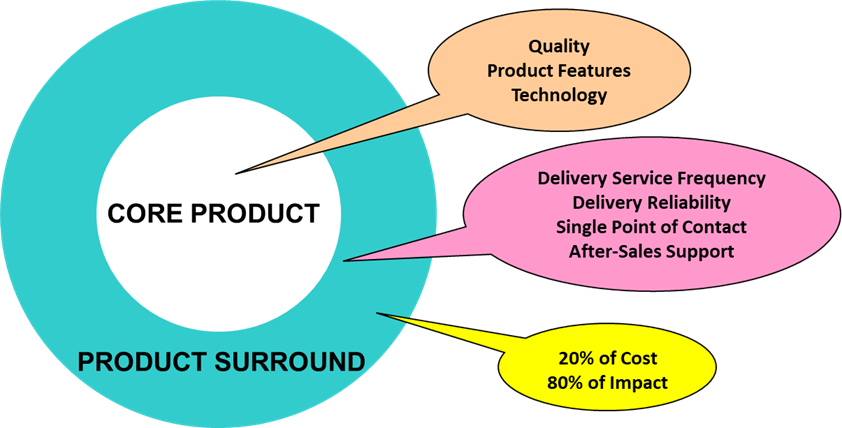
Anchors are those items which matter the most in how the supply chain shall flow and perform.  Anchors are those highly valued items in an inventory line-up that make or break not only an enterprise’s working capital but also its delivery reliability. 

Anchors, like flagships, vary from one enterprise to the next. 

For the Coca-Cola Company, its anchors would be the concentrates and syrups which are the main ingredients in the bottling and canning of its flagship beverages. 

The aluminium company ALCOA anchors on the raw material of bauxite for the manufacturing of its products. 

Starbucks’ anchors are the beans it buys for all its coffee products sold from its shops worldwide. 

Toyota Motor Company’s anchor in Southeast Asia are the chassis which are the platforms for its Fortuner, Hi-Lux, and Innova brands. 

Philippine-based conglomerate, Jollibee, learned the hard way that not only beef for its hamburgers but also chicken is an anchor when it suddenly could not source the latter in the middle of 2022 and ended up not being able to sell its flagship Chickenjoy items at its branches

Anchors could either be raw materials, work-in-process, or finished products.  It all depends on the business and operations of the enterprise. 

The inventory of every item in a business is, of course, important.  Manufacturers cannot produce unless all components, ingredients, materials, and supplies are complete and available.  We can’t sell a car with one less door handle as much as we can’t produce beauty soap without perfume. 

Anchors don’t diminish the importance of other items that flow through supply chains.  But they do require more focus and they usually determine how we manage our inventory planning & control systems. 

For example, a Japanese metals fabrication company sells a wide line of steel angle bars and flat bars of various grades, sizes & thicknesses.  Sales managers would insist that the operations department keep stock of sixty-four (64) SKU (stock keeping unit) items which are the company’s best-sellers. 

The operations department didn’t agree.  The operations managers, instead, focused on sixteen (16) types of 6-ton metal coils which were the raw materials for all the company’s products.  The operations department’s manufacturing & logistics plans centred on the procurement & processing of the coils which were imported from China. 

The operations managers kept stock of the coils but not the finished products.  When customers ordered, the operations managers would immediately schedule fabrication of the needed products. 

It wasn’t because it was easier to manage sixteen (16) coil raw material items than it was for sixty-four (64) finished product stock-keeping units (SKUs).  It was because it was easier for the company’s operations managers to focus & flex production from the tons of metal from the coils than on the number of pieces needed per product SKU.  It was simpler to make-to-order products and buy-to-stock the raw material coils, than it was to keep inventories of both products and coils. 

Coils were the most expensive raw materials of the company, but they were also its fastest moving items.  The company could not afford to having no stock of coils at any time but at the same time had to balance cash that would be tied up in buying and waiting for the coils to arrive from abroad. 

Anchors vary along the supply chain from enterprise to enterprise.  If coils were the anchors for a metal fabrication company, iron ore would be the anchors for the vendors who manufactured & sold the coils.  The fabrication company’s products of flat bars & angle bars would be the anchors for customers such as machine shops and construction contractors. 

Enterprise executives may put a lot of priority on flagships but for supply chain managers, managing anchors matter more when it comes to productivity and customer service.  

Anchors determine how we plan and execute operations and in so doing, they support the flagships enterprises market & sell. 

About Ellery’s Essays

Beware the Balanced Scorecard and Other Buzzwords

Executives of a multinational corporation mandated the roll-out of the Balanced Scorecard (BSc) throughout the organisation.  Departments such as Sales, Marketing, Research & Development (R&D), Human Resources, Manufacturing, Logistics, & Purchasing were required to present key performance indices (KPIs) to upper management and show corresponding targets & action plans. 

Department managers immediately attended BSc seminars & workshops.  They drafted long lists of objectives, performance measures, and action plans and presented these to their superiors.  Executives applauded the managers for their commitments and promised support.

In less than a week, the corporation’s BSc drive was a thing of the past.  Executives nagged managers about getting more sales, reducing costs, and resolving customer complaints, which was what they did before the BSc was introduced.  The KPIs managers had presented and committed to were forgotten. 

The executives occasionally (like once a year) asked for a review of BSc performance measures which were presented in that first workshop.  Managers would cram and invent figures to accommodate for presentations which executives would again applaud but afterward forget.  For the executives, having a BSc presentation gave them a security blanket that their organisation remained sold to the concept, even though they no longer (if ever) were not.

The Balanced Scorecard is a popular concept among enterprises.  Its thrust is to unite the departments of an enterprise by implementing performance measures under four (4) broad categories:  learning & growth, business processes, customers, and finance. 

With BSc, executives can analyse non-financial and financial information in single reports as sourced from various departments.  The aim is to give executives an up-to-date picture of performance which would result in greater control and identification of improvement opportunities. 

Enterprises who have enrolled into the BSc do not disagree with its philosophy; it’s just that many enterprises implement it differently from what its creators, David Norton & Robert Kaplan, had written in their book

For example, some enterprises use totally different categories other than the four the Balanced Scorecard originally preached (i.e., learning & growth, business processes, customers, and finance).  Some would instead classify their KPIs based on operations, functions, market category, etc. 

Some companies implement KPIs via a top-down approach, i.e., executives dictate to managers, supervisors, and staff what performance measures to use.   The executives would then instruct the managers, supervisors, & staff to come up with action plans to meet goals tied to those performance measures.   

Others, like the example of the multinational corporation, would delegate department managers to formulate their own goals & KPIs and present their plans on how they would meet those goals   Executives would just simply approve what the managers would present and observe the managers’ performances from time to time.     

Some enterprises would use the Balanced Scorecard as the basis for performance appraisals of managers.  Managers would be expected to meet scorecard objectives and be subsequently rewarded if their scores meet or exceed expectations or be punished if they don’t. 

In most cases, the Balanced Scorecard implementation doesn’t prosper.  Organisations would regress to what they were doing before.  As in the example of the multinational, executives would backslide to their perceived urgent issues such as meeting sales targets, controlling costs, and addressing customer complaints. 

History is replete with enterprises pushing popular buzzword business concepts only for them to fall flat and fail.  Examples include Total Quality, Just-in-Time, Manufacturing Resource Planning (MRP II), Lean Six Sigma, Enterprise Resource Planning (ERP).  The concepts sounded good, and they were successful for a few companies who seriously used them; it was just that what the executives were trying to put in wasn’t really addressing pertinent problems.

It’s not that the idea of implementing the Balanced Scorecard is a bad one.  The Balanced Scorecard and all other management concepts come with methodical approaches to solving problems.  They are not meant to be philosophies to adopt but relevant ideas to address issues. 

The executives in the multinational example were preoccupied with getting more profits and market share and thought that enrolling their organisation into the Balanced Scorecard would automatically bring about a boost in results. 

But it didn’t.  Executives got impatient and slid back to what they were doing before, which was to nag their managers on sales, costs, and complaints.  The BSc approach just didn’t suit what the executives really wanted. 

Especially for enterprises with supply chain relationships, buzzword business philosophies won’t be cut out for success unless we apply their approaches appropriately as solutions to problems.  We shouldn’t force fit our organisations to concepts; we should tailor them to fit into our organisations.  (Analogy:  we don’t force ourselves to wear small-size pants so that we can look thin; we either find the right-size pants or physically exercise to really get thin).

With the barrage of information from numerous people who think they know better than we do, we’re tempted to try things which attract our attention and spur our interest.  What we should ask ourselves whenever we see these so-called ideas, is how they can be solutions to whatever our problems are. 

It would, therefore, be to our advantage to know what our problems are.  We should define them as we observe and experience them.  We should seek them out as we develop goals and strategies.  We should be aware of the challenges and potential disruptions as we formulate the roadmaps to our visions. 

The famous automotive industrialist, Henry Ford, once said:

“Obstacles are those frightful things you see when you take your eyes off your goals.”

Some would say we should therefore keep our eyes on our goals.  We’ll run into problems and get stuck if we don’t.   Keep our eyes on the road and we’ll be there at our destinations before we know it.

But we can also say: let’s solve the problems, especially those that are right there blocking our path, the ones disrupting our driving, and even the ones that may open a shorter and faster route to where we’re going. 

Obstacles may indeed be frightful, but we should face them when they challenge us.  All we need is some courage and commitment, without the need of a buzzword. 

About Ellery’s Essays

My Car Gets a Day Off; How Come I Don’t?

I work every day of the week.  This comes from having several jobs or responsibilities, which is typical not only for myself but also for many Filipino workers, employees, and professionals who eke out what they can for a decent living. 

True, there are some lucky people who don’t work as much. Many court judges, for example, work only during hearings or trials and leave much of the grunt work to clerks.  Bank employees have weekends off.  Some families of overseas workers simply sit back and wait for the hard-earned remittances of their hardworking foreign-based bread-winners. 

Aside from these lucky people, there’s also my car.  It has a day off at least once a week.  This is thanks to the Metropolitan Manila Development Authority’s ordinance known as the Unified Vehicular Volume Reduction Program (UVVRP) or what people call the Number Coding scheme. 

The UVVRP’s purpose is to reduce the number of vehicles on the road during daytime hours as a means to manage traffic in Metropolitan Manila.  Private vehicles such as cars and vans are not allowed to use public thoroughfares one day of the working week, which is from Monday to Friday.  The assigned day of the vehicle’s exclusion from the streets depends on the last digit of the vehicle’s license plate and the numbers assigned for that day.  Cars with last digits of 1 or 2 are banned on Mondays, 3 and 4 are banned on Tuesdays, 5 and 6 on Wednesdays, 7 and 8 on Thursdays, and 9 and 0 on Fridays.  My car’s license plate ends with 3 so I’m not allowed to use my car on Tuesdays.

The UVVRP ordinance has become quite complicated as cities and towns surrounding Manila adopt their own intrinsic rules.  Some cities lift the UVVRP from 10am and 3pm but in Makati City, the UVVRP is enforced the whole day.  The ordinance is suspended during holidays but cities like Makati and Pasay sometimes keeps the ordinance enforced, thus causing confusion to motorists, especially the ones who get caught. 


I drive to work every day but because my car isn’t available on Tuesdays, I borrow my sister’s or uncle’s car to drive to work.  Many families essentially buy an extra car to cope with the UVVRP because simply, they have to go places every day of the week.  Cars get a day off but people don’t. 

The UVVRP is, therefore, ineffective since people would find another vehicle to drive and work around the scheme.  Despite calls to repeal the ordinance, the MMDA adamantly stands by the UVVRP.  The MMDA instead insists that motorists take public transportation on days their cars are banned to help reduce traffic. 

Several years ago, concerned citizens with the help of a few senators and congressmen loudly pushed for the end of the UVVRP.  The MMDA refused and justified their position based on a study they conducted.  The study consisted of counting the number of vehicles on the roads when the UVVRP is in effect and when it isn’t.  The MMDA lifted the UVVRP for one week to allow its personnel to count the vehicles on the roads.  When the UVVRP went back into effect, the same survey was conducted.

According to the MMDA, the study showed that the UVVRP reduced the daily number of vehicles by 20%, which was expected since the number coding scheme forced every car out of the streets 1 out of 5 days a week. 

But the study was flawed.  The MMDA survey when the UVVRP was lifted happened during a normal work and school week.  The vehicle counting when the UVVRP went back into effect was done when schools are closed.  It was obvious that the reduction in traffic when the UVVRP was back in place wasn’t due to the scheme but due to less traffic at schools. 

Counts were also done haphazardly usually on one or two roads over a brief number of hours conducted by traffic enforcers untrained for the study.  In other words, it was an un-scientific survey which wouldn’t pass any statistical test of significance. 

A straightforward textbook application taken from the Operations Research field would probably have been more effective in seeing whether the UVVRP worked or not.  This would involve identifying choke points, timing the waiting time at those choke points, surveying the volume of traffic, and comparing the data with and without the UVVRP on normal work and school weeks.  Chances are the study would show that it’s the choke points where viable solutions can be found to unlock Metro Manila’s traffic, and not in a number coding scheme which probably didn’t have much of an effect. 

The MMDA with the backing of Metro-Manila city mayors, unfortunately, would have none of any other argument and has kept the UVVRP running.  So up to the present, my car gets a day off 1 day out of the week but I don’t. 

The UVVRP illustrates a phenomenon where organizations such as government agencies implement rules that result in assets becoming idled for wished-for beneficial results that don’t not really come about in the first place.  The price of reducing traffic, which is likely insignificant, is manifested in the cars and vans that sit idly in garages on days they cannot be used.  For some economists, this might not be an issue; rather it probably can be construed as a benefit since as families buy extra cars, the purchases spur the local automotive industry. 

But the UVVRP doesn’t just affect families.  It affects as well delivery vehicles of small businesses and company cars used by people such as sales persons and real estate agents.  Businessmen have to invest more in extra vehicles to ensure that deliveries are done every day and field personnel can conduct their daily business. 

The MMDA argues that if the UVVRP is repealed, Metropolitan Manila will end up in a much worse gridlock as 20% more vehicles will be out on the roads daily.  There likely could be a build-up but probably not as much as 20% more.  There are after all only so many drivers in the city and they, like most human beings, will learn to adapt to the heavy traffic and find ways to beat it, which is what we are already doing every day anyway. 

About Ellery’s Essays

This essay was originally written on May 26, 2013

It’s Not Only About ROI

Residents of Addition Hills in Mandaluyong City, Manila, queue to recieve water distributed on water tank truck and fire trucks on March 15, 2019. Manila has been hit by its worst water shortage in years, leaving bucket-bearing families to wait hours for a fill up from tanker trucks and some hospitals to turn away less urgent cases.     -Noel Celis / AFP

The chief executive officer of a multinational consumer goods corporation handed down an edict:  he won’t approve any project unless the proponent presents a justifiable return on investment (ROI).  Whether it be an investment in new facilities, hiring of additional staff, or a promotion of a new product, the CEO won’t let an undertaking push through unless the ROI is attractive, i.e., the benefits outweigh what the company would get back in interest if money for the project was saved in the bank. 

The CEO’s edict forced managers to carefully study their initiatives before bringing them up for approval.  But it did also lead to managers hesitating to suggest improvements in which they couldn’t outright determine the ROI.  Engineers didn’t replace machines even though they were often breaking down; some departments stuck with their head counts despite heavier workloads; and logistics managers squeezed as many items as they could into warehouses even if storage was already beyond capacity. 

Should everything we decide on be based on ROI? 

The CEO of the multinational consumer goods corporation argued that if a manager couldn’t compute a justifiable ROI for any proposed undertaking, it’s because:

  1. The manager wasn’t thorough enough in quantifying the benefits of his proposal, or;
  2. There actually are no worthy benefits from the proposal to speak of, or;
  3. The manager’s proposal is not feasible in the first place. 

Computing the ROI can necessitate some study from different angles. 

Take the following case for example: 

Transportation managers of a logistics enterprise studied whether they should repair an old delivery truck or replace it with a new one.

The cost to buy a new truck was $USD 25,000.  Estimated life is five (5) years. 

The cost to overhaul the old truck and extend its life for another five (5) years was $USD 2,000. 

Estimated annual expenses for operating the new truck or the old truck for the next five years were as follows:

New Truck Expenses ($USD)
Fuel 2,400
Tires & Battery 400
Maintenance 800
Yearly Total Expense3,600
Old Truck Expenses
Fuel4,800
Tires & Battery    600
Maintenance2,000
Yearly Total Expense7,400

Sticking with the old truck would incur higher expenses totalling $USD 7,400 per annum.  Buying a new truck would cost $USD 3,600 per annum and would save the enterprise $USD 3,800 [7,400 – 3,600] annually or $USD 19,000 in five (5) years. 

The savings of $USD 19,000, however, would hardly justify the cash outlay of $USD 25,000 for the new truck as the enterprise wouldn’t get its money back within the truck’s five-year life.  The ROI is 15% ($USD 3,800 divided by $USD 25,000) but it doesn’t hurdle the annual depreciation of $USD 5,000 (the accounting expense of the new truck’s reduction in purchased value over five [5] years). 

Even if the transportation managers argued that they could still operate the new truck beyond five (5) years, expenses would still end up equal to that of the old truck by that time, as the new truck would already be considered old. 

There is, however, another quantifiable benefit to having a new truck versus an old one. 

A new truck would have less downtime from maintenance and breakdowns, and because it’s brand new, would be available for more trips a week.   A new truck could provide 50% more trips a year than the old one, such that it can add more income than if the enterprise stuck with the old truck:

New Truck Income ($USD)
Gross Receipts @$USD 80/trip; @375 trips/year30,000
Expense 
Fuel 3,600
Tires & Battery 600
Maintenance 1,200
Sub-Total Expense5,400
Net Income Per Year24,600
Old Truck Income ($USD)
Gross Receipts @$USD 80/trip; @250 trips/year20,000
Expense 
Fuel 4,800
Tires & Battery 600
Maintenance 2,000
Sub-Total Expense7,400
Net Income Per Year12,600

A new truck would add $USD 12,000 ($USD 24,600 – $USD 12,600) in net income annually.  Cashflow from the new truck’s income would return its investment in a little more than two (2) years.  ROI computed would be 48% [straight line of dividing 12,000 by 25,000]. 

The transportation managers would need to commit that they’d use a new truck for more trips and earn additional income than with an older truck.  At least, the transportation managers should confidently tell their superiors that a new truck is worth one-and-a-half times more in delivery capacity than that of the older truck. 

The lesson from this case of the new truck versus an old truck is that we shouldn’t limit our decision-making to the ROI from cost savings.  We should consider other benefits such as what could be gained from the opportunity of additional income.

We also should not solely rely on ROI when it comes to projects that deal with risk. 

In 1997, the Manila Water Company, was granted as concessionaire to supply water to Eastern side of Metropolitan Manila, Philippines, which included the neighbourhood where I lived.  MWC had upped the water pressure and improved service as soon as they came on board and almost overnight, I and my neighbours no longer needed to pump & store water in 30-foot-high water tanks which we previously used when water supply was not dependable. 

As MWC provided strong water supply & pressure continuously, many of my neighbours dismantled their tanks, pumps, & cisterns as a result.

But we in my family’s household didn’t; we continued to maintain our water tank & pumps even though we hardly used them. 

In March 2019, MWC abruptly cut water supply for up to 20 hours a day, citing critically low water levels at reservoirs. Taps ran dry and people in my neighbourhood desperately sought water for their basic needs.  They queued up to wait for water trucks that sometimes never arrived or bought bottled water from vendors, if they could find anyone selling in the first place.  Despite assurances from MWC that service would normalise, the water service cut-off would last for more than two (2) weeks.  People couldn’t go to work or even sleep as they had to look for water to meet their daily needs. 

But at my residence, we had no problems thanks to the stored water in our tanks.  We had enough water to last at least five (5) days.  And we replenished our tanks when MWC did supply water even if it was only available for very few hours a day. 

We avoided the nightmare of disruption to our daily lives, as we continued with our businesses and even shared some of our water with friends and employees. 

From 1997 to 2019, I religiously maintained my residence’s tank & pumps.  It did cost me money and time as I sometimes had to ask a plumber to replace older pumps or repair rusty pipes & valves. 

There was no reward, no financial return, for my efforts to upkeep our water tanks and corresponding plumbing while my neighbours enjoyed MWC’s continuous water supply.  But it all paid off that fateful month of March 2019, as I and my family avoided the inconveniences from MWC’s sudden & disastrous water interruption. 

The purpose of investing in tanks & plumbing was to counter the risk of experiencing no MWC service at any given time.  An ROI computation would show it wouldn’t have been worth the investment but it turned out the opposite if we consider the avoidance of disruption. 

Enterprises exist to make money and ROI is a key measure in determining whether we will from the decisions we make.  But as much as it is an important economic parameter, ROI should not solely be the deciding factor especially when we are taking advantage of opportunities or when we are mitigating risk from possible adversity.

We shouldn’t ignore the potential benefits which we wouldn’t be able to quantify an ROI from, especially when we are betting on opportunities or hedging against adversities.    

About Ellery’s Essays

Solving Problems Before They Become Calamities

https://imageio.forbes.com/specials-images/imageserve/65adeae8d5e6436b71755865/Pedestrians-walk-past-the-American-multinational-chain—/960×0.jpg?format=jpg&width=1440

Starbucks Corporation had reported lower sales in the second quarter of its fiscal year ending March 31, 2024.  This led to the coffee chain company’s stock price tumbling by as much as 12% on April 30, 2024.  Starbucks’ chief executive officer, Laxman Narasimhan, cited customers abandoning their app orders because of very long waiting times at Starbucks stores. 

“The chain’s executives said that they are working to speed up service during the morning hours to better meet customer demand, including for orders placed ahead of time on its app. Too many customers are abandoning their app orders because of long wait times and menu-item unavailability, CEO Laxman Narasimhan said.”

CEO Laxman Narasimhan had been credited for spending time at Starbucks branches.  He immersed himself in the front-line business of Starbucks, as he operated espresso machines, served coffee & food to customers, and held dialogues with baristas.  From what he learned, he promised to improve working conditions and customer service.  He recognised the difficulties of baristas such as when they needed to serve coffee drinks within company-specified lead times or when they ran out of cups or menu items. 

CEO Narasimhan’s initiatives, however, did not pay off before its fiscal quarter ended on March 31, 2024.  Sales had dropped together with income as well.  And according to observers and Starbucks management, it was not because demand had declined.  It was because Starbucks hadn’t been able to serve customers fast enough before they gave up on their orders.   

The fall in stock price was a calamity for Starbucks.  Executives and stockholders were obviously disappointed as company leaders promised to “speed up service” especially during the morning hours, when customers looked for their daily wake-up drink before going to work.  But the idea of shortening service times sounded more like a knee-jerk response than an actual solution. 

Was inefficient customer service really a major root cause for the unexpected bad financial news?   

Customers clamour for Starbucks coffee products because of their quality, and excellent store service & ambience.  But was a failure to maintain that excellence (i.e., serving customers quickly) the primary reason for the subpar quarterly financial performance?

Many executives prepare ready answers when calamities strike their corporations.  They immediately identify causes and promise to solve problems.  But are the causes they identify the problems that should be pursued? 

Starbucks is a global company.  Observers had noted that upstart coffee shops had been challenging Starbucks’ market share in China.  There have been some price increases in coffee and food items, and prices of coffee beans had also been rising, putting pressure on Starbucks’ profits. 

Could the stock price of Starbucks have dropped not only because of the reported lower sales but also because of the higher costs?  Higher costs were likely contributing to reductions in income as much as higher prices may had played a role in declining same-store sales.    

How do we solve problems?  Do we wait for them to happen before we try figuring them out?  Or do we anticipate them, ready with our teams to take them on?  Or, do we ask questions, gather information, identify them, and figure them out? 

We don’t welcome problems.  It’s a common message we managers send to our peers and subordinates:  don’t give me problems.   And because we avoid problems, we only address them when they happen, which is when they manifest themselves as calamities, disruptions, or heaven forbid, catastrophes. 

Worse, we are typically impatient in getting anything done.  Therefore, when calamities strike, we rapidly seek remedies to mitigate them or just ride them out. 

We are reactive, instead of proactive. 

Proactive has been a popular buzzword.  We say we are proactive when we act without a stimulus.  We take initiative from a cause, which we make succinct via visions, missions, goals, & strategies. 

The problem-solving approach is a splendid example of proactivity.  Instead of waiting for calamities to occur, we seek out and solve problems such that we counteract, if not allay, their impacts.  There is a plus side to imbedding such a mindset in our organisations. 

But many of us don’t have one.

Most enterprises don’t have a policy, structure, or system which sees us seeking out problems, defining them, and painstakingly solving them.  We, instead, tend to solve problems based on what happens in front of us, or more specifically, based on what happens in front of our leaders.  Whatever the chief executives decide is the problem becomes our problem to solve. 

A problem-solving approach requires a paradigm shift.  It requires that we admit that there are problems out there which we have yet to recognise and we make an effort to identify them, clarify them, and find solutions.  It requires we accept that we won’t have ready answers but that problems would be showing themselves as indications or symptoms which we should not ignore. 

Starbucks had seen the symptoms.  There was the growing & thriving demand, the longer lines at stores, the harder challenges baristas were going through in serving customers, and the runouts of supplies & menu items.  The symptoms were there, and they indicated problems that were becoming potential calamities.  Starbucks management just needed to detect them, dig into the data, and articulate the problems.    

Executives immersing into their businesses are a good thing.  But it would be a better if they did it with the intent to identify and solve problems.  Immersing fosters better relationships with the people of our organisations but we could do a lot better if we also immersed to open our eyes to problems we could solve before they turn into calamities.

About Ellery’s Essays

Solving Problems in the Midst of Crises

We who are supply chain veterans have encountered many crises in our operations. 

Over the decades since Keith Oliver (and Mr. Van t’Hoff) coined the term, supply chain management, we have had our share of challenging crises.  But even as many enterprises recognise their critical importance, supply chains remained a not well understood branch of business.

That changed at the height of the CoVID-19 pandemic.  

After the World Health Organisation formally declared the coronavirus pandemic on March 11, 2020, nations enacted lockdowns which shut down supply chains around the world. 

Panic-buying consumers emptied grocery shelves almost overnight.  There were shortages of food and hospital supplies as demand spiked and vendors were unable to deliver provisions. 

When pharmaceutical scientists developed vaccines to counter the virus, governments finally relaxed restrictions.  Supply chains were able to flow again.

The crisis from the pandemic, however, had thrust supply chain management to the forefront of global media attention. 

Events relating to supply chain disruptions became headlines:

Suez Canal, March 23, 2021

The Ever Given container ship runs aground at the Suez Canal blocking shipping traffic between Asia and Europe.  The incident dominates global news headlines and even though salvage crews finally were able to dislodge the ship in less than a week, newscasters and analysts fanned speculations of increased costs in freight and merchandise arising from delays caused. 

Bloomberg Supply Lines, September 22, 2021

“The amount of time it’s taking for chip-starved companies to get orders filled stretched to 21 weeks in August, indicating the shortages that have crippled auto production and held back growth in the electronics industry are getting worse. Chip lead times, the gap between ordering a semiconductor and taking delivery, increased by 6 days to about 21 weeks in August from the previous month, according to research by Susquehanna Financial Group. Volkswagen’s truck division Traton SE became the latest manufacturer to warn the global shortage of semiconductors has jeopardized deliveries.”

Ukraine, February 24, 2022

Russian military forces invade Ukrainian territory, setting off alarm bells in global commodity markets.  Prices of wheat skyrocket as nations sought alternative sources.  It didn’t help when Western nations from the United States to European countries slapped sanctions on Russia, further crimping supply not only of wheat, but also of crude oil and various minerals. 

The war degraded into a stalemate that resulted into bitter divisions among global traders.  Businesses adapted to the fighting but the war and the growing political divide between East and West remains a looming risk for supply chains. 

Panama Canal, August 25, 2023

Panamanian authorities announced restrictions in the passage of ships through the Panama Canal, a vital waterway shortcut between the Atlantic and Pacific Oceans.  Low water levels from a drought in Panama had limited canal lock operations, resulting in long queues of ships waiting to pass through.  Shipping lines re-routed their container ships either through the West or East Coasts of the United States or via the long route around the Southern tip of Latin America.  Shipping cost increases and delays resulted for customers and vendors in North America and Europe. 

Panamanian authorities announced an ease in restrictions on April 15, 2024, as they welcomed optimism that the upcoming rainy season will revive water levels at the Panama Canal.  Supply chain professionals were cautiously hopeful. 

Pfizer Plant, Rocky Mount, North Carolina, USA, July 19, 2023

A tornado ripped through a Pfizer pharmaceutical facility.  Fortunately, there were no fatalities, but the damage and resulting shutdown of the facility had aggravated the already-strained supply of drug products to US hospitals. 

The Rocky Mount facility was able to restart operations four (4) months later, although not yet in full swing. 

Red Sea, November 19, 2023

Houthi rebels based in Yemen began attacks on shipping at the Red Sea, starting with a hijacking of a commercial ship and later via drone & missile strikes on merchant vessels

The rebels continued their attacks despite retaliation from a coalition of American and Western forces.  Shipping lines, meanwhile, suspended passage of their vessels through the Red Sea, which has added expense and lead times to transportation between Asia and Europe. 

Baltimore, Maryland, USA, March 26, 2024

The container ship, MV Dali, departing from Baltimore’s harbour, collided with the Francis Scott Key bridge, causing it to collapse.  Quick thinking port authorities within minutes stopped traffic from crossing the busy bridge, preventing hundreds of motorists from falling into the Baltimore port’s bay (unfortunately, six [6] construction workers didn’t make it out).  In the aftermath of the collapse, salvage crews removed enough debris to open a temporary channel for stranded ships to pass through and allow some operations at the port to resume.

Commentators and so-called expert analysts had urged enterprises to prioritise resilience and sustainability.  Their rationale is that supply chains need to prepare for risks and adversities.  They have pushed organisations to adopt renewable energies, cutting-edge technologies (e.g., artificial intelligence), and risk management. 

Supply chain managers should invest in better planning & information systems such that they could be more flexible to changing demand, especially given global events (e.g., war, calamities) may affect our business environments. 

So-called experts and wannabe consultants offer a lot of solutions.  Many, however, don’t tell what the problems are in the first place.  They equate crises with problems without understanding that crises are likely more the effects from problems which we failed to identify and solve. 

We usually don’t solve crises; instead, we manage them.  We try to moderate effects, counter threats, or minimise risks.  We move to get ourselves and others out of harm’s way or work to reduce the inconveniences.  We hunker down or we try to escape. 

In the aftermath of crises, we recover and heal.  If a crisis festers (e.g., burning platforms), we look for quick fixes. We pick up the pieces, but we skip solving problems exposed by a crisis.  We urgently find ways to get things back to track to where we left off, but we don’t review what happened, how we responded, and what we should do better next time.  If we do, most of the time we implement solutions without first defining the problems. 

The strength of our supply chains lies in not in how well we weather crises but in how well we identify problems and implement solutions which contribute to our operations’ productivities despite the risks and adversities. 

Problems accompany crises.  The trouble is we don’t solve them as much as we manage crises. 

Enterprises and economies have experienced many supply chain crises and survived, if not even prospered. 

But despite what we may call resilience in our operations, we have not really made our supply chains more productive.  We did not really identify or solve many of the problems that underlined the crises we experienced. 

Because we have not yet addressed, if not even sought out, these problems, we have not optimised our supply chains, at least to the extent that they would be well-prepared for the next crisis. 

Most of us don’t like problems because we equate them with crises and the disruptions they bring. 

But crises are not problems.  They either give us problems or they are the results of them.  Problems are the root causes of crises or weaknesses in our systems and structures which crises expose. 

We don’t want to experience crises, but we should seek and identify problems so that we can develop solutions to either mitigate, counter, or defend against crises. 

In crises, we may turn to our leaders.  In problems, however, we need the right people to solve them. 

Executives manage crises.  Inventors, entrepreneurs, & engineers solve problems. 

Organisations should have the talent, systems, & structures to not only weather crises, but also the incentive, initiative, and creativity to find and solve problems. 

It starts with us not only counting on executives to manage crises but also enrolling all of us in the supply chain hierarchy to participate in the problem-solving process. 

About Ellery’s Essays

Are You Looking for a Problem?

In the 1980’s, Procter & Gamble had a cost improvement program dubbed “Deliberate Change.”  The purpose of the program was to tap all levels of the P&G organization to find ways to reduce cost. 

The Deliberate Change program encouraged P&G employees to look for ways to reduce costs.  There were extensive training programs focused on “creative problem solving” which encouraged brainstorming and using the right criteria for solutions.

All in all, the Deliberate Change (later renamed the Cost Improvement Program) helped save P&G millions in dollars worldwide and boosted P&G’s efforts to double its business by the end of the 1980’s.    

P&G rewarded cost improvement teams which came up with innovative and effective cost reduction solutions.  This motivated employees to seek out problems and solve them.  At one point, teams were claiming so many cost improvement solutions that the company had to have steering committees actively screening the ideas to make sure they were indeed contributing real and effective savings. 

The cost improvement program became an integral part of P&G’s culture of innovation and entrepreneurship.  People who left P&G brought the “problem-seeking” mindset to other organizations and contributed effectively to companies’ bottom-lines. 

The success of the P&G Deliberate Change program was in getting employees to seek problems, study them, and solve them.  It is quite unheard of today in many companies for managers to tell employees to find problems.  It is more of a rule that managers tell employees to avoid problems; employees instead should try to prevent them or find quick-fix solutions.  Some companies would only go as far as putting up suggestion boxes for employees to contribute ideas where often, the suggestion boxes would remain empty or if there’s any, the suggestions would just languish in the boxes without anyone bothering to read them. 

Many successful entrepreneurs start with a problem than with a solution.  Netflix began when founder, Reed Hastings, sought a better way to rent movies.1 Uber started when founders, Travis Kalanick and Garret Camp could not find a taxi one night and decided to find a more convenient way to go from one place to another.

But as much as success comes from solving a problem, being continuously successful happens when one does not stop looking for problems.  P&G’s Cost Improvement Program has evolved to one where the organization searches the outside world for innovative ideas

But as much as ideas drive success for most enterprises, it is how well problems are solved that an idea becomes successful. 

But it has to start with recognizing there’s a problem to solve.  And before one recognizes a problem, should one wait for it to arrive, anticipate its arrival, or seek it out even if there is no urgent need of one in the first place? 

Successful organisations solve problems.  Successful entrepreneurs develop ideas that anticipate and solve problems.  Continuously successful people look for problems to solve. 

About Ellery’s Essays

This essay was originally written on Januar 18, 2019

1 Adrian J. Slywotsky, Demand, (New York: Crown Business), page 2

Discerning What We Can Change versus What We Cannot

A long time ago I tried to start a business in which I’d deliver basic consumer products to small provincial stores.  I’d buy products from major wholesalers and sell them at small profit margins.  I’d offer my customers products at close to wholesale prices and I’d deliver items as soon as there were ordered.

As soon as I started selling, however, distributors of the same products made life difficult for me.  They’d stop my delivery truck and told my crew to leave the area because my business was infringing on their “territories.”  When the delivery truck returned, they threatened them with legal action.  They then threatened my customers, saying there would be no more deliveries of products. 

I ended the business as soon as it started because of the endless harassment. 

In the present day, the same customers I used to sell to can now buy almost anything they want thanks to the internet.  By accessing e-commerce websites, provincial stores can buy the same products I used to sell and lots more at competitive prices. Many provincial distributors have closed shop as costs have climbed and margins have shrunk.  The few that remain are very large and have updated their information systems to accommodate e-commerce but they struggle to stay competitive against upstart entrepreneurs selling rival merchandise.

Sometimes it feels downright impossible to make a change where we would like to see one.  And sometimes it’s hard to stop change when we don’t want one.  The distributors in my time didn’t want change and I had a hard time making any with my business.  In the present day, distributors face a changing business landscape which requires constant adaptation. 

Sometimes we need to be creative and persistent in finding change and making it happen.  Sometimes change just happens when and where we least expect it and we have to be quick to adopt it else we fall behind or worse, we become obsolete or irrelevant. 

Take traffic, for example.  Manila (Philippines) traffic is one of the worst in the world, if not the worst.  Countless ideas have been thrown for more than a decade to alleviate the chronic daily gridlock.  Nothing has worked and commuters have had to endure hours in buses, trains, and cars to move around the city. 

But in the last few years, Waze and other navigation applications have become popular as they help motorists move through traffic. 

Motorcycles and bicycles have become the vehicles of choice for many people as they have enabled riders to weave through streets with less difficulty.

Businesses are using app-linked couriers, messengers, and transport providers to deliver their products.  And as mentioned above, e-commerce is becoming the preferred choice of consumers to buy groceries, clothes, and all kinds of merchandise which are delivered to our doorsteps via a click of a computer mouse. 

The traffic is still there but people have adopted.  Change was made in how people navigate through traffic and how people buy the things they need or want.  Much of the change was unexpected and much of the effect went beyond people’s expectations. 

So, for the rest of us who did not expect change or have not yet fully accepted it, we end up scrambling to make up for lost ground. 

For the rest of us who want to enable change, it can be a frustrating fight that tests our patience and resolve.  But the potential rewards can be very much worth the trouble. 

What can we do to make adoption of change or the enabling of change not only easier but also beneficial? 

It starts with first discerning what we can change versus what we cannot change.  We can’t change traffic but we can change how we work around it.  We can’t change a distributor’s “territory” but we can change how products are marketed and delivered. 

To find what we can change and what we can’t, we need to understand an issue from all sides and find a side where change can be made.

We’d need to define the problem before we can make a difference. 

“Grant me the serenity to accept the things I cannot change, the courage to change the things I can, and the wisdom to know the difference.”

-Reinhold Niebuhr (American theologian)

About Ellery’s Essays

This essay originally written January 06, 2019

Engineering for Versatility, Not Resilience

When we analyse the gaps in our supply chain operations, it isn’t just about how wide the differences are in how we’re performing versus what we’re aiming for.  It won’t only be about variances between targeted & actual results, but it will also be about how well we respond to and handle risks now and in the future. 

Gaps, in the supply chain engineering context, are the disparities between the ideal and the present states of the structures & systems of our operations.  Gaps represent the differences between the performances we want to achieve versus how we are currently doing. Gaps are the obstructions, divides, and barriers that stand in our way toward our ultimate objectives.

Adversities are dangers, perils, hazards, threats, and menaces that cause disruption (if not disaster) to our operations.  Risks are the possibilities these adversities manifest themselves as unwelcome outcomes.  Emphasis is on the word, possibilities.  We’re never sure how and when risks will become adversities.  We just know they can and will eventually. 

Many so-called experts push for resiliency as the answer to mitigating risk and minimising the effects of adversities.  In supply chain management (as per SAP), resiliency is “the ability to respond quickly to operational disruptions through flexible contingency planning and forecasting – from material sourcing to logistics and the final delivery of products and services.

Resiliency, however, is more of a buzzword than it is a desired attribute.  It stresses responsiveness via “flexible planning and forecasting.” When it comes to reducing risk and adversity, we need to be more than responsive and flexible.  We need to not only bounce back from disruption, but we also need to counteract, if not avoid, risk.  It’s not resilience which we need, but versatility

Versatility denotes our supply chain’s readiness to transform itself as the need arises.  Versatility is the means to change whatever we’re doing such that we uphold & continue our track record of operational performance.  Versatility is not only flexibility or the ability to switch or adjust; agility, the speed to make any change; and adaptability, the range of operability under different circumstances.  It’s not only about coping, which is what resiliency means, but more of engineering our operations to be versatile. 

Versatility is about solving problems before they become looming threats. 

In 2005, then United States President George H. W. Bush asked his cabinet secretaries to plan for a possible pandemic.  President Bush felt that the American government was not prepared to handle a pandemic like the influenza outbreak of 1918

The Bush administration laid out proposals to stock up on medicines and develop protocols to respond to a pandemic threat.  Bush’s then Secretary of Homeland Security, Ms. Fran Townsend, recapped:

“Thus was born the nation’s most comprehensive pandemic plan — a playbook that included diagrams for a global early warning system, funding to develop new, rapid vaccine technology, and a robust national stockpile of critical supplies, such as face masks and ventilators.”

Unfortunately, even though President Bush’s cabinet secretaries initiated steps to make the plan a reality:

“…large swaths of the ambitious plan were either not fully realized or entirely shelved as other priorities and crises took hold

Efforts to sustain the pandemic plan waned under succeeding US presidents. 

When CoVID-19 arrived in America in 2020, the Trump administration referred to the 2005 Bush plan to respond to the threat.  The US government sped the development & distribution of mRNA vaccines in record time, which likely saved lives and mitigated the coronavirus pandemic’s economic impact.  It wasn’t a grand success but thanks to a former president’s forward thinking in 2005, the worst of the 2020 coronavirus was blunted.

The Bush administration’s pandemic plan was remarkable in that it was a “playbook,” which stressed “a global early warning system,” development of a “new, rapid vaccine technology,” and “robust national stockpile of critical supplies.”

The doctrine of the Bush plan was about responding to a pandemic threat via attacking the pathogens that would be causing it.  It was about organising people and resources to solve problems.  It wasn’t about preparing the government to be resilient, e.g,, locking down the country, but to be versatile, e.g., being forewarned  about the threat before it arrives, studying what it is, & developing countermeasures via pre-planned medicine & vaccine protocols. 

Gaps in supply chain operational performance include how we deal with risks.  Risks are possible, if not probable, adversities—perils, menaces, barriers, divides, & obstacles—which would disrupt our plans. 

So-called experts preach resiliency as the answer to mitigating risk.  But it’s not enough.  What we need more is versatility, the ability to flex, adapt, and be agile as the need arises.  It’s about addressing the root causes and fixing them in our operations. 

To be versatile isn’t about just being ready to respond or hunker down but instead be organised to solve whatever problems that are the root causes of the adversities awaiting us. 

Engineering supply chains is about solving problems, not enduring them. 

About Ellery’s Essays

Engineering for Risk

Kobe Hanshin Expressway, Before & After Restoration from 1995 Earthquake

The earthquake that hit Kobe, Japan in on January 17, 1995 lasted about twenty (20) seconds but with a magnitude of 7.3 on the Richter scale, it was enough to kill 6,400 people and damage up to 120,000 structures.   The disaster disrupted the nation’s economy as the earthquake destroyed Kobe’s seaport, wrecked railways, roads & bridges, and shut down numerous manufacturing facilities.  Critics chided the government’s slow initial response amid the disbelief that Japan’s much vaunted earthquake-proof infrastructure did not withstand the tremblor. 

In one week, however, electricity service was restored in Kobe.  Gas and water supplies were fully operational in four (4) months.  Industries resumed manufacturing and national production output was back on track.  Four (4) years later, Kobe’s infrastructure was rebuilt.

From the lessons learned from the Kobe earthquake, the Japanese reinforced many roads, buildings, & bridges and revised disaster response policies.  Japanese engineers since then had continuously invested time & resources to better improve structural designs such that they would withstand another strong earthquake like the one that hit Kobe. 

The big test of their improvements came on March 11, 2011 when a magnitude 9 earthquake hit the Tohoku region north of Tokyo.  The earthquake and accompanying tsunami killed an estimated 20,000 people and destroyed roads, bridges, and railways.  The tsunami overwhelmed seashore defences at the Fukushima nuclear power plant and caused a catastrophic meltdown.  The economic impact was estimated at $USD 360 billion.

Most of Tokyo’s high-rise buildings, however, survived the swaying and came out practically unscathed.  Engineers attributed this to ongoing improvements in structural design since the Kobe earthquake although the Japanese were once again shocked by the unprecedented damage and deaths.  Critics again complained that the government was slow in responding to the disaster. 

Ten years later, in 2021, Japan virtually recovered from the Tohoku earthquake with most infrastructure restored (except for the damaged nuclear power plant which will probably entail decades of cleaning up radioactive materials).  Engineers may have learned lessons from the 1995 Kobe earthquakes but  officials concluded that they needed to do better. 

If there was common denominator in the lessons learned from Kobe and Tohoku earthquakes, it was that we should not believe we can learn everything we need to know from one or even two disasters.  There will always be something we didn’t foresee, something we did not expect.  We should always be anticipating different scenarios and seeking solutions to potential problems. 

There was one other lesson. 

Disasters may not happen often, but it doesn’t mean another won’t happen again and with much worse effect.   Disasters occur when we least expect it and even though we may be able to predict or anticipate some of them, they likely can still hit us with more damage and disruption that we thought.

Of course, there are disasters which don’t turn out worse than we anticipated.  A typhoon may veer at the last minute, sparing our cities.  Or an unexpected heavy rain puts out a forest fire which was threatening a community.  Before a container ship collided with the Francis Scott Key bridge at Baltimore in the early morning of March 26, 2024, first responders stopped traffic heading to the bridge in about 90 seconds after the harbour pilots issued a mayday alert; many motorists and riders (except for an unfortunate construction crew) were saved from tragedy as a result. 

It’s not only that we learn a lot to mitigate the impacts from future disasters; but it’s also we realise there will be new lessons when they do occur.  Every disaster is unique and thus we should always be open to learn new lessons when and after they happen. 

The Japanese accept their country is prone to disastrous earthquakes, not to mention tsunamis, typhoons, and even threats from neighbouring nations.  What is going for them is that they don’t give up learning, despite whatever frustrations they may feel when what they thought were solutions to risks didn’t prevent heavy casualties and losses. 

The Japanese know they must not only learn from their mistakes but also that they should explore potential ones.  We must identify and solve problems even though they may at the moment be just figments of our imaginations. 

It is not risk management, but engineering for risk. 

About Ellery’s Essays