The Need to Conform Before We Can Sell

There used to be a time when we made things, and they’d sell.  Artists would draw their paintings or sculpt their masterpieces, display them, and people would walk up to buy them.  Artisans would produce their wares (e.g. potteries, garments, trinkets), place them in front of their houses, and customers would purchase them outright.    

We “built it, and they will come.”  We painstakingly crafted our items; our customers would see them, and they’d buy them. 

In our present-day 21st century world, the “build it, and they will come” is a fantasy. It’s not enough we just make something.  We need to sell our products & services so we can prosper.  We live and work in a marketing economy; we succeed by selling.  If we don’t sell, we don’t earn. 

And we don’t sell products or services anymore.  We sell ideas, what our products & services feature, what they’re for, and what they’re worth.  If our items promote an attractive idea, chances are we’ll be able to sell them. 

We therefore need to persuade people that our products & services represent good ideas, at least ideas which we as customers are willing to enrol ourselves to. 

In the very competitive and complicated world of our 21st century, persuasion comes with prerequisites.  Before we convince our customers to buy into our ideas, we’d have to conform to the rules of the prevailing culture. 

If we want to offer legal services, for example, we’d have to show we have law degrees from schools our clients would recognise as certified or endorsed by institutions such as the local bar association. 

If we want to sell a new software application, we’d have to meet requirements of the firms who run the platforms where we’d be advertising our app.  We’d have to not only pay fees but also meet contractual obligations the platforms would insist we comply with. 

If we want to set up a shop on a town’s main street, we’d have to apply for the necessary permits from the local government, pay taxes, and comply with regulations. 

It’s no longer about how good our idea is per se.  It’s not only about how well we develop our ideas into reality, i.e., designing, developing, inventing, and producing working items.  It is also about conformity and compliance with the cultural norms of where we pitch our ideas. 

I had an idea once.  I bought consumer products from a wholesaler and I’d offer small retailers in rural villages that I’d deliver the items they’d need in two (2) days, beating the average one to two weeks traditional area distributors were doing.  Since my prices were competitive, I was able to quickly find customers.  The area distributors, however, weren’t happy.  They reported to their multinational suppliers that I was a threat.  The multinational suppliers pressured me with legal action, saying I had infringed on their business (even though I was selling more of their products better than their distributors).  After so much harassment, I decided to end the short-lived business. 

The consumer goods businesses in the rural areas I was selling to have a culture in which multinational suppliers provided exclusive territorial ‘rights’ to distributors. No one can compete with the distributors without ‘approval’ from the multinationals’ management.  If I wanted to break into the business, I had to first apply for a distributor’s license and convince the executives of the multinationals.  That was the way and no other. 

The “build it and they will come” business is long gone.  We live and work in an economy where we need to persuade people to buy into our ideas if we are to sell our products & services.  And often, we’d have to conform to the culture of our markets before we can persuade. 

We must create demand to sell.  To do that, we need to convince customers.  And we’d have to comply with the norms of the market we’re selling in. 

It’s a complicated world.  It’s no longer simple to sell anything. 

About Ellery’s Essays

Beware the Aggravation in Addressing Our Problems

Does it seem like there are more aggravations in our lives than ever before? 

Aggravations are facts of life for us humans.  For most of our history here on Earth, we have had our share of aggravations.  We’ve gone through wars, plagues, invasions, natural disasters, famines, and economic distresses.  At a tad lower level, we’ve had our conflicts with friends & families and issues at work. 

We need to differentiate aggravations from annoyances.  They are similar, but not the same.  Annoyances are minor inconveniences which cost little to handle.  Aggravations are major inconveniences which cost us significantly to fix or overcome.

How each of us determines an annoyance or an aggravation depends on our personal standards.  I once saw a businessman on a German commuter train swear and walk out when he heard a public announcement that the train would be delayed leaving the station by five (5) minutes.  To the businessman, a five (5) minute delay was an aggravation whereas for other commuters, it would just be an annoyance. 

We, of course, try to avoid aggravations.  Aggravations stem from adversities. Adversities are the unfavourable situations that we run into or that arrives in untimely fashion.  We run into adversities as we pursue satisfying our needs, achieving our goals, and realising our dreams.  The loftier our needs, goals, & dreams are, the greater the chance of challenging adversities. 

I have observed that we, as in people in general, have set loftier needs, goals, and dreams over the decades.  We never have been more dissatisfied; we always desire something better from whatever we already possess.  We constantly seek that elusive best for us and for our families.  We made it to the moon; we now want to go to Mars.  We can live up to 100 years, but we want to live forever.  Whatever we have already reached is not enough; we want more.

We can cite ambition, competition, devotion, and other desires as the drivers towards our loftier needs, goals & dreams.  But there’s a price to pay and that comes in the form of adversities.  And when there are adversities, aggravations follow.  

In 2019, the popular buzzword was disruption.  Disruption was short for “disruptive innovation,” which described new upstart enterprises challenging established firms with “simpler, more convenient, or more affordable” products. (as per Stefano Virgilli, disruption has actually been a buzzword since the 1990’s, but it seemed quite the talk-of-the-town word in 2019). 

Entrepreneurs and innovators challenged mainstream companies, even though some of the latter were former disruptors themselves.  Tiktok challenged YouTube.  Grab displaced Uber in Southeast Asia.  Joyride and Move It went head-to-head with Angkas in the motorcycle ride-hailing market in the Philippines. The delivery apps of FoodPanda and LalaFood challenged the traditional leaders of fast-food industries. And artificial intelligence was looming on the horizon, which spurred the titans of Google, Microsoft, & Apple to review their information technology strategies. 

Disruptions bring aggravations to enterprises.  We, who are managers, must adjust, adopt, and change either to defend our turfs or counter the inconvenience.  Aggravations are a source for many problems we identify, prioritise, and solve. 

In 2020, as we were managing through disruptions, the coronavirus pandemic hit us.  It was the worst global aggravation since the Second World War.  Many of us lost loved ones and saw our livelihoods sink.  For us who managed enterprises through disruptions a year earlier, we once again had to adjust, adapt, & change. 

Numerous problems followed the pandemic for three (3) years afterward.  Some of those problems remained unresolved.  Nations went to war.  Prices went up. Trade swung up and down.  Supply chain shortages & delivery delays festered.  Labour was tight as people insisted on additional benefits such as higher wages and the option to work from home. Activists pressed for issues such as climate change and human rights.

With a changed world and with our insatiable demands & desires, we were running into aggravations more so than ever.  We acknowledged the need to deal with aggravations, never mind the frequency & intensity of adversities that have come with progress. 

Many people (e.g. politicians, so-called wannabe experts) offer quick-fix solutions to our aggravations.  Many don’t work because we either didn’t identify the problem in the first place or formulate effective solutions. When we try to solve problems underlying aggravations, we prefer solutions to be fast and easy.  And that can’t and won’t happen unless we set aside emotions, step back, and follow a rational problem-solving process.

Solving problems is best done via the following steps: 

  1. Gathering information
  2. Identifying root causes
  3. Establishing criteria to choose which root causes to address first
  4. Identifying the problem from the chosen root causes
  5. Laying out options as candidates for solutions
  6. Evaluating the candidate solutions via our established criteria
  7. Selecting the solution
  8. Developing the solution as in formulating strategies, plans, & roadmaps
  9. Designing the program or prototype
  10. Experimenting by running a pilot program or building a prototype
  11. Implementing the solution (‘going live’)

It’s a straightforward process though it may not offer an immediate resolution to aggravations. And that’s the lesson when it comes to dealing with aggravation:  we shouldn’t let it rule us.  Just as we are taught to keep calm in the face of calamity, so too must we be rational when we face aggravation.  We may not avoid the anxiety and emotion, but we can still retain control as we deliberately work out our problems.    

Aggravation is a reality for all of us, more so in the post-pandemic world of our 21st century that is cluttered with so many global issues. 

Aggravation stems from adversities and drives many of the problems we prioritise.  But we shouldn’t let our aggravation determine how we solve our problems, if not even what to prioritise.  We shouldn’t surrender control to whatever (or whoever) is aggravating us.  Instead, we should solve our problems deliberately and rationally, through a tried-and-true problem-solving process. 

About Ellery’s Essays

When Friends Become Customers

Several years ago, I approached an old classmate from high school who was in the construction business and asked him if he can quote me for a big project I was undertaking.  He replied, “sorry, I’m too busy with other jobs.”

Recently, I asked a friend if she can quote me for some equipment she was selling and I was interested in.  Her reply: “Will get back to you.  Sorry been so busy.”   No more contact since.

I found another contractor for my project, and I bought equipment from another supplier.  In both cases, I ended up dealing with strangers. 

Some years ago, I struck a conversation with a gentleman who happened to be waiting in line along with me at a bank.  He was an insurance salesman but for a few months we didn’t discuss business but just had good conversations.  We became good friends.  I finally bought property insurance from him.  My friend personally delivered the policies, assisted in the paperwork, and even made sure I paid the lowest premium price.  In between the business dealings, we kept contact and had our usual friendly conversations. 

It is said that friends don’t make good business partners because the conflicts and stress would eventually end any friendship.  Does this apply to friends who just want to be customers?

It’s one thing to turn down a friend in business.  It’s another when that friend wants to be a customer.  Because when it comes down right to it, whether or not a customer is a friend, how we treat our customers reflects how we treat our business.

Friends can be customers and still remain friends if both parties just recognized the value of both friendship and customer service.

About Ellery’s Essays

A Primer on the Process of Order Creation & Fulfilment

The process of customer order creation and fulfilment is a core task of many enterprises.

An order creation & fulfilment process in a business-to-business (B2B) relationship typically consists of the following steps:

  1. Propose:  Enterprise via marketing & sales presents product or service (i.e. item) to customers.
  2. Request:  Customer expresses interest
  3. Quote:  Enterprise provides prices, terms, & availability
  4. Order:  Customer orders items
  5. Validate: Enterprise sales accounting checks legitimacy of customer & order (e.g. credit line, completeness of data).
  6. Enter:  Enterprise sales accepts order & inputs it as a pending order
  7. Allocate:  Enterprise logistics reserves available items to pending order
  8. Pick:  Enterprise logistics physically picks items from inventory & stages them for shipment
  9. Delivery:  Enterprise logistics books & dispatches transport of items to customer
  10. Post-Sales Services:  Enterprise via sales & logistics acts on any customer feedback or complaint (e.g., customer returns items, enterprise replaces or fixes items covered by warranty)

Enterprises who sell directly to end-users, that is business-to-consumer (B2C, e.g., supermarkets, e-commerce, restaurants) typically have a simpler process: 

  1. Advertise: Enterprise displays items for sale (e.g. on shelf, on screen, menu)
  2. Inquire:  Customers ask about items (e.g. price, features, available variants)
  3. Pick:  Customers choose items (e.g. place in shopping cart)
  4. Check-Out: Customers commits to buy (e.g. makes payment); enterprise confirms order & payment
  5. Obtain:  Enterprise delivers items; customer receives & accepts items
  6. Post-Sales Services: Enterprise via sales & logistics acts on any customer feedback or complaint (e.g., customer returns items, enterprise replaces or fixes items covered by warranty)

Enterprises who offer services, such as what we see in the travel industry, would follow an order creation & fulfilment process like the following:

  1. Advertise: Enterprise displays services for sale (e.g. flight schedules, hotel promotions)
  2. Inquire:  Customers ask about services (e.g. price, terms, available seats or rooms)
  3. Book: Customers reserve for services (e.g., seats, rooms, tours, tickets)
  4. Pay:  Customers pay (depending on terms)
  5. Register: Customers show up to obtain services (e.g., flight or hotel check-ins)
  6. Experience:  Enterprises provide services (e.g., in-flight amenities, transportation, lodging)
  7. PostServices:  Enterprises refund or rebate services for complaints; enterprises reward clients or customers for patronage

The common thread for any order creation & fulfilment process in most enterprises is:

  1. Inquire
  2. Order
  3. Allocate
  4. Deliver
  5. Pay
  6. Post-Sales Services

In many of our enterprises, we share these steps among functions.  Sales & Marketing, for instance, would handle inquiries, orders, & post-sales, while Operations would take care of allocation & delivery.  Finance and Sales would handle payments & collections (which often cause confusion in who’s accountable). 

The purpose of any order creation & fulfilment process is to support the enterprise’s objectives, such as:

  • Meet targeted sales or revenues
  • Attain competitive advantage
  • Expand market share
  • Build reputation & influence

An order creation & fulfilment process has three typical (3) tactical aims:

  1. Entice customers to order
  2. Deliver items completely and on-time
  3. Pursue payments

We depend on several factors for an order creation & fulfilment process to succeed.  Examples of such factors include:

  • Inventories (e.g., items on stock, available seats)
  • Assets (e.g., manufacturing capacities, available transport, storage/shelf space, uptime & speed of online portals)
  • Policies (e.g., terms, rules for order acceptance, credit lines, prerequisite qualifications, less-than-truckload [LTL] allowances, returns & exchanges, inventory policy)
  • Methods (e.g., do-it-yourself-checkouts at supermarkets, online ordering, payment options, salesperson calls & visits
  • People (e.g., organisational structure, competencies, head count)

We look to several models or tactics to enhance the order creation & fulfilment systems.  Examples include:

  • Inventory Policies (e.g., minimum stock on-hand, economic order quantity [EOQ], ABC inventories)
  • Operations Planning (e.g., Enterprise Resource Planning [ERP], Just-In-Time)
  • Demand Forecasting (e.g., trending demand, seasonal factoring, bottoms-up sales forecasting)
  • Manufacturing & Logistics Models (e.g., multiple workstations, cellular manufacturing, job shops, hub & spoke networks)
  • Workplace Systems (e.g., job specialisation & rotation, incentives & quotas, work teams & quality circles).

Order creation & fulfilment is not a straightforward process, as some of us may think.  For many enterprises, it is a complicated sequence of steps, in which its performance is dependent on factors such as what were mentioned above (available inventory, asset capabilities, policies, methods & systems in place, & organisational competencies).   

We determine how our order creation & fulfilment processes perform.  That is, we establish the policies, systems, & structures. 

The process differs from one enterprise to the next, contingent on the type of product or service we market & sell, the strategy we lead, and the rules we set. 

Some enterprise executives try to improve order creation & fulfilment via brute force, such as mandating criteria & standards everyone in the organisation must comply with.  Examples: 

  • Maximum Inventories (e.g,, total inventories must not exceed 30 days of sales)
  • Acceptable Service Level (e.g., order must be delivered complete in three [3] days)
  • Sales Targets (e.g., monthly shipment volume goal)

Most mandates fail because they’re frequently done without any assessment or change in existing structures or systems.  Items run out (or wrong items are stocked), deliveries are rushed without regard to quality of service, and people get stressed & burned out.  Like a rubber band, the systems underlying the process reverts back to its past state.  Executives & customers fret. 

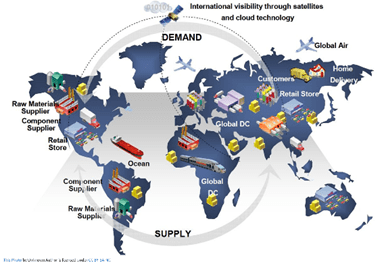
Order creation & fulfilment is a process that underlie the two (2) basic tasks of our enterprises:

  1. Create demand
  2. Fulfil it

It is a good starting point to study for improvements in our supply chains. 

About Ellery’s Essays

What Problems Will AI Solve?

The debut of artificial intelligence (AI) applications like ChatGPT in late 2022 ignited viral media firestorms around the world. AI is no longer science fiction.  It is here.  It has arrived.  It is on our fingertips, demonstrating its power and ready for our use. 

With AI apps like ChatGPT, we can use our devices (i.e., smartphones, desktop computers, tablets) to draft our emails, chat online fluently in multiple languages, and write programming code.  Sooner or later, if not already, AI could help us write books, compose songs, experiment with new chemical formulae, draw up architectural plans, design new fashion attire, book our travel itineraries, drive our cars, and interview applicants for employment.  The potentials for AI are endless and needless to say, it’s making us either very excited or very uneasy about the future of our careers and our cultures.

For those of us who are operations professionals, the opportunity for AI is not far-fetched but huge.  We will soon, if not already, be able to use AI to drive our supply chains.  AI could capably automate supply chain functions from purchasing, inventory control, production planning, to logistics.

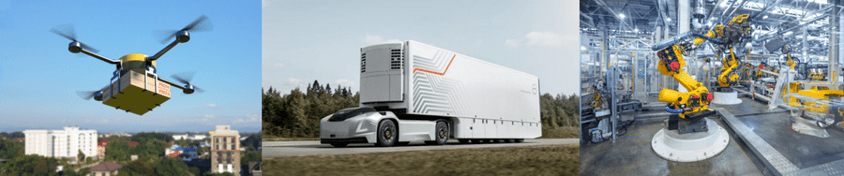
We might in our lifetimes see AI-driven supply chains supported by automated facilities & autonomous vehicles.  Merchandise would flow with minimal, if not without, human intervention through robot-equipped factories.  AI software would input sales orders, generate pick lists, plan routes, and dispatch self-driving trucks & drones to deliver products to customers.  AI could also supplement Enterprise Resource Planning/Materials Resource Planning (MRP) software to formulate purchasing & production plans which would automatically trigger procurement orders & manufacturing schedules.  

And while AI drives the supply chains, we who may still be called supply chain managers would monitor & remotely oversee operations online from our offices & homes.  Interventions would be limited to equipment maintenance, database & software updates, and once-in-a-while management overrides. 

AI might at some point in the future lead to the death of supply chain management.  AI could displace the purchasers, planners, and supervisors of supply chain operations and take away the need to employ supply chain staff.  The chief supply chain officer (CSCO) role would be a short-lived career which an AI program could render obsolete. 

What are the reasons we would embrace AI into our enterprises and supply chains? 

  • Would be it’s because AI is a new technology everyone is getting into and we should too? 
  • Are we afraid our competitors would have AI and we won’t? 
  • Do we fear we would lack the talent and skills in adopting AI such that we become outcasts? 

In 1981, IBM introduced the desktop personal computer (PC).  It wasn’t new.  Apple and other companies had already introduced their personal computers.  Because IBM did not fully patent the PC model, however, other manufacturers made available ‘PC compatibles,’ which came with cheaper prices and wide distribution.  By the end of the 1980’s, most households & businesses had personal computers on their tables. 

We were both excited and uneasy when desktop computers were rapidly coming into the market.  We were asking ourselves:

  • Did we need them? 
  • What happens if we didn’t buy one? 
  • How would it impact our jobs?
  • Would desktop PCs be harmful to our children?
  • Would we be left behind if we didn’t have one? 

By the 1990’s, desktop computers were ubiquitous appliances like television sets, fax machines, microwave ovens, & refrigerators.  If we didn’t have PCs and use word processors, spreadsheet programs, and dot-matrix printers, we’d not be keeping up with everyone else: 

  • We wouldn’t be able to provide or print word processing or spreadsheet files corporations or government entities would be requiring
  • We wouldn’t be able to quickly prepare presentations in formats our bosses or customers would be expecting

The popularity of personal computers overrode any fears or anxieties.  Not having a personal computer (or in the 21st century, a personal computing device like a smartphone, tablet, or laptop) is out of the question.  We would hardly be able to live or work without it.  Personal computing devices are no longer luxuries but are needs. 

We could argue the same kind of thinking about artificial intelligence.   It’s a new technology we should seriously consider adopting, at least, be updated with.  If everyone is on the verge of using it, we should be ready too, at least to learn the basics of it.  Because if we don’t, we risk falling into the same trap of being left behind. 

That doesn’t stop us, however, from asking similar questions we had about personal computers: 

  • Do we need AI? 
  • What happens if we don’t buy the AI hardware & software? 
  • How would AI impact our jobs?
  • Would AI be harmful to our children?
  • Would we be left behind if we didn’t have AI? 

There’s a chance AI will be become ubiquitous via the apps in our devices and via the transactions we make in the future.  So much so that AI’s potentially universal coverage may override what fears & anxieties we may have, just as the flood of PCs did in the 1980’s. 

Nevertheless, it pays to evaluate whatever new technology we are considering adopting. 

We didn’t, after all, just buy any PC in the 1980’s.  We determined what we would need a PC for.  Then, we compared models to look for the one that would best. satisfy our needs.  We checked the estimated lifetimes of different models. We studied how powerful the PC’s microprocessor should be, how much storage space we should get, and what peripherals (e.g., mouse, keyboard, stylus) will the device accommodate.  We weighed what software to buy and the technical support the manufacturer will provide.    And finally, we decided how much we were willing to pay versus the perceived value we’d be getting from the PC we want. 

AI requires information technology (IT) hardware & software.  If we are to adopt it into our enterprises and supply chains, we’d need to determine where it will be applied and what it would cover in terms of scope.  In short, we’d use a similar line of questioning as we used when we bought PCs in the 1980s. 

Where would we want to apply AI?  What AI programs would we like to have? What hardware would we need?  How compatible would the hardware be with our current devices?  What are our options for software?  What would be the estimated lifetimes of the hardware & software?  How much would it cost? 

Some of us learned the hard way when we bought personal computers just for the sake of having them on our desks.  Some ended up idle, to be later disposed of or sold.  Some we realised we couldn’t work with, because we didn’t have the right software or hardware—e.g., not enough hard disk memory, the wrong spreadsheet program.  We ended up realising that some of the PCs we bought weren’t suitable for the tasks they were intended to support. 

We could end up spending so much time and money investing in AI to also realise we didn’t get the right hardware & software suitable for our needs. 

In short, we might not match the AI we get for the tasks we want it to handle.  We didn’t answer critical questions.  We didn’t solve the problems we wanted AI to solve.

We, therefore, should not only ask ‘how do we embrace AI into our enterprises and supply chains?’  but instead, seek answers to ‘what problems will AI solve?

The fast-pace changes in information technology drive us to adopt new hardware & software such that we could benefit from new and modern innovations while we keep up with our rivals, if not with the times. 

We may be excited or anxious about AI, given its revolutionary potential to upend (if not eliminate) how we manage our supply chains.  But as much as we examine where we can apply it in our operations, we would still need to evaluate it as we do when we buy new devices or software.  That means we need to know what opportunities AI can exploit and what problems it would solve. 

AI is here, but we determine its destiny. 

About Ellery’s Essays

The Science Behind Management & Why We Need Engineering

In March of 1911, Frederick Winslow Taylor’s The Principles of Scientific Management debuted to the public.  It was the height of the Industrial Revolution in the United States of America.  Corporations were mass producing items and many Americans were employed in factories.  Mr. Taylor’s Principles couldn’t have come at a better time as when it did, it revolutionised the ways of management. 

The Principles of Scientific Management argued for the necessity of efficiency in the workplace.  Without efficiency, there would be no prosperity.  Employees, especially those in factories, had to be productive if enterprises were to be prosperous.  Taylor defined prosperity, or more fully “maximum prosperity,” as not only “large dividends” but “the development of every branch of the business to its highest state of excellence, so that the prosperity may be permanent.”  A business is prosperous when the workers are productive. 

With that in mind, Taylor proceeded with the four (4) elements which comprised the Principles of Scientific Management:

  1. “…develop a science for each element of a man’s work, which replaces the old rule -of thumb method;
  2. “…scientifically select and then train, teach, and develop the workman;
  3. “…heartily cooperate with the men so as to insure all of the work being done in accordance with the principles of the science which has been developed;
  4. “There is an almost equal division of the work and the responsibility between the management and the workmen.”

The Principles of Scientific Management stressed objectivity in job performance and in how we hire & train people but encouraged cooperation & recognition between managers & workers using science as a common ground. 

Although Taylor encountered criticism for giving the impression that workers were nothing more than machines meant to be tinkered & optimised, industries adopted his Principles and drove a cultural shift in how we manage our organisations.  As a result, over the next hundred years, we became more efficient and more productive.

We have evolved from the Principles.  We no longer use the term “scientific management,” but we rationalise our management methods with terms like “evidence management,” “big data,” “statistics,” and “data analytics.”  We apply “automation,” “lean thinking,” and in the 1st quarter of the 21st century, we have become enthralled with “Industry 4.0,” and “artificial intelligence.” If we think about it, all these terms, phrases, & buzzwords directly or indirectly emanate from Taylor’s Principles of Scientific Management.  Whether we like it or not, we are purveyors of what Taylor promoted for the progress of productivity. 

The Principles of Scientific Management spawned Industrial Engineering and Operations Management.  Industrial Engineers defined themselves as designers, developers, & builders of manufacturing systems & operations structures with the purpose of optimising productivity of workers together with their equipment.  Operations Management, on the other hand, rose as “the administration of business practices to create the highest level of efficiency possible within an organization. It is concerned with converting materials and labour into goods and services as efficiently as possible to maximize the profit of an organization.” Industrial Engineers stressed they are engineers while Operations Managers emphasised their roles as administrators of the activities essential to the value of their organisations’ products & services. 

But as IEs and OMs debate about their identities, those of us who are business leaders see both as change agents for improvement.  At work, we don’t split the difference between the two.  We only care that IEs & OMs optimise our operations as well as continually improve them. 

But the time has arrived that we should perhaps make the distinction between what is management and what is engineering. 

In 2023, the world was emerging from a global pandemic, the worst global disruption since the Second World War.  Supply chain management had suddenly become popular thanks to product shortages & service failures in which the pandemic impacted the flow of merchandise from sources to end-users.    Business leaders recognised supply chain management as a strategic pillar alongside marketing, finance, and people.  The supply chain had become a high-profile priority of organisations. 

We catapulted the supply chain to the top of our enterprise agenda because we could no longer relegate it to middle-level operations management.  We realised that supply chain management is not only about multi-operation integration & multi-enterprise collaboration but also about strategic interdependent interaction with functions such as marketing, finance, and human resources. 

Supply Chain Management is rooted in Operations Management.  It is a discipline that concerns itself with the operations that underlie the relationships that run between vendors, operators, quality control inspectors, logisticians, transporters, service providers, labourers, & customers. 

Industrial Engineers, however, also do a lot of work with supply chains.  Supply chains are obvious parts of the IE’s scope in the improvement of productivity.  Despite whatever perception that Industrial Engineering leans toward management, IEs are engineers who focus on improvements in systems & structures, like those that underlie supply chains. 

Frederick Taylor was a mechanical engineer.  He saw a need to improve workplace efficiency and applied his engineering background to do so.  The big challenge was to somehow standardise the work of human beings, given that we as individuals each have different physical make-ups. 

But he attempted anyway, and it resulted in workplace standards that were applied first to factories and then to other areas of industry, such as warehouses, hospitals, and transportation.  His pioneering work in establishing standards in time & motion efficiencies led to his publishing of the Principles of Scientific Management, and the birth of Industrial Engineering. 

I’ve heard critics say, however, that there is too much subjectivity in Industrial Engineering.  IE seems more based on empirical mathematics, in which IE seems to be more reliant on experience than on proven scientific theory.  Industrial Engineering methods also are seen as more art than science, less objective than what we would be in other engineering disciplines. 

Hence, some people say IE is not engineering.  It’s management that combines with engineering. It doesn’t help that some universities offer IE with course titles such as “Industrial & Management Engineering,”  or just “Management Engineering.”

In my mind, Management Engineering, Engineering Management, Industrial & Management Engineering are oxymorons.  An oxymoron is “a rhetorical figure in which incongruous or contradictory terms are combined.”  To put it simply, engineering is not management, and management is not engineering.  Putting together both as one term is a futile and silly attempt to mix one with the other.  Each are different from one another as apples are from oranges. 

Inspired from Taylor’s Principles of Scientific Management, Industrial Engineers started out as efficiency experts targeting workers to be more productive with their time.  IE, over the years, diverged from the basics of time & motion to expand to areas such as ergonomics, statistical quality control, facilities planning, and queuing theory.  As much as they influence management, IE is a field that isn’t management.  It is engineering that designs, develops, & installs systems & structures with the purpose of improving productivity, never mind if the math IEs use are more empirical than theoretical. 

Supply Chain Engineering stems from IE.  It expands from improvement of the individual workers’ relationships with their workplaces to groups of workers’ relationships within & between operations.  It derives from the applications of IE in which it focuses more on the optimal flow of merchandise & services from their sources to their ends. 

Whereas IEs are challenged to standardise solutions for individual humans in their workplaces, Supply Chain Engineers are challenged to standardise solutions for individual group operations and their links to others. 

The mathematics of SCE is therefore just as daunting, if not more, than it is for IE.  For as much as IEs work to optimise the productivities of individuals, SCEs attempt to optimise the productivities of supply chain operations. 

Many supply chains in the present day are inefficient and offer plenty of room for productivity improvement.  We can see these deficiencies or imbalances everywhere. Port facilities are either too slow, too overloaded, or are frequently underutilised.  Transportation, whether land, sea, or air, often experience constant uncertainties in lead times.  Storage facilities either have too much stock or are lacking in stock.  Factories either have too much excess manufacturing capacity or don’t have enough to keep up with demand.  

We can no longer expect supply chain managers, as operations managers, to improve our organisations’ systems & structures on top of ensuring the continuous flow of merchandise & services.  We as supply chain managers can’t pursue needed changes by ourselves. 

Engineering is not management, and we can’t do both as supply chain managers.  Frederick Taylor promoted science into how we manage our enterprises.  And more than a hundred years later, we face challenges to apply science in the continuous improvement of our supply chains.  To do that, we must partner with engineers to help us make those productive changes.  Engineers have the education and expertise to help us make that happen. 

We must realise that we can no longer manage supply chains to make them better. 

We need to engineer them.    

About Ellery’s Essays

Why We Should Ask More Questions

Eight (8) utility posts fell on a busy street at Manila’s Binondo Chinatown district.  The posts damaged cars and caused a power failure to commercial establishments.  The power utility company, MERALCO, however, immediately removed and replaced the fallen posts.  Power was restored within hours.  Business on the street returned to normal. 

That wasn’t enough for a Manila city councilor, however.  The councilor suggested a feasibility study to phase out electric posts in Manila’s Chinatown and replace them with underground cables.  A Philippine lawmaker also proposed the laying of underground cables all over the country.  “This multiyear undertaking is, I believe, the appropriate solution to end the repeated isolation of coastal towns and remote islands often in the path of typhoons,” the lawmaker said.

We, not only politicians, have a penchant for proposing quick solutions whenever an issue crops up.  We then suggest experts, such as engineers, study and carry out whatever the solution would be. 

We as humans have two (2) common tendencies:

  1. We immediately find answers to questions or solutions to problems, never mind if we didn’t really examine the question or problem thoroughly beforehand.
  2. We justify our answers and push our solutions but we delegate other people, like engineers, to make whatever the idea into reality.

We don’t ask enough questions when an issue arises or whenever we think we have a good idea.  The idea is ‘good’ because we think it’s so.  It makes sense.  It’s creative and innovative. We should do it. 

But does the so-called ‘good’ idea resonate with your criteria or priorities, or with what are important for the people the good idea is supposedly for? 

The Philippine Department of Natural Resources (DENR) led construction of an artificial beach on Manila Bay on August 2020.  From the Cebu island hundreds of kilometres away, the DENR dumped sand & crushed dolomite by the bay’s seawall.  The beach was opened briefly on September 2020 but the DENR delayed completion until the end of the year.  Typhoon and trash kept the DENR busy working on the beach for months after.  Tourists visiting the beach are not allowed to swim, only to stand on the beach. The DENR argued that the beach was meant to be part of a coastal defence and environmental restoration project.  Critics say it’s a waste of taxpayers’ money, not to mention the damage done to the environment where the dolomite was mined from. 

The dolomite project is an example of a solution that didn’t solve a defined problem especially one which would be consistent with the government’s priorities.  The proponents apparently didn’t give enough study to what the environmental problems of Manila Bay, instead implementing ideas which turned out to be questionable.   

The dolomite controversy is an example of why it doesn’t hurt to ask more questions whenever we face an issue or we start work on a problem.  The problem-solving process starts with understanding what the problem really is about.  What are we experiencing from this problem?  Where is it coming from?  What’s causing the symptoms we are observing?  What data should we collect?  What does our analysis say? 

Understanding a problem leads us to better defining what we believe would be the true problem.  We can define a problem by posing it as a question, such as, for examples: 

  • ‘In what way can we prevent utility posts from collapsing without warning?’
  • ‘In what way can we mitigate the symptoms of this disease?’ 
  • ‘How can we better secure and protect vehicles on city streets?’
  • ‘How can we respond faster to accidents in our city?’ 
  • ‘How can we improve the environment of Manila Bay?’

We need to remind ourselves, however, that whatever definition we make of a problem, we should be prepared to edit it as we gather more information and weigh it versus our criteria, as well as that of who would most benefit, if not would be most affected, from it.

We also don’t delegate solutions to experts, like engineers.  Engineers are not executioners, they are problem-solvers.  If we are to seek help from engineers, we must enrol them at the very first stage of the problem-solving process: understanding the issues

We engineers work best when we participate in any problem-solving process from the beginning.  That’s what we engineers do, after all; we solve problems.  As much as anyone can have a good idea, we utilise a fraction of our talents when we simply are asked to make any idea into reality. 

We engineers study problems first before entertaining ideas as possible solutions.  We ask questions, we assess, we understand, and we define the problem.  We check if the problem has bearing with the criteria and priorities of stakeholders or clients. And only after all these, do we begin seeking and examining ideas. 

We all have what we believe are good ideas.  We see a few entrepreneurs succeed and make lots of money from their ideas.  We want to be like them so we try to promote our ideas too.  Because we think our ideas are good, we push them for acceptance and when we think we have it, we delegate them to experts like engineers to execute them. 

For every so-called good idea that succeeds, there are likely many that have never gotten off the ground or failed at a later stage.  And this is because:

  1. We didn’t ask enough questions to define clearly what problems we are solving and what would be their worth solving them.
  2. We don’t involve experts, like we engineers, at the very start of the problem-solving process. 

Let’s not be afraid to ask more questions.  And let’s not hesitate to enrol the expertise of others at the very beginning of solving a problem.

About Ellery’s Essays

Why We Need to Ask More (Right) Questions

We ask a lot of questions.  But which questions do we choose to answer?  Which questions do we delve into?  Which questions become the bases of our lifetime quests?   

Both words, ‘Questions’ and ‘quests,’ have a similar origin:  quaerere, to ask, seek. 

What we seek depends on what we ask.

And the first things we should ask are:

  1. Have we asked questions relevant to what we seek?
  2. Have we asked questions relevant to what our audience, customers, clients, superiors, subordinates, and peers are seeking? 

How we proceed in our quests count on the answers to these two (2) questions. 

We have ‘Aha!’ moments every day.  The ‘Ahas’ are insights to our observations or experiences.  These insights lead us to answers to questions we have been thinking about. 

Then again, some may not.  We sometimes have insights which we have no questions to match.  We end up looking for the questions these insights answer.    

Nevertheless, we try to cultivate some of our insights into reality.  We like to think some insights are inspirations toward new designs or inventions, which we could reap rewards from.  We build products and offer services which we advertise as innovative and which we count on to boost our wealth and esteem. 

Many inventions from insights, however, end up as failures because we did not connect them to problems relevant to our priorities. 

But we don’t accept failure at once.  As one insight fails, we look for another.  We try again, only to fail once more to connect the insight to a problem that’s related to our quests.  We don’t realise that it’s futile to work with solutions which don’t address issues that are of interest to us.  It’s like putting the cart before the horse; the solution either goes nowhere or remains motionless, no matter how much we push it. 

Sometimes, however, we get lucky; an insight we make into reality somehow prospers.  We find a connection which we or our audience didn’t see at first but realised was there all along. 

An example is Velcro®, invented by Swiss engineer, George de Mestral. Mr. Mestral invented Velcro’s® multiple hook & loop fasteners after wondering how cockleburs got caught on his pants while he was on a hike.  He introduced the product, and it became immensely popular.  Most people at the time didn’t realise they needed Velcro®, until they saw the benefit of a fastener that could easily stick & unstick things like pockets together. Velcro® became a solution to fastening things together where buttons & clasps would be more cumbersome or difficult to use. Velcro® was fortunate to succeed even though it didn’t have an obvious problem to solve when it made its debut.   

The example of Velcro®, however, should not be a reason to pursue insights without first asking questions.  As much as we seek ‘Aha!’ insights, we should also ask ‘Aha!’ questions.  Velcro® motivated Mr. Mestral and its users to ask what it can be used for.  They experienced their ‘Ahas!’ when they discovered the questions Velcro® answered, as in how to easily stick and unstick things where a button, clasp, or glue wouldn’t be feasible (e.g. inside pockets of bags, roll-up straps)

Would we create & innovate better if we first asked the questions before finding the answers? 

The following is an example where this might be the case: 

Mosquitoes infect thousands of people with deadly diseases (e.g., dengue, zika, encephalitis, malaria).  Epidemics of mosquito-borne diseases cost communities millions of dollars in health care annually, not to mention they sicken & kill many people.  Communities and governments have conducted numerous programs to rid their environs of mosquitoes, which consisted mostly of spraying pesticides, laying traps, and cleaning sewers & waterways.   

Since 2016, the World Mosquito Program had been initiating a drive to infect mosquitoes with Wolbachia, a bacteria that inhibits the dengue virus. It was found that dengue illnesses were 77% lower in Wolbachia-treated communities than in others.  The bacteria also showed promise in inhibiting other mosquito-borne viruses. 

The WMP figured out that the problem with mosquito-borne diseases wasn’t the mosquitoes; it was the pathogens. They directed their efforts towards on how to defeat the pathogens, not the mosquito populations.  The organisation, as a result, came up with Wolbachia, which targeted the virus behind dengue and discovered its efficacy can potentially extend to a wide range of pathogens.  The WMP is on a long-term campaign to introduce Wolbachia-infected mosquitoes in communities around the world. 

We welcome insights like Velcro® and find the questions where we can apply them to.    But we should also be asking questions so that we can formulate answers which hit what we’re targeting.  These include questions such as the World Mosquito Program’s asking how to eliminate the pathogens and not the carriers, the mosquitoes.   

By our nature, we don’t ask too many questions as much as we come up with too many answers.  Chalk it up to peer pressure or the daily constant rush that comes with our work ethics or cultures.   Whenever we face a problem or a question, we try to answer them immediately.  We don’t like to leave things hanging.  We don’t like to have too many things on our plate.  We don’t like unsolved mysteries.  We brainstorm ideas so we’d have options and then we choose which looks best as a solution so that we can move on.  

We see this mindset in many organisations.  A manager raises a problem; the boss calls a meeting.  The problem dominates the meeting’s discussion, the attendees throw ideas on the table, and the boss proposes, decides, & approves a solution.  The boss assigns persons to draft action plans and approves resources for the solution.  The meeting adjourns. A few months later, another (possibly similar) problem emerges, and the process repeats itself:  another meeting, another discussion, another solution, another hit & miss set of action plans. 

We strive to find answers, despite not asking enough questions, more specifically, the right questions, the ones which would lead to answers that matter to our goals and our priorities.  Instead, because we work on so many ideas as answers, we often don’t clarify what we are truly seeking.  We don’t find the best answers because we didn’t bother to ask the right questions. 

We pursue ideas and insights rather than ask questions because we believe that the latter will follow as soon as we innovate and invent via the former.  We don’t like asking too many questions because we don’t want to be anxious to answer them all.  Dwelling on questions makes us uncomfortable and insecure as we fear not finding the answers. 

We, however, can look at asking questions as an exploration, a journey of discovery.  The more questions we ask, the more informed we become as we gather and analyse data.  When we ask, we seek to understand, to appreciate the scale and scope of what lies behind the questions.  The more we seek to know, the more things become clearer, the more we can focus on root causes, the more we can relate to what we’re asking to what are important for us.  Asking questions and not being afraid to ask lead us to more ‘Aha!’ moments, even if these lead to more questions than answers.    

Asking questions opens doors which lead us to more doors.  We can either worry about all the doors to open or we can delight with the discoveries we will find from opening them.

When one door closes, another door opens; but we often look so long and regretfully upon the closed door that we do not see the ones which open for us.”  –Alexander Graham Bell

We need to ask the right questions if we are to find the right answers, the ones that will determine how we progress in our quests

This is my 200th essay.  It is, therefore, fitting that I ask:

Have I asked as many questions as I’ve offered answers in the two hundred (200) essays I’ve published? 

I submit that I did not.  I confess I offered more answers and insights that not necessarily had questions to match. 

We all have roles to play, causes to champion, and jobs to do.  In my case, on top of my responsibilities, I have more essays to write.  And in so doing, I should discover more questions to ask, and see where they lead, hopefully to answers which not only make sense, but also will help us.

About Ellery’s Essays

Enforcement is Not Necessarily a Solution

City traffic in Manila, the Philippines, is downright horrible.  Driving a car in Manila is an adventure in patience and civility.  It’s hard to be a nice person when we compete for road space in this city’s congested streets. 

Metropolitan Manila, formally known as the National Capital Region, is the urban centre and capital of the Republic of the Philippines.  It includes the old city of Manila itself and surrounding cities & towns.  Many private and public organisations base their headquarters, offices, and operations in the NCR.  Thus, it comes to no surprise that Metro Manila has a daytime population estimated of up to fifteen (15) million people.  Metro Manila’s urban density is estimated at 42,857 people per square kilometre, much higher than that of Mumbai (23,000/sq km), Paris (20,150/sq km), and Tokyo. (10,100/sq km).  (ref: https://worldpopulationreview.com/world-cities/manila-population)   

Over the years, those of us who are Manila’s denizens have seen countless ideas put into play to solve the city’s traffic problem: 

  • The national government built new roads & bridges, and installed traffic lights, closed-circuit television cameras (CCTVs), & flood control equipment.
  • The government’s lead agency, the Metropolitan Manila Development Authority (MMDA), introduced one scheme after another, consisting of ordinances & regulations, to enforce discipline among motorists.  These include:
    • a number coding law which banned private vehicles one day every week based on the last digit of their license plate number
    • a ban on heavy trucks during morning & evening rush hours
    • a ban on the use of mobile phones while driving
    • Exclusive lanes for public buses at main roads and dedicated lanes for motorcycles & bicycles
    • Deployment of hordes of traffic cops at busy intersections, who also were given authority to flag down & ticket motorists. 

While politicians trumpeted these initiatives, they hardly made a dent on traffic.  We still find ourselves spending up to four (4) hours a day driving an average of ten (10) kilometres to and from work.  For those who take public transport, a commute that would take an hour or less would be negated by up to another hour of waiting in line at bus and train stations.    

Traffic goes from inconvenience to nightmare when streets get flooded from heavy rains, lights fail due to power outages or glitches, or when enforcers simply give up directing traffic at busy intersections.  The gridlocks that ensue result in we motorists getting stuck for more hours on the road and commuters stranded at stations or ending up walking up home. 

Many of us believe enforcement is the best solution to Manila’s traffic problem.  We point to undisciplined drivers for the cause of traffic. We get annoyed seeing cars parked where they’re not supposed to.  We are irritated at motorists running through red lights.  We shake our heads at drivers not stopping to allow pedestrians to cross. We scream at cars who block the flow of traffic at crossings.  If only traffic cops would flag down these errant drivers, if only there would be enforcement of rules, we would be able to solve the traffic problem. 

But somehow enforcement, no matter how much the politicians and the police try, does not seem to work. No matter how many enforcers are there, no matter how many tickets are served, the traffic gridlocks fester.  We remain in despair that we will get stuck for hours whenever we foray into the city.    

Authorities blame us for the traffic woes.  We motorists are stubborn, undisciplined, disobedient, and disrespectful.  We are accused of corrupting traffic cops and violating rules for our own ends. Those of us who are public transport drivers don’t follow road signs or stop at stations.  

We should be threatened with higher penalties.  Enforcement is too lax; it should be stricter and we should be punished whenever we violate the rules.  More enforcement is therefore the answer, many pundits say.

And so it has been for Manila as traffic continues to worse, the MMDA enacts and applies more rules, more penalties, and more limits to discipline we ‘bad’ drivers. 

As much as the national government has built new freeways & bridges and expanded train lines & river ferries, the traffic remains a mess.  I’ve heard so-called self-proclaimed traffic experts agree with government leaders and authorities and label Manila’s motorists uneducated and immature.  We point fingers at each other for the problem.  Enforcement is very much needed. 

Saying that enforcement is an ultimate fix to Manila’s traffic is an example of how misguided we are in solving problems.  Solving problems doesn’t start with outright solutions. Problem solving is a process. It entails the following steps:

  1. Gathering information & understanding the issues
  2. Identifying root causes
  3. Establishing criteria to choose which root causes to address first
  4. Identifying the problem from the chosen root causes
  5. Laying out options as candidates for solutions
  6. Evaluating the candidate solutions via our established criteria
  7. Selecting the solution
  8. Developing the solution as in formulating strategies, plans, & roadmaps
  9. Designing the program or prototype
  10. Experimenting by running a pilot program or building a prototype
  11. Implementing the solution (‘going live’)

Because we clamour for fast outcomes to complaints, we tend to look for quick and simple fixes without first studying what’s going on and pinpointing what to prioritise. (Politicians, for instance, insist on making master plans without determining root causes and what the master plan will address). We can’t solve problems without first defining what they are and in the first place, deciding whether they’re the ones we should be addressing.

We can trace Manila’s traffic to numerous root causes:

  1. Overpopulation
  2. Too many private cars; inadequate public transport
  3. Not enough infrastructure (i.e., roads, bridges, sewage)
  4. Poorly trained or too few enforcers
  5. No formal zoning of urban districts
  6. Overlapping authority from too many government agencies
  7. Lack of road signs & traffic lights
  8. Too many undisciplined & unqualified drivers

And these are just a few.  We can probably name more. 

Enforcement, as much as it is a possible solution, should not be considered until we first clarify which root causes we want to address. 

The problem we will define and solve is not necessarily the same as a root cause. Root causes are our jump-off point to gather & study data and as we get to understand what’s going on and evaluate versus our priorities, we sharpen our definition of the problem we intend to solve.   

Defining the problem brings us almost halfway to finding the solution.  When we have clarity as to the problem we want to solve, we find ourselves more creative and able to bring out ideas.  We develop our solution from those ideas, again from our criteria.  We experiment and invent.  And we make our solution into reality.

We who drive and commute in Manila have become very impatient in seeking solutions.  But we need to realise that solving the traffic problem requires stepping back, gathering information, and identifying & prioritising root causes to address before we can even study & evaluate ideas to mitigate the traffic mess. 

Unfortunately, every problem-solving process takes time. We can surely insist that for the meantime, whoever is in authority should just work harder to enforce existing laws.  But we need to understand that existing methods won’t likely lead to significant improvements.  It would be better if we undertake a problem-solving process than to simply complain & demand for quick-fix solutions that won’t probably work.

And we who have lived in Manila for most of our lives know that quick-fix solutions never do really work.  A problem-solving process would no doubt be the best way to untangle the traffic mess, if not other problems we also encounter every day. 

About Ellery’s Essays

The Basic Tasks of Management vs. The Basic Tasks of Engineering

Management is the predominant means in how we run our organisations.  It’s been like that since the late 19th century, when we adopted capitalism into our society to cultivate the prosperity & wealth resulting from the Industrial Revolution.  Business was getting more complex when it came to all the money we were earning.  We needed to learn to manage the growing complexity.

We sharpened the meaning of management over time.  Management is essentially the administration of people & resources to achieve the goals of the enterprise.  Managers represented the ownership of enterprises, whether they were the stockholders of corporations, partners of firms, or the proprietors of small businesses.  Whereas the role of the owners is to lead, or at least provide direction, managers do the job of planning, organising, directing, & controlling.  Managers are the procurers of resources, the representative negotiators, the disciplinarians, and the planners & implementors of strategy. 

We’ve applied management to our supply chains in the same way we applied it to all other business functions.  We set goals, defined performance standards, and ran after our people to accomplish & comply with them. 

We learned, however, that we could do only so much in managing supply chains.  We can only do so much with existing supply chain structures & systems.  If we are to improve supply chains, we needed to re-engineer them, as in either replace parts of them, or rebuild all of them. 

We engage engineers for projects which require scientific & technical prowess.  It’s been argued that we as managers don’t have the expertise to change systems or structures. 

Many of us who are managers have degrees in engineering, and those of us who do have exercised our engineering talents in our day-to-day jobs.  But our scopes of work as managers, what with all the pressures and distractions, make it difficult for us to double as engineers.

Yet, we try.  Not only because we have the educational backgrounds, but because our superiors expect us to do so.  As much as management is about planning, organising, directing, & controlling, our superiors also expect us to improve the systems & structures we oversee.  It doesn’t matter if it’s not exactly specified in our contracts or job descriptions, our superiors expect us to initiate & make better what we manage. 

Engineering is the application of scientific & technical knowledge to the design, development, & establishment of systems & structures.  In short, engineers are problem solvers and builders. 

There are a multitude of engineering disciplines.  Civil, mechanical, electrical, chemical, industrial, nuclear, environmental, petroleum, software, aeronautical, just to name a few. 

Most, if not all, engineering disciplines take off from the natural sciences.  And all engineers apply a lot of mathematics in their work.  Mechanical, civil, & electrical engineers apply the principles of Physics.  Chemical, petroleum, & metallurgical engineers build from the science of chemistry.  Environmental & biomedical engineers take off from biology and the medical sciences. 

For many of us, who are engineers by degree, we try to apply our engineering education when we became managers.  We try to apply science in how we improve our operations.  We try to be scientific in solving problems, especially supply chain problems.

And we learned that we can’t.  And why we can’t is because our roles as managers require us to spend much of our time in:

  1. Planning:  e.g., developing strategies, defining objectives;
  2. Organising:  e.g., listing priorities, making & filing reports, ensuring proper housekeeping;
  3. Directing:  e.g. communicating & delegating assignments, clarifying roles, setting work pace targets;
  4. Controlling:  e.g., addressing deviations, enforcing discipline. 

Doing these basic tasks of management doesn’t give us much time to solve problems.  And that is also because problem solving is a big task.  We can try to be engineers, but we learn by experience that it’s not simply part of our scope.

Problem solving is the engineer’s job.  And engineers do it by the following basic tasks: 

  1. Designing:  i.e., defining the problem, establishing criteria, identifying candidates as options for the solution;
  2. Development:  e.g., drafting the design, building & testing prototypes, experimenting with options, determining costs & benefits, selecting & proposing the solution;
  3. Installation: e.g., drafting the detailed design specifications, scheduling & executing trials, troubleshooting, deployment, go live, writing the manual;

Engineering by itself is a full time job much different from management.  Even as much as we want to be both managers and engineers, we can’t.

Managers plan, organise, direct, & control.  Engineers design, develop, & install.  Managers oversee and administer.  Engineers solve problems.

We can be engineers by education but we can’t manage & engineer at the same time.   

About Ellery’s Essays