Many entrepreneurs have invented all kinds of applications for a variety of uses. We have apps to help in our finances, make music, learn new languages, find places we’ve never visited, make reservations, book rides, and buy tickets.
The one app we (still) don’t have is the one that makes & delivers products. I wouldn’t be surprised if there is some wannabe upstart group of technical geniuses developing a killer app which could do that.
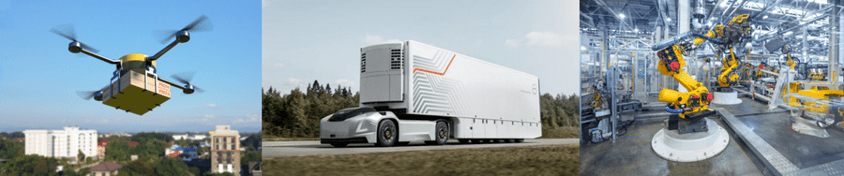
There are, however, app-driven devices in the market which come close to executing production & delivery. Drones, self-driving cars & trucks are already shipping goods to far-flung places and would perhaps be bringing packages to our doorsteps within the 2020s decade. Industrial robots are already ubiquitous fixtures in factories and it’s probably just a matter of time before artificial intelligent (AI) software will be automatically programming them to design & fabricate items on their own.
We can foresee self-propelling supply chains, managed remotely, where AI driven devices plan & execute operations in fully automated manufacturing & logistics facilities and at the same time, dispatch driverless vehicles to deliver items locally & worldwide.
This is what we may define as the ultimate of a digital supply chain. Everything is done via keyboards, mouse clicks, & virtual reality (VR) headsets, with the autonomy of app-driven AI devices running the show.
We see this scenario and make it our vision. We justify its benefits in terms of the breakthroughs we will gain in productivity and customer service. We love the idea that AI-driven automated supply chains could tackle day-to-day issues we would no longer need to sweat over.
A vision of an AI-driven automated digital supply chain would become our basis for our operations management’s missions, objectives & strategies, if we’re not already adopting it now. We cannot hesitate to venture. Otherwise, others, our rivals especially, will overtake us and we’ll be left behind.
We who are subordinates of leaders who mandate such a supply chain vision would be expected to be disciples. Leaders would assume we accept the vision wholeheartedly and work hard for it.
How realistic, however, is such a vision?
Supply chains aren’t really like chains consisting of singular interlocking links. Rather, they are made up of multitudes of operations fostered by relationships with independently owned organisations or individuals. No one organisation or individual dominates any supply chain. It is improbable, if not impossible, to find a supply chain run exclusively by one entity.
Not that anyone has tried.
There are enterprises, particularly multinational conglomerates, who have been attempting to take total control of entire supply chains, from start to end.
Automotive corporations like Toyota and General Motors have bought stakes in suppliers of critical components & spare parts and have shown interest in the mining & processing of raw materials, especially those needed for electric vehicles (EVs).
Behemoth retailers like Walmart and SM dictate contracts & set non-negotiable policies with vendors, who either comply or face ouster in favour for other eager alternatives.
Consumer giants like P&G invest a great deal in downstream distribution channels to monitor & manage the retail presence and the resulting market shares of their products.
Apple manages supply and distribution of its product lines from its contracted assemblers to its many famous Apple stores around the world.
Amazon has formed its own transportation fleet of trucks & airplanes (and drones and soon maybe, ocean-going container ships) in parallel with 3rd party providers (e.g., UPS, FedEx) to deliver items globally.
ExxonMobil’s supply chain begins from the exploration & drilling of crude oil & natural gas to the refining & shipping of petroleum products to retail stations and industrial customers. ExxonMobil’s reach is global from drilling platforms, tanker fleets, to refineries around the world.
But no matter how powerful they are, enterprises such as conglomerates do not have 100% dominion over their supply chains. There will be the equipment vendors who ExxonMobil executives will still need to negotiate with to operate the oil rigs. Apple has to renew partnerships with outsourced contractors to assemble its iPhones, iPads, and Mac laptops. Amazon depends on book publishers and name-brand suppliers for the many products it sells on its e-commerce platform. P&G must maintain relationships with commodity vendors to ensure continuous supply of ingredients for its consumer products. Walmart and SM depend a great deal on last-mile land transportation providers (truckers) to shuttle goods from distribution centres to their outlets.
As elegant and cool a supply chain vision may sound coming from any powerful corporate executive, it can’t be fully realised unless all links are at least amenable to it.
Executives of greatly perceived power may try to bypass any stalwart individual who represents an obstacle to their vision. Apple, for example, tried to make its own chips for its products but instead, ended up (probably reluctantly) negotiating a multi-billion-dollar supply contract with Qualcomm.
A vision of a digital supply chain where most, if not all, activities are automated is nice to see and hear. But first things first, everyone must be on board to it.
Supply chains aren’t meant to be empires led by oligarchs or autocrats. They represent relationships between enterprises. As much as there may be very influential individuals in those links, how they and the links relate to each other shall determine how successful they can form a unified vision.

