Working What We Have vs. Changing What We Work With

We who are supply chain managers have their hands full doing their jobs.  The problem is we work with what we only have.   Executives of enterprises determine our scopes; executives also decide what resources & assets we will have at our disposal or have authority over. 

Supply chains extend beyond the borders of enterprises, and this is one key reason why our supply chains are dysfunctional.  We are limited to working within our scopes and in what we have.  Executive strategic policies govern the relationships we have with those outside the jurisdiction of the enterprise, i.e., vendors, customers, & service providers. 

To build or improve supply chains, we need engineering, not management.  We who are engineers are tasked to solve problems without working with we have.  We determine what we need to work with and what resources & assets enterprises need to procure and invest in.  

Engineers build new structures & systems.  Managers work within existing structures & systems. 

When it comes to tasks, supply chain managers look at what’s happening in their operations and plan, organise, direct, and control the people, resources, and assets they oversee. 

Supply chain engineers, on the other hand, don’t oversee or supervise.  They assess the conditions of people, assets, and resources and figure out how to boost the productivities of each and all.  Engineers don’t limit themselves to what’s there but instead, study what can be added or changed. 

Supply chain engineers become more worthy when they tackle issues.  Whereas supply chain managers quick-fix or implement short-term remedies, supply chain engineers define problems and design long-term productive solutions. 

Improving supply chains is about changing what we work with. 

About Ellery’s Essays

Shifting the Supply Chain Management Paradigm

Supply chains consist of interdependent relationships within and between enterprises.  No one enterprise dominates an entire supply chain, though many have tried.  And because we who work in supply chains participate in these relationships, we need to learn to work with each other, if not together. 

We, therefore, require a paradigm shift. 

Most of us have the idea that managing supply chains means managing the operations within the walls of our enterprises.  We call vendors and customers ‘partners,’ but they are outsiders to us.  We treat vendors as sources we negotiate with so we can procure needed materials, ingredients, parts, or components.  Customers are parties we aim to win over so that they will buy our products & services at profitable prices.  Other than that, they are nothing more. 

The paradigm of supply chain management is to improve the productivity of the enterprises we work in.  Negotiation and collaboration are means to benefiting the ends of our enterprises. Good, if we get win-win results, but we wouldn’t care that much, if we ended up as winners and our partners did not.  What’s important is we meet our targets, not so much theirs. 

And this is why supply chains are far from perfect, which is an understatement. 

Our supply chains are not optimal; they are far from productive.  We can dare say they are dysfunctional.  Or to put it more succinctly, they are all one downright mess.   

Apple has been the model of supply chain management excellence.  The company develops and rolls out iPhones, iPads, and Macs in seamless fashion from its vendors & contract manufacturers to its retail stores and direct buyers.  Yet, Apple products are never 100% available.  Buyers in some countries need to wait, sometimes for weeks.

Amazon, another supply chain ‘star,’ serves orders completely as fast as one day.  Amazon’s order portal doesn’t allow us to order an item which is out of stock, so any demand for an unavailable item remains unfulfilled.  We praise Amazon’s e-commerce excellence, but its supply chain doesn’t necessarily deliver what we want when we want it.  It never fulfils demand. 

We don’t get what we clamour for.  We have either too much inventory somewhere or none someplace else.  Products take too long from manufacturing to distribution.  Customers complain about quality, and we do too to our vendors.  High prices are constant headaches for everyone along the supply chain. 

We blame our suppliers, logistics service providers, and freight transporters for delays and our customers finger-point us as well.  On top of all these, we are at the mercy of government red-tape, seaport congestions, and all kinds of disruptions (e.g., calamities, labour strikes, wars, new competing products). 

The paradigm of supply chain management is we work from within our enterprise’s operations.  And as a result, we have impaired and unproductive supply chains. 

The new paradigm is to work from without. 

Ideally, that would mean we who are the links in our supply chains should work together starting with common goals; goals that would be shared from the sources to the final buyers. 

In our real world, where we are under pressure to deliver for the enterprises we work for, such a paradigm shift would be a tall order. 

But I believe it can be done. 

We just have to start thinking from a different perspective. 

About Ellery’s Essays

The Last Squirrel

There was a time when every early morning, I’d see a family of squirrels scamper on the treetops above our yard.  The squirrels would leap from one branch to the other, from one tree to the next, searching for something to eat.

The squirrels ate anything they’d find edible, from small fruits & seeds to leftover food our pet dogs & cats may leave behind.  It was kind of a daily morning show to watch as many as four squirrels scamper overhead as I did my outdoor routines. 

Sometimes when I drove off to work, I’d see a squirrel walking tightrope along a telephone cable just outside my home.  The neighbourhood was the squirrels’ habitat; they had no boundaries. 

I see only one (1) squirrel nowadays, a juvenile, I think, because of its relatively smaller size.  The others were gone, presumed dead.

A neighbour told my sister he trapped and killed squirrels recently.  They were pests, he said, because they ate the fruits from his trees.

The government’s Department of Natural Resources (DENR) secretary in 2020 stated that squirrels seen around the city were an invasive species; they didn’t belong in our neighbourhoods.  The DENR believed the squirrels escaped from some irresponsible individuals who smuggled them in from faraway places and kept them as pets.  The squirrels displace and endanger species endemic to the area as they compete for food otherwise meant for local animals.    

The DENR, therefore, labelled squirrels as a threat.  They were not to be approached as they carried viruses and germs.  They were better off exterminated.  As much as they looked cuddly with their cute eyes and bushy tails, the government warned the public not to feed or care for them.  They were unwanted and undesirable. They were better off dead.  There lied the logic of my neighbour who trapped and killed squirrels. 

We consider rats, mice, and most insects as pests.  Some birds, our dogs & cats, are also invasive species; they didn’t originate from my neighbourhood or even my country. Most of the poultry and livestock local farmers raise also came from other countries.

Every night, bats wake and fly to partake of the budding fruits and insects of our neighbourhood’s trees.  By day, they sleep upside down on tree branches or in crevices.  The trees don’t mind them, more like they welcomed them as bats help pollinate the flowers which bring about the fruits. 

We also have bees, wasps, and various flies (e.g., dragonflies, butterflies, houseflies) buzzing in our yard.  The bugs don’t bother us as long as we don’t bother them. The birds eat many of the bugs and so there are many bird species that reside in our neighbourhood. 

The cats that live around my neighbourhood do capture and eat some of the birds and any unlucky rat or mouse.  But I feed the cats enough food to discourage them from hunting the wildlife. 

There are also frogs, lizards, salamanders, and snakes which we see occasionally and which hunt down bugs and rodents.  We leave them alone, though I’d hear a scream now and then from someone seeing a snake. 

Our yard is an active ecosystem.  The wildlife happily live in our yard and we likewise happily live with them.  Exceptions are the rodents and bugs (e.g., thermites, mosquitoes) who stray into my home; I pay an exterminator to get rid of them as soon as possible. 

Why, then, is the DENR singling out the squirrel as an unwelcome species?  We can see the good intention in warning us about the dangers of adopting squirrels as pets; otherwise, it seems unfair to classify them as invasive or harmful given all the native and no-so-native wildlife living all over the place. 

It’s a given wildlife species migrate from place to place. It has been a part of the evolutionary history.  It’s natural.  Even we humans do a lot of migrating. 

It’s understandable if we intervene to stop a species from wiping out another.  Like killing rats to stop them from hunting down rare birds.  Or spaying cats from multiplying to unmanageable numbers.

Squirrels, however, are wildlife.  They are far from being pets.  They live in the trees, and they take & eat only what they need.  They are prey to predators just like other wild animals in our neighbourhood.  They don’t bother the birds and they even eat pests like coconut-tree-eating beetles. 

Squirrels are not invaders.  They may be uninvited guests, certainly, but they had brought no harm to my neighbourhood.  They, in fact, made my mornings more enjoyable as I had looked forward to seeing them. 

The ignorant neighbour who trapped and killed squirrels didn’t want to share the fruits of his trees, never mind that other wildlife partook of them when he wasn’t noticing.  He’d probably kill more wildlife if he found out.

The DENR secretary who classified squirrels as dangerous is also clueless of what the squirrels had contributed in the way of enriching my yard’s ecosystem.

I sigh at that one last squirrel I in the morning and I treasure every glimpse I could of it.  Maybe someday, the squirrels would return; I’d look forward to it. 

About Ellery’s Essays

Climate Change vs. Pollution:  Collaboration Comes First

When I was in elementary school, I had an assignment to write & present a report on pollution.  It was the 1970s and pollution was a global issue; politicians and the press were talking about it as a crisis that needed to be addressed. 

My report to the class explained what pollution was and I made recommendations on how to mitigate it.  I concluded that there were trade-offs in combating pollution; either we slowed the speed of economic progress or face the spectre of dirtier air, water, and land.

Pollution is the contamination of our environment, rendering natural resources as harmful for consumption or incompatible for utilisation.    

In my school report, I named three types of pollution: air, water, & land.  In the years after, we have included two (2) more:  light pollution and noise pollution.  Air, water, & land pollution directly impacts our natural resources, while light & noise pollution hinder our enjoyment of the environment.  

These five (5) types of pollution as named are self-explanatory, but let’s look at each anyway:

Air pollution is the contamination of the atmosphere.  Smoke, and its derivative, smog, are typical examples of air pollution.  The release of noxious gases and radioactive fallout are more extreme examples. We consider air pollution as anything that makes it hard to breathe, causes the sky to become hazy, or brings about bad odour. 

Water pollution is the contamination of aquatic systems, such as seas, rivers, and lakes.  Examples of water pollution are oil slicks, untreated waste dumped into sewers, and plain dirty water.  Anything that causes water to be less potable, less liveable for aquatic life, and not conducive for human enjoyment (e.g., swimming, boating, fishing) is water pollution. 

Land pollution is the contamination of our planet’s solid natural ground.  Examples are household trash scattered on streets, chemical seepages into the ground, and radioactive waste leaking from nuclear plants into adjacent land.  Anything that results in less arable topsoil or leads to land no longer accessible for occupation or use is land pollution.

Light pollution is the unwanted illumination of the night sky, in which the brightness of urban lighting interferes with otherwise would be a dark and star-filled sky. Light pollution disrupts not only our astronomical observations of stars & other heavenly phenomena but also, basically, our sleep cycles.  It’s hard to sleep when there is too much bright light. 

Noise pollution is the incidences of undesirable sounds, which via volume or pitch, disturbs us.  Noise disrupts what we would otherwise call peace & quiet interrupts whatever may be doing, hampering our productivity.  Boom-box music, honking cars, jet planes taking off, or neighbours talking loudly constitute examples of noise pollution. 

In the fifty years (50) since I presented my school report, nations had made progress against pollution.  Governments around the world had passed stricter environmental protection laws.  Cities have invested in measures which had led to cleaner air & water, and the preservation of natural lands.  Local communities enforce ordinances against noisy automobiles and even ban landings & take-offs of aircraft after certain hours.  Villages also have deliberately removed street lighting and banned neon-lighted billboards to preserve their dark skies at nights. 

Starting in the 1980s, however, we shifted attention to climate change.  We first called it global warming, in which some scientists guessed our planet was trapping heat and becoming like a greenhouse. It didn’t help a hole emerged in the ozone layer at the southern hemisphere which increased ultraviolet radiation (it thankfully closed years later). 

We renamed global warming to climate change, so that we understand the issue covers not only rising temperatures but shifts in seasonal weather conditions. 

Former United States Vice-President Al Gore put climate change on the forefront in his lead role in the documentary, An Inconvenient Truth, aired in 2006.  The award-winning documentary highlighted man-made threats to our planet’s environment and the need for united action and solutions.

We don’t hear much about pollution anymore.  Everyone is talking about climate change, in which politicians and the press alike say is a global crisis. 

The problem of climate change isn’t identical to that of pollution.  What we’re up against in climate change is deteriorating weather conditions, extreme temperature variations, and their effects on agriculture and habitats. Pollution is about the contamination of our environment and natural resources.  Both pollution and climate change threaten the inhabitability of our neighbourhoods, but both are separate problems, requiring solutions catered specifically to each.   

Which, then, is more important?  Climate change or pollution? 

We prioritise which problems to solve based on their urgency and their importance vis-à-vis what we value. 

Citizens of Northern Europe and island residents at the Pacific Ocean would, for example, likely place more priority toward climate change, as they have been front-line witnesses to fast-melting ice packs and rising sea levels, respectively. 

People living and working in big cities like Hong Kong, New York, and Los Angeles would probably demand more action against pollution, as they would be experiencing first-hand smog, smelly garbage, dirty water, noise, and constantly hazy and over-neon-lighted night skies.

We may try to solve both pollution and climate change simultaneously, but that approach would be in my view, wrong.  It would be a mistake to solve both problems as if they were one, because when we do so, we’d inevitably end up with half-baked solutions.

To cite an example, registering one’s automobile here in the Philippines requires exhaust-emission testing before the government’s land transport office grants a renewal of vehicle registration. Yet, I would always see diesel-engine vehicles on the road spewing black sooty smoke from their exhaust pipes.  Activists and politicians, meanwhile, clamour for action against climate change, demanding an end to fossil fuels as primary energy sources.  Ending fossil fuels may indeed eliminate smoke-belching vehicles in the long run, but it doesn’t address the problem straight away. We who continue to ride or drive diesel- or gasoline-powered vehicles would not experience any immediate impact from climate change initiatives against fossil fuels.  We’d still be breathing smoky exhausts while scientists or engineers experiment with alternative sources of energy for automobiles.      

Solutions to the climate change problem don’t directly address the ones of pollution and vice-versa.  Climate change’s causes are rooted in how our atmosphere is changing and affecting seasonal weather.  Pollution’s causes are basically contaminants.  We can stop contaminants leading to pollution and that may help mitigate climate change or we can minimise man-made contributions to the altering of our atmosphere which may also help versus pollution.  Each approach may positively affect one or the other, but it does not really solve the other’s problem at least on target.    

To stop pollution, I recommended in my school report that we should slow industrial progress.  To stop climate change, we’d may need to do the same.  But how we do it for each won’t be.  On one hand, we can recycle to minimise land pollution from trash, clean & maintain our vehicles, upgrade our sewage systems, limit those garish neon lights at night, and turn down the volumes of the noises we make. On the other hand, we can promote renewable energies to reduce fossil fuel consumption and regulate the emissions of factories. We just need to keep in mind that one strategy for pollution doesn’t mean an ideal one too for climate change, and vice-versa.   

Where we live and what we experience determine our priorities versus pollution and climate change.  We won’t think about climate change if we’re living now with a lack of breathable air, potable water, proper sanitation, and peace & quiet.  We may not be placing too much focus on pollution if we were seeing the weather changing every year, watching our farm crops wilt as a result, experiencing more floods from rising oceans, and observing glaciers melt faster. 

We, however, can’t solve both problems simultaneously even if we may find common denominating issues in each.  But we can solve both problems together, as in collaboration via teams or communities

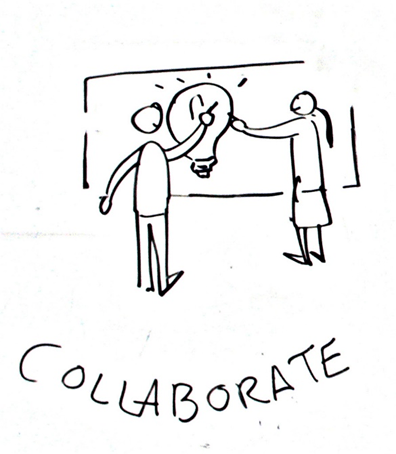
Collaboration is not about compromise or trading off one’s priorities for another. It is about synergy and developing win-win solutions.  It starts with sharing, such as information and assets, and requires open minds to other people’s views. Solutions come quicker when we join forces than work solo. 

We may differ in our priorities toward either pollution or climate change.  Both require unique solutions respectively and we can’t solve them at the same time optimally.  But we can make progress if we take the initiative to work together

About Ellery’s Essays

Pets Are Worth It…I Think

Having animals for pets help us stay healthy and happy.  Or so we say. 

My family household adopted four (4) birds, ten (10) cats, and four (4) dogs.  We clean the bird cages and feed the pets every early morning and late afternoon, with periods of snacks in-between. 

Our big dog, Lucas, always vies for attention.  He also is the pickiest when it comes to food; he won’t eat if he doesn’t like what we serve him.  But he pokes us when he does get hungry but won’t touch his food unless there’s a person there to keep him company.  He likes to play at unpredictable times, like anytime in the afternoons to the middle of the night.  He is, thus, a daily disruption to whatever we may be doing. 

The birds, two (2) lovebirds & two (2) parakeets, meanwhile, have their mood swings.  And they are often in a bad mood, especially in the morning when they impatiently wait for us to feed them.  When they are really mad, they lunge to bite our fingers whenever they have the chance, or they’d tip their dishes over to spill whatever contents on the floor.  Of all the pets, they contribute most of the mess we clean up daily. 

The cats don’t stay indoors so they require the least attention.  But they entail the highest cost in terms of food and veterinary care.  It’s not only because there are ten of them but also because we neutered them all; if we didn’t, we’d have a hundred (100) cats, and not ten (10).

It’s, therefore, sometimes hard to fathom how pets help us become healthier and happier with all the stress and cash-outflow we incur to take care of them.  Pets are noisy, cantankerous, and downright crazy (I classify our birds as sociopaths). 

There are those who don’t recommend we get pets. Aside from all the time and money we need to take care of them, we lose freedom to do other things.  Lucas jumped on me several times while I wrote this essay, for example, disturbing my train of thought as he nagged me to watch him eat his breakfast.

Taking care of pets has motivated me to stay home more rather than go out with friends.  I don’t know if that’s a good thing but I notice I had been spending more time outdoors playing with the dogs & cats, which seems to be a plus to my physical health.

Other than that, there’s no point in having pets. Except for those occasional periods where the dogs would lick me happily, the cats would rub me lovingly, and the birds would sing after a satisfyingly good meal. 

It’s only because of these exceptions we keep pets.  And that’s what makes it all worth it at the end of the day, even if our dog doesn’t know when that is. 

About Ellery’s Essays

It Always Takes Longer

The workout app said my morning exercise routine won’t take more than 60 minutes.  It’s right; from when I start my first weightlifting set to my last, it’s about an hour.  However, if I include the time to change to & from my gym attire, setting up & putting away my equipment, and the showering, I use up as long as 120 minutes.  I need to allocate at least two (2) hours every time I exercise. No wonder, many people say: “I don’t have time to exercise.” 

The traffic mapping app said the drive from my home to my employer’s warehouse says the drive would take twenty (20) minutes.  It’s right, unless we include the unpredictable waiting times at intersections manned by traffic cops.  Waiting time at an intersection can last from a minute to as long as twenty, which via the latter potentially doubles my travel time.

The automobile maintenance shop advertised that it could change my car’s oil in thirty (30) minutes.  But if I include the time waiting in line to register my car and the time paying for the service, I’d need at least two (2) hours. 

Meetings are always longer than they should be because there’d be introductions, small talk, waiting for one’s turn to speak up, and the speech; not included would be time spent for preparing presentations before going to the meetings.    

It always takes longer to do any task.  In whatever we get into, we’d need to factor in steps that have nothing to with the tasks themselves but are nonetheless necessary to their completion. 

Steps or activities are either value-adding or non-value-adding.  When we do something that directly leads to a benefit or progress towards a goal, it’s value-adding; anything else that does not is non-value-adding. 

Doing a weightlifting set during my workout is value-adding; changing to gym attire and showering are non-value-adding. 

Driving our cars adds value as we progress towards our destination; waiting at a traffic light, however, does not add value. 

The actual changing of the oil of our cars at the shop is value-adding; the registering & paying are not. 

Believe it or not, many of us put more effort in reducing the time of value-adding steps than shrinking the time we waste in non-value-adding activities.  We tend to target activities which take up most of the time of a process, and we assume value-adding steps are those that are ripe for reduction. 

But careful study of many processes show that non-value-adding activities consume as much time as value-adding ones.  We don’t recognise this reality immediately because the time consumed by many non-value-adding activities are not fixed or predictable, or we bundle non-value-adding-activities together with value-adding activities and don’t realise they’re there hidden within various tasks.   

Many of us try to optimise tasks one at a time, thinking that whatever improvements we do from each would add up to a more efficient whole.  We, for instance, manufacture different items in the largest batch sizes possible, with the hope that we could maximize the efficiencies of our equipment.  We don’t realise that the production of large batches results in many items languishing longer in storage, which in itself is a non-value-adding step.  Many enterprises streamline the efficiencies of their value-adding activities but ignore the trade-offs that result in terms of longer non-value adding activities. 

Why do we neglect doing anything about non-value adding activities? One reason is our mindsets that many non-value-adding activities are uncontrollable, steps which we cannot do anything about and must live with.  Or we think non-value-adding activities won’t yield much benefit if we do improve them; they’re not worth the trouble. 

We also neglect non-value adding activities into our scheduling.  I find myself rushing through a shower after a workout because I didn’t factor it in my morning schedule.    I speed through streets because I gambled that I wouldn’t be waiting too long at intersections manned by fickle traffic cops.  I cram crafting presentations at the last minute before meetings. 

I am a very bad estimator of time. What I think takes an hour to do more often takes double or multiple times longer.  My accuracy in estimating time is as bad as my accuracy in forecasting the weather.  I’m always wrong. 

We should evaluate whether whatever we do adds value.  We should reduce if not eliminate any work that doesn’t. 

Enterprises that focus on reducing or eliminating non-value-adding activities tend to be more successful than rivals.  Toyota defines non-value-adding activities as waste and its decades-long efforts to reduce inventories and production cycle times had helped propel it to become a globally successful automotive conglomerate.  Southwest Airline’s strategy to cut the turnaround times of its planes had enabled the airline to better utilise its fleet of planes and make it the low-cost favourite of the flying public.    

I set a schedule to ensure enough time not only for my workouts but also for the activities before and after them.  I drive to my warehouse on Sundays, when vehicular volume is at its lightest and traffic cops are on their day off.  And I make sure to draft presentations at least a week before. 

I also call a mechanic to change the oil of my car at my residence instead of at a shop.  With a good mechanic, I get the same job done at the same quality, lower cost, and at very much without entailing the non-value-added time of having to pay & register at a shop. 

Optimisation of any process best begins with value-stream mapping (VSM), the laying out of the flows of activities and identifying steps as either value-adding or non-value-adding.  By making value-adding and non-value-adding activities visible together with their links, we would be able to tackle each one by one while keeping an eye on the resulting impact on the process itself. 

Any task always takes longer than what it entails.  There’re steps before and after that need to be done, and usually they are non-value-adding.  We often focus on optimising the value-adding task without realising we can reap more productivity by reducing if not eliminating the non-value-adding ones. It’s been proven that reducing the waste of non-value-adding activities has helped organisations become more successful. 

Mapping, specifically value-stream mapping (VSM), is the suggested first act to productivity improvement and in making things less longer than they should.  

It always takes longer. 

About Ellery’s Essays

Supply Chains:  IT’s Failed Frontier

I brought my family’s passenger van for repairs at the car dealership where we bought it from.  The van had trouble accelerating especially going uphill.  It would sometimes stall. 

The dealership’s engineer pulled out a portable device which he plugged into an electronic box under the van’s hood.  When I asked what the device was, the engineer said it was a diagnostic computer which could detect and report whatever is wrong with the van’s engine. 

After a few pushes of the computer’s buttons, the engineer reported that there was nothing wrong with the van.  He also checked the oil and other fluids and said the van was okay.   It might be the quality of the fuel I bought from the petrol station, he said.   

But as soon as I made my exit from the dealership, the van again began to slow and stall. 

When I went to the petrol station to ask about its fuel quality, the attendants showed me a very clear & clean sample from the pump.  It was obvious that the fuel wasn’t the cause of my van’s stalling problem. 

When I returned to the dealership to report my van was still stalling, the engineer gave the same diagnoses.  There was nothing wrong with the van as per the diagnostic computer.  It may be air in the fuel filter if not the fuel, he said.  Or he implied that I have poor driving habits.  If I asked if his diagnostic computer could be wrong, he said that was impossible. 

We had a family driver, and he said it may be our exhaust muffler could be dirty and clogged.  We pumped water into the muffler and plenty of black soot came out.  We road-tested the van afterward and the acceleration was great!  No more stalling!  It turns out that the problem was a dirty muffler that needed to be cleaned.  The dealership’s diagnostic computer didn’t sense the dirty muffler, and the engineer didn’t bother to check it in the first place.  Anyway, I and the family driver solved the problem with no help of a so-called sophisticated device.    I never went back to the dealership, nor did I ever bother to consider buying a vehicle from them ever again. 

From the end of the 20th century through the 2020’s, there has been no end to advances in information technology (IT).  We find ourselves often enthralled with new devices and their features, which tech firms frequently churned out. 

IT not only astounds us with gadgets & apps but also impresses us with its specialised fields from code programming and computer equipment design & manufacture to cybersecurity and artificial intelligence.  

Generation after generation of young people choose IT as their career paths.  Even when hiring prospects are low, college students would opt for IT as their majors, as many believe the future will perpetually be bright for graduates with IT degrees. 

The heart of IT is data.  Data, which is the plural for datum, are the raw bits of stuff which we retrieve from whatever we are observing.  Observation itself is a topic of interest.  We not only gather data, but we also seek means to amplify it via tools & instruments, whether it be trivial (e.g., flashlights, earphones) or sophisticated (e.g., radar, sonar, electron microscopes). 

IT is about the hardware and software we build and program respectively to process data.  By process, we mean extract, refine, filter, organise, store, retrieve, secure, & analyse, for the purpose of reaping relevant and useful information.  Data are the raw materials; information is the product. 

Hence, there are many IT activities which have to do with data, such as data mining, data administration, programming, communications, identification, verification, and security.  (There are also opposites to these activities such as theft, hacking, disinformation, and malware coding). 

We have become capable of processing data to produce information fast and in large quantities.   The availability of abundant information has given us opportunities to plan in real time and respond faster to changing situations.  And thanks to portability and communications (i.e., Internet), we can access and share information from just about anywhere with real-time speed. 

We can manage operations remotely, trade electronically without having to go face-to-face, get diagnosed & treated by doctors from far away, and conduct financial transactions via our tablets & smartphones. 

On one hand, we can conclude that IT has made us more productive.

But has it, really? 

By my experience with the car dealership, advances in IT do not necessarily translate to higher productivity.  Aside from the very poor service I received, the result was a disaster, at least to my and my van’s productivity.  My time was wasted; I was made to pay expenses the dealership charged me; and I was unable to use the van for some days. 

It may be true that IT has helped us become more productive in many ways.  We could do many tasks in minutes, if not seconds, which would have taken days, or even weeks, a hundred years ago.  We can download documents instantly versus having to wait for them to be printed & mailed.  We can buy and receive fast-food within an hour by ordering & paying online instead of driving to the nearest restaurant.  We can book concert tickets, reserve seats, and walk straight into the venues without having to register at a counter.  We can hail and wait for our rides at our doorsteps without having to walk and wait at a taxi stand.  IT has been instrumental in providing us more conveniences in less time and at less cost. 

But be that as they may, IT hasn’t been 100% foolproof in boosting productivity.  At least, IT has far to go when it comes to supply chains. 

Many enterprises engage IT professionals to improve supply chain productivity.  For years, executives believed that computerisation was key to making supply chains more productive.  Executives had been mesmerised with the bells & whistles of so-called state-of-the-art IT hardware & software, thinking that every new device and app is a potential silver bullet to optimising supply chains. 

The dealership’s engineer thought I’d be impressed by his diagnostic computer, and I would gullibly accept whatever the computer said, that I would take any information from it as undisputed truth about what’s wrong with my family’s van. 

It wasn’t a new lesson for me that IT, for whatever its worth, does not directly lead to improvements in operations.  IT provides us information, not solutions.  We, not IT, use information to solve problems.  It is also we who decide if the information is useful in the first place. 

Devices and apps the IT profession provides are tools or instruments which enable us to receive information in a timely and sufficient manner.  No matter how advanced or how artificially intelligent IT has become, it will not decide how problems, especially supply chain problems, shall be solved. 

There have been many problems with supply chains.  Inventories are either too high, too low, or are in the wrong places.  It takes quite long for some deliveries to arrive.  Expenses are difficult to tame, and we experience unacceptable losses in merchandise in just about every supply chain step.  Sales forecasts are often off and manufacturing departments either make too much or too few versus whatever elegant plans were agreed to. 

The thinking of many executives of computerising operations is plainly naive.  We can’t fix a family van with a so-called all-knowing diagnostic computer; we, therefore, shouldn’t logically depend on expensive IT hardware & software to automatically solve our supply chain problems. 

Certainly, IT contributed to advancements in supply chain automation such as in industrial robots, automatic-guided vehicles (AGVs), warehouse management systems (WMS), computer-aided design (CAD) & manufacturing (CAM), blockchains & electronic trading, and radio-frequency identification (RFID). 

But as much as we have built in IT infrastructure into our operations, and even brought in artificially intelligent automated decision-making programs, it’s unlikely we’ll see any progress in supply chain productivity unless we, the supply chain professionals & engineers, take the initiative to solve underlying problems. 

The IT profession’s purpose is to provide useful information.  The supply chain’s profession’s purpose, specifically the supply chain engineering profession’s purpose, is to solve problems to improve productivity.  Ambitious IT professionals who thought they could solve supply chain problems singlehandedly had not been successful. Supply chains are frontiers of IT failures, because IT’s purpose is not about solving supply chain problems, but about producing useful information from abundant data. 

About Ellery’s Essays

Losing Less Time with One Step

“The journey of a thousand miles begins with one step.”

-Lao Tzu

We lose a lot of time every day. 

When we fly from one place to another, we would spend time at the airport that would often last as long as the actual flight.  Flight time from Manila to Hong Kong, for example, is one hour and thirty minutes.  But one could spend an hour checking in, lining up at immigration and security, waiting at the gate, and sitting inside the airplane while it waits in turn to take off at the runway.  Arriving at Hong Kong, one could spend another hour while waiting for the plane to taxi and dock on the jetway, walking from the arrival gate to the terminal, and waiting in line at immigration.  The bright side about Hong Kong is luggage is often waiting when one reaches the baggage claim. 

The same can be said for banks.  Many people wait longer in line than what it would take to transact a deposit or withdrawal. 

And we already spend so much time in traffic.  Manila traffic being the worst when it comes to sitting for hours as one’s vehicle crawls almost as fast as a pedestrian. 

We usually complain about how much time we don’t have.  The question is: how efficient have been in using our time?

Many management executives focus a great deal on goals.  When meeting with subordinates, the bosses would ask for or dictate deadlines for tasks.  Subordinates are then expected to meet the deadlines.  Some careers have risen and fallen based on how employees perform versus deadlines. 

Many of us don’t really think much about how long a task would take.  We tend to promise to finish something without so much study as to the amount of time needed.  In many cases, we overestimate or underestimate the time needed to do a job. 

On one hand, it would be trivial.  If the task is straightforward such as following up a payment or ordering a spare part, we may not put too much thought on how long it would take.    But when it comes to important and more complicated projects, we would need to take greater care about the time needed as we consider the needed resources and the risks involved. 

And in many cases, we aren’t careful.  Many projects have failed or has cost more because we made promises we didn’t plan for and ended up couldn’t keep. 

There’s a machine shop near my office that fabricates customized parts for equipment.  Whenever a customer wants an item made, a clerk at the shop pulls out a piece of paper and writes down what needs to be done.  The clerk would list every step of the fabrication process and verify with the shop’s machine operators for what and how much material would be needed.  The clerk then would estimate the cost of the item and when the item could be made available based on the calculated length of time of the process and the waiting time if there are other customers ahead of this particular order. 

Every task we do entails steps and resources.  In order to find out how long a task would take depends on how we plan those tasks and resources.  The simplest method is to lay out the process and list down what would be needed.  Even for complicated projects, making the steps visible for the tasks to be done can be a great help in determining reasonable deadlines. 

Not only do process flow layouts make deadlines easier to set.  They can also help find quicker ways to get things done without sacrificing cost and quality.

We lose a lot of time every day.  We set deadlines that we end up not meeting because we don’t really put much thought on the tasks and resources.  Laying out the steps of a task would make visible what needs to be done and what resources are required.  A visible flow of a process more often than not helps find quicker ways to get things done. 

We waste a lot less time with just this one step. 

About Ellery’s Essays

Originally written July 09, 2019

It’s 2024, and 1984 is Not Far Off

George Orwell wrote about a dystopian future in his book, Nineteen Eighty-Four (1984).  1984 was Orwell’s last novel and it was published in the year 1949.  Seventy-five (75) years later, in 2024, 1984 doesn’t seem far off. 

In the novel, an authoritarian government led by a character named Big Brother monitors its country’s people via an omnipresent surveillance system.  Big Brother’s government via its Ministry of Truth carries out propaganda and persecutes anyone who challenges it.  Citizens are not allowed to express outright their personal beliefs.  If they did, they were subject to prosecution and penalties (e.g., torture, imprisonment).  

We breathed a sigh of relief when the actual year 1984 passed.  Nowhere near was our planet Earth to Orwell’s tragic world.  In 1984, communist totalitarianism was waning with the crumbling of the Soviet Union and democracy was the predominant political order. Nations were embarking on economic paths of prosperity leading to pacts like the Asia-Pacific Economic Cooperation (APEC) and the European Union. 

In 2024, however, times had changed.  The world is more divided.  Many countries, from First World to Third World, have eschewed democracy in favour of more authoritarian policies. Organisations, whether government or private, watch corporations and individuals for any possible wrongdoings, which not only may be illegal acts but also for any behaviour deemed offensive to whoever is watching. 

Thanks to the proliferation of portable devices (e.g., smartphones, tablets), anyone can record anybody and upload images, videos, & audio to online public domains in real time.  We can search historical records to obtain snippets of someone’s past. We can accuse politicians or celebrities of racism, for example, if we capture them making comments about a person’s colour, never mind if it was taken from a private conversation five minutes or fifteen years ago.

Surveillance equipment, i.e., closed-circuit television cameras (CCTVs), are ubiquitously found anywhere such as every street corner, shop, bank, restaurant, airport, train, bus, & ferry terminal, office, & clinic.  Whoever are the so-called authorities can track down anyone they suspect as terrorist, troublemaker, or dissident. 

In 2024, cruel people bully others for what they stood for or for just how they looked.  We think twice about posting anything in public not because we fear criticism but because we dread the possibility of insults & accusations in which even if they were unwarranted, gullible people could believe and judge ill of us.  We don’t need the stress, so we hesitate to express, or at least we opt on the side of caution before we post or communicate. 

In 2024, it has come to the point where anyone can jump to conclusions about our behaviours and appearances from our public online profiles.  People can judge us not even by searching for us or meeting us in person, but by relying on artificially intelligent (AI) software

In 2024, organisations had begun delegating basic decisions to AI algorithms. Security professionals, for example, used AI-powered video surveillance during the 2024 Summer Olympics in Paris.  AI surveillance systems flag authorities whenever they detect unusual scenes or suspicious individuals.   

AI has become the tool of choice of not only security agencies but also human resource (HR) departments, scientists, engineers, marketing & advertising professionals, and government groups.  In short, just about every organisation is finding use for AI. 

Never mind what the doomsday extremists say, AI isn’t poised to become an independently thinking individual which will end humanity; it’s just software that has the capability to use data to make decisions based on programmed criteria.  AI can draft email, automatically text SMS messages, & write books, and it is not far from searching the worldwide web without asking it to, operating appliances autonomously, re-programming industrial robots on the fly, diagnosing our health in real time, and experimenting to discover the optimal chemical formulae. 

AI is becoming an instrument which not only alerts us if we stray from our routines but also to prevent deviations.  As much as it can warn us, it can also notify not only us but other people if it notices digressions in behaviour.  And if it can do that, what would stop it from informing anyone, even others whom we did not even program it to not know? 

And what would stop it from expanding its scope to not only know how we behave but also what we feel, think & express?

Via CCTVs and smart personal devices, AI could also survey what we eat, how we sleep, where we go, what we read, watch & hear, and whom we regularly contact. CCTVs, social media, and AI by themselves can become the instruments of wannabe Big Brothers.

Many of us, of course, are aware of this possibility and we actively gatekeep what we share to anyone whatever the media.  We challenge any attempt of any authority to pry into information we consider secret or private. 

The trend, however, remains as AI and surveillance technologies progress.  Some democratic nations still side with their citizens’ privacies but some not-so-free countries have gotten the ball rolling to an Orwellian 1984 future. 

We are partly to blame for heading towards a 1984 future.  When we gang up (troll) other people in chat rooms, use our devices to record events, and allow AI into our social media software, we prop up the progress toward a Big Brother future.

History is replete with governments and kingdoms aiming to steer their people in terms of their behaviour and beliefs.  Religious sects had persecuted whom they called sinners, heretics, or infidels.  Dictators jailed, tortured, and executed those they labelled disloyal to their regimes.  Bureaucrats censored media and edited history books.  Pyramid-scheme marketing organisations enrol people into doubtful selling tactics and ostracise members who question them. 

You may think Orwell’s 1984 is still too far-fetched and an unlikely scenario, but this probably won’t stop ambitious megalomaniacs or populist politicians from trying nonetheless. 

Influence has become a key work in the decade of the 2020s.  How do we sway others to buy into our views, opinions, & ideas?  How do we get customers to buy what we sell? How do we gather an audience of fans & followers?  And how do we defeat our adversaries?

There really are two options to expanding our influence:

  1. Go to war; or
  2. Collaborate.

Some of us like going to war. In an international training session for senior managers I attended in 1993, one speaker preached Sun-Tzu’s Art of War.  Marketing was about competitive advantage via waging war on rivals.  The aim was to dominate markets; the strategy was to take market share away from the competitor’s products or better yet, put them out of business. 

In war, we vanquish our enemies.  We destroy the competition.  We eliminate the threats.  Going to war seems easy when we believe our world is black & white, that is, we discern those who are for us versus those who oppose us. Anyone who agrees with us is our ally; anyone who does not is our enemy. We, therefore, must unite to attack our enemies in the name of progress. 

Or we could collaborate. Not everyone is our enemy. Whoever is not with us is not necessarily against us.  We can form alliances via empathy and win-win negotiations. 

But collaboration is hard.  Empathy and negotiation require time and patience.  And we don’t have unlimited amounts of both. 

Empathy and negotiation are investments, and we can be innovative in how we use our time and resources just as much as we can be creative in waging war.  In both options, we can use technologies to help us.  As much as we can use AI to identify weaknesses, for instance, we can use AI to identify common grounds for mutual strengths.  

In the year 1984, we laughed that we were nowhere near Orwell’s Nineteen Eighty-Four.  In 2024, we realise we are closer to getting there thanks to nefarious parties exploiting surveillance, social media, and AI technologies. 

We have a decision to make. Do we wage war or collaborate as we aim to expand our spheres of influence? 

If we wage war, we could head toward that dystopian world George Orwell described in his novel.  If we collaborate, we strive towards mutual beneficial relationships despite our individual differences; but it would mean hard work and an investment of valuable time. 

The lesson is there is always a cost to whatever we opt for.  We just need to understand what we can lose versus what we can win. 

About Ellery’s Essays

Rationalising Workmanship

Executives of a dental laboratory asked a consultant fellow of mine to do time studies of their workers.  The consultant and I, however, convinced the executives that we should first do an assessment of their operations.

When we presented our report, we recommended that the executives change the layout of their laboratory and focus on eliminating non-value-adding activities.

The executives were cool to our recommendations and years later, I realised what the executives wanted was an improvement in workmanship

The mission of the dental laboratory was to make orthodontic sets (i.e., false teeth) which its customers, who were dentists, ordered for their patients. Every orthodontic set was unique; no two were alike as there is no such thing as a set of false teeth that would fit any mouth or cater to any patient’s aesthetic preferences. 

Dentists would send moulds of their patients to the laboratory where lab planners would match them with job order numbers & instructions.  Lab workers would then fabricate, assemble, & polish orthodontic sets per their corresponding job orders.  The laboratory’s executives themselves would inspect every orthodontic set before they granted final approval to ship the finished sets to respective dentists. 

The lab executives stressed quality above all in training & disciplining their workers in the production of each orthodontic set.  What the executives lacked, however, were standards in labour productivity—they didn’t know how long it should take to manufacture each orthodontic set.  The executives wanted efficiency on top of quality, and this was how they defined workmanship.    

The dictionary defines workmanship as:

Going by this dictionary definition, we notice the following which stand out: 

  1. Art or skill
  2. Quality or mode of execution
  3. Product or result

On one hand, workmanship sounds more like a subjective assessment than one we could scientifically measure.  What one person may judge as satisfactory workmanship may not necessarily be the same from another. 

On the other hand, the dictionary brings forth criteria for how we would assess workmanship, which are skill, quality, & result.     

In industrial settings, we don’t hear much about workmanship as much as we do quality.  We measure quality comprehensively in our factories, applying statistical methods as we emphasise detailed procedures & elaborate specifications. 

Yet, we hear a lot about workmanship when we select jewellery, compare expensive watches, admire custom-made sports cars, browse fine kitchenware or silverware, order hand-made furniture, or try on bespoke business suits or dresses.  We criticise the workmanship of contractors in the construction or renovation of our homes and in how well they repair our appliances and landscape our gardens.    

We sometimes exchange workmanship with craftsmanship or for politically correct gender-neutral purposes: artisanship.  Or, we just equate workmanship with quality or excellence but base either on our own biased standards. 

We should not confuse workmanship with beauty.  Beauty is how much an item appeals to our senses.  Good music, works of art, and the fragrance of fine perfumes, for example, are objects we appreciate as beautiful to our ears, eyes, and noses.   

Workmanship, however, is more like how well we feel a job was done or how a product’s characteristics meet our personal expectations.  We appreciate the beauty of masterpieces artists create, whereas artists criticise the workmanship of their apprentices who assisted in making the masterpieces. 

There is hardly any standard measure for workmanship. But it may be worth it to have one when we expect satisfactory results.  The dental lab executives were on the right track; they saw both quality and efficiency in their definition of workmanship.

If we are to measure workmanship, we should at least have the following in mind: 

1. A very clear vision of what we want

        It’s not only a description but also an image of what we want our product to look like or what results we expect from a service or project.  A picture is worth a thousand words.  Both a narrative description and a vivid image would form our baseline for measuring workmanship. 

        2. A recipe or set of instructions

        There must be a visible set of instructions on how products are to be manufactured and delivered.  Instructions should be step-by-step and in sequence.  And the more detailed, the better. 

        3. A timeline or schedule

        Not only should there be a formal start date & time and deadline, but there should also be expected lengths of time for every step and a visible critical path of events.  (The critical path is the longest path from the start to the end of the project, passing through all the essential tasks to the project’s completion. In other words, the longest sequence of tasks determines the minimum time needed to complete the project).

        4. An agreement between stakeholders and participants

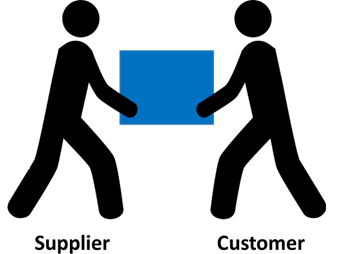
        Both clients and suppliers should share a common vision, recipe, and timeline of the product or project.  There should be a contract or a tangible agreement to foster an understanding between parties on these three (3) aspects.  And everyone should keep in mind that there must be only one vision, recipe, and timeline.   

        Workmanship is therefore about how close or how far better a finished product or completed project is relative to what a client, designer, engineer, and contractor agreed to have done. It seems straightforward enough to measure a product or project against what we envisioned, how well we followed instructions, and if we met our schedule. 

        There would certainly still be qualitative judgments of workmanship no matter how clear our visions, recipes, timelines, and agreements are.  We will always have our own opinions when we inspect products or assess results of projects.  This becomes especially true when workmanship exceeds expectations; the lines sometimes blur between a job well done and a job that ended up more beautiful than we thought. 

        We can also conclude that workmanship is not only about quality but also about performance, i.e., how well and how efficient a product or project turned out.  In another sense, workmanship is one tangible measure of productivity, an ideal we pursue for our personal and professional benefits.  

        About Ellery’s Essays