Owning versus Managing: What’s the Difference?

Do you own the business or do you manage the business?*

A senior member of the board of trustees of a high-rise building walked into its administration office and asked the accountant there to order parts for a diesel generator set.  The senior board member believed that the generator needed a minor repair and not only does he tell the accountant to buy parts, he also tells the building technicians to do the repair the coming weekend.  At no time does he talk to the building manager or the engineer both of whom were at the office. 

The building manager didn’t agree with the board member.  She made that clear in a previous board meeting where the senior member as well as the president and other board trustees were present.  The building manager felt that an outside contractor, with special expertise in generator sets, should diagnose and repair the building’s diesel generator.  It shouldn’t be entrusted to the building’s technicians who themselves said they were not qualified to do the job. 

The senior board member didn’t care for the building manager’s opinion and didn’t bother to talk to the engineer.  When asked why, the senior board member said the technicians agreed to do the job and the engineer didn’t seem to be interested. 

We can easily see that the board member was wrong for pushing ahead with a job that is the responsibility of the manager.  But this kind of thing happens a lot not just in buildings but in businesses.  Owners hire managers but take it upon themselves to micro-manage daily activities.  

Owners would insist on being part of every daily decision, from approving every petty cash disbursement to studying every project, big or small.  Managers end up paralysed; they won’t move until the owners tell them what to do. 

Thus, the question to enterprise owners: are you there to own the business or manage the business

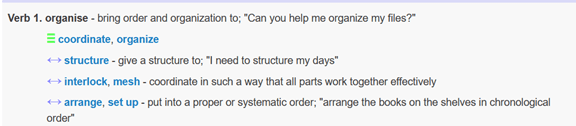
Managing the business is about planning, organising, directing, and controlling the enterprise’s day-to-day activities and projects.  It’s about supervising people, procuring resources, budgeting & accounting, and compliance to rules & regulations.  Managers make sure goals are met and strategies executed. 

Owners set the standards and peg the objectives of the enterprise they have stakes in.  They monitor the performance of the enterprise in which management delivers and reports.  They listen to management’s recommendations on issues such as budgets, plans, projects, and strategies.  It is the owners who decide via their boards or executive committees whether plans push through or not and how much resources will be planned, procured, and given.   And of course, it is the owners who hire and fire the managers. 

Both managers and owners share the same common interest:  make the enterprise prosper.   Each just have different roles.  But because we are human in which we each have our own opinions, owners sometimes cross the line and interfere with management. 

There is nothing wrong when owners complain when they notice employees come in late for work or when they question why customers aren’t receiving their orders quickly.  There is nothing wrong when owners suggest ideas to managers whether it be for process improvement or for a new gadget. 

It becomes wrong when owners push managers on how to address a complaint or how to adopt whatever idea or suggestion is raised.  Managers are there to figure out how to do things.  Owners are there to see how managers perform. 

Managers represent the owners when they deal with clients, vendors, contractors, community, and government.  Managers therefore should make sure their decisions and policies are in line with the owners’ standards and objectives. 

Owners lead.  Managers execute.  Owners set the destinations; managers map the routes.  Owners approve the strategies; managers act on them. 

There should be no overlap.  No crossing over.  Owners should know their place as much as managers should too.  If owners want to manage, then they should assume the position but be ready for the consequences, one of which is organisational paralysis. 

*Thank you to Mr. Jovy Jader of Prosults for coining the question and inspiring this blog. 

About Overtimers Anonymous

Management is Not Leading, and It Isn’t Staffing Either

First thing I was taught as a management trainee at a large multinational corporation in 1985 was that there are four (4) basic functions to managing. 

These are:  Planning, Organising, Directing, Controlling.

In 2021, when I search for “management functions” on the Internet, the results mostly are:  Planning. Organising, Leading, Controlling, and Staffing.

Leading had replaced Directing.  There’s that additional 5th function called Staffing. 

I see leadership, management, and supervision as three circles, in which one is a subset of another:

Leading or leadership is not management but encompasses it and more.  Leadership is about influencing people towards a cause, philosophy, religion, or vision.  Management lies within leadership, not the other way around.  To call leadership a “function” of management degrades that special talent or gift of charisma and influence not many people have. 

Management is about getting and administering the resources that would bring reality to a leader’s cause.  Leadership is enrolling people while management is about enrolling resources and doing the details in enrolling people. 

And then there’s supervision.  Supervision is overseeing people, making sure they are following policies, rules, regulations, and directives laid down by managers and leaders.  It falls within the sphere of management but it isn’t management.

Staffing isn’t a function of management.  Management plans head counts for staffs, organises the resources for staffing, directs the staffing, and makes sure the staffing activities are under control.  But it isn’t a function by itself; it’s one of many activities covered by management. 

I wonder if the people who put in Leading and Staffing as management functions have done any actual management at all. 

About Overtimers Anonymous

Twenty-Five Questions We May Find Ourselves Asking Everyday

Some of us ask very profound questions when we go to bed at night or wake up in the morning:

“Why are we here?”

“Where are we going?”

“What happens when we die?”

For many who work long hours and experience the daily adventures of hand-to-mouth jobs, however, these questions are quickly overtaken by more mundane ones. 

The following are twenty-five (25) sample seemingly trivial questions we may find ourselves asking as we go through our daily lives:

  1. Why does it take so long for the traffic light to change?
  2. Why does the traffic enforcer make me and a hundred drivers wait as long as twenty (20) minutes at an intersection?
  3. Why does my mobile phone conversation keep disconnecting?
  4. Why does it take up to five (5) times to redial and connect a mobile phone call?
  5. Why do some fast-food restaurants reject my credit card while the drug store down the street accepts it? 
  6. Why doesn’t the brand-name wrist-watch store have on stock the brand-name wrist-watch strap to replace the one for my brand-name wrist-watch?
  7. Why does it take months for the big hardware store to replace the light bulb I bought but which stopped working after a few days? 
  8. Why do many new bridges only have two (2) lanes, one for each way? 
  9. Why ban trucks on roads at certain hours of the day?
  10. Why do traffic cops target and stop trucks for alleged violations all the time? 
  11. Why put speed bumps (we call them humps) on newly-cemented smooth roads?
  12. Why do some cars not stop when there’s a red traffic light?
  13. Why does the water company dig holes and trenches on newly-built roads?
  14. Why does the power company require so much paperwork and time to change the meter of a house?
  15. Why are there so many fires every March, which every year is fire-prevention month?
  16. How come there’s always an elevator that’s not working?
  17. Why are there never enough parking spaces to park my car at the convenience store or at the bank?
  18. Are Manila’s streets for cars or for basketball courts?
  19. Why do we have to pay the city’s tax-paid garbage truck to haul our trash?
  20. Why do I have to renew my business’s environmental permit when I already have a city hall mayor’s permit?
  21. Why do I have to submit a hundred pages of tax forms when I already had filed it electronically through the tax agency’s website?
  22. Why does the power company give me only a week to pay my electric bill before they threaten disconnection?
  23. Why is the bank’s 24/7 ATM always off-line?
  24. Is it me or is the bread I buy getting smaller?
  25. Why is fish so expensive in a country surrounded by water?

About Overtimers Anonymous

The Case of the Half-Cut Tree; How We View Accountability

There’s a tree across the street from where I live that looks like it’s half of what it should be. 

the half-cut tree

The tree’s trunk is rooted on an empty lot.  Its leafy side hangs over a street intersection. 

The tree’s leafy branches press down on telephone & internet cables.  Over the years, especially when the wind is blowing, the branches force the cables to snap.  We’ve lost telephone landline service several times as a result. 

One day, a contractor working for the power utility company MERALCO (short for Manila Electric Company), came by and started trimming the tree’s branches.  He trimmed the few branches on the side of the tree that didn’t touch the telephone wires.  When I asked if he could prune the branches pressing on the telephone wires, he said he couldn’t.  His contract with MERALCO covered cutting tree branches touching electric cables but not those belonging to the telecom companies.  And since there were no MERALCO cables where the telephone wires were, he had no authority to cut anything there.  I should just call the owner of the lot to fix the problem, he said.

The problem was I didn’t know the owner of the empty lot.  I haven’t seen anyone on that empty lot for years. 

I called the phone company and reported about the tree branches endangering their wires.  The man on the other end of the phone said the phone company couldn’t cut the branches.  The phone company does not have a permit from the Philippine government’s Department of Environment & Natural Resources (DENR) to cut tree branches.  The phone company cannot justify a permit, the man said, because their cables pose no danger to the tree.  The MERALCO contractor, the man added, probably has a DENR permit because the electric cables are high-voltage and may pose a risk to the tree. 

In other words, I can’t ask either the MERALCO contractor or the phone company to trim the tree and free the telephone wires from the pressing branches.  The MERALCO contractor went on to trim the tree from one end but would not cut the tree on the other side. The tree therefore looks cut in half with a leafy side matched by an empty space on the other. 

One day a city engineer’s crew in a truck passed by, inspecting the street lights.  I approached the crew and asked them if they can do something about the tree branches.  The crew chief said he’ll look into it.  A few days later he came back and promised to trim the tree.  It’s been two (2) weeks and he hasn’t come back. 

Who’s accountable for the telephone wires?  The phone company owns the wires but they won’t touch the tree.  They’ll repair the telephone wires when they snap but they won’t trim the tree to prevent it from happening. 

Who should trim the tree branches?  Both the MERALCO contractor and the phone company said the owner of the empty lot should be the one responsible to cut the tree.  It doesn’t mean though he should be responsible for the telephone wires. 

What’s the role of the city government and the DENR? I imagine that the the city hall people do not consider themselves accountable for either the tree or the telephone wires.  The city government would be concerned about safety and well-being of residents but they wouldn’t touch the tree if there’s no apparent risk.  As for the DENR, they’d rather no one do anything to the tree. 

The case of the half-cut tree represents the state of accountability in society today.   To put it bluntly, we avoid accountability. 

Saying that people avoid accountability is a matter of personal opinion.  But from experience and observation, we try as much as we could to not take in added responsibility, unless there’s an incentive or reward to be had. 

First reason:  it’s human nature.  When we were children, most of us would blame someone else for our misbehaviour.   This is to evade punishment or to look good.  “It’s not our fault, it’s hers!”, we’d exclaim when our parents catch us doing something wrong. 

Second reason:  We have become more defensive.  Thanks to social media and all the finger-pointing, trolling, and blown-up scandals that come with it, we have become more careful about what we say and do.  People can see more of what we’re doing and question and criticise us for it.  We have seen people’s reputations damaged or their careers side-lined because they said or did something someone didn’t agree with. 

We therefore hesitate to accept new challenges, ones that especially bring us out of our comfort zones.  We fear criticisms or worse, legal and social consequences for volunteering ideas or joining a cause. 

In business, enterprise executives look out for their interests before deciding on an initiative.  Executives and managers rather work within their turfs rather than venture with other departments.  Employees don’t go beyond their job descriptions, and if they don’t know what their job descriptions are, they’ll demand it be clarified before they proceed to work.    

Third Reason:  We have become more individualistic.  Teamwork should mean people working together.  But in the real world, it has become synonymous to delegating and performance evaluation. 

We see teamwork in sports such as when basketball players pass the ball and assist one another to score.  We see it in religious organisations when we see choirs practice singing together.  But we hardly see it in every day work in which managers simply farm out tasks to subordinates and assign them deadlines and criteria for success. 

We have become more careful of what we commit as a result.  As much as possible, we don’t commit if we could.  Better if we don’t join a team.  We’d rather work on our own rather than risk getting more to do that we’d be condemned later for if we don’t finish on time or completely.

It’s ironic that enterprises invest in team building workshops in which employees participate in exercises together only for them to go back to their workplaces to toil on individual commitments. 

Fourth Reason:  Performance management has focused more on individuals than on the teams.  We manage performance more on the parts than on the whole. 

Management philosophy at the turn of the 21st century has shifted towards scorecards and metrics.  Key performance measurement has become the enterprises’ go-to method to getting things done. 

Managers, however, have been emphasising individual performance than team achievement.  When an enterprise applies the basic features of a SMART-C performance metric, in which it has to be specific, measurable, show who’s accountable, realistic, time-bound, & challenging, they drop them on the lap of individual employees, not on teams.  If teams themselves present scorecards, it’s the team leader who’s usually made accountable.  He gets the glory if he makes it; he gets the reprimand if he doesn’t. 

Backers of key performance indices, KPI’s, may disagree with what I just said.   Scorecards are designed for teams not individuals, they’d say.  That is true.  But from what I’ve seen, enterprises have remained focused on individuals when it comes to performance evaluation.  Hardly does one see an executive evaluate a team together.    

And because of this, individuals work on the measures they’re evaluated on than on the overall standards of the organisations they work for.  And that’s assuming if they even know what those standards are, or if they care. 

It is these four reasons why I believe the tree outside my residence will remain cut in half.  One side trimmed and not in any way endangering the electric power cables, the other side left untrimmed with branches ready to snap the service out of my telephone line. 

The phone company, the MERALCO contractor, the owner of the empty lot, the city, the DENR, and I will not volunteer to prune the tree.  It requires a joint team effort among all the parties.  And it looks like it’s not going to happen because of the four (4) reasons stated above. 

Accountability has become a bad word for many people.  We don’t want more of what we already have and if we can avoid it, we will. 

The best solution to reverse the accountability avoidance trend is to bring back old-fashioned team work.  You know, the one where people come together and work together as a group?  If it can be done in sports and religious organisations, then why not in every day work?

Easier said than done, yeah, especially with a virus forcing people apart.  But if we can somehow recognise the need to be together to get something done together, why not indeed?   

About Overtimers Anonymous

A Letter to a Life Insurance Company

The following is a letter I want to send to a life insurance company regarding their service.  Identities are anonymous to avoid complications. 

Dear Chief Executive Officer of Life Insurance Company,

I received your letter dated August 25, 2020 which arrived February 16, 2021.  Your letter stated that you did not receive payment for past due premiums for my life insurance policy.  Thus, you are notifying me that you have classified my unpaid premiums as a “Premium Loan” and that I owe the balance of PhP 7,415.45 ($USD 148.31) as of June 23, 2020. 

You also notified me that the Premium Loan will be charged an interest rate per annum of 9.00%.  You urge me to repay the loan at the soonest time to ensure I will enjoy the benefits of my policy.

In response, please be informed that the latest billing statement you sent me (dated June 21, 2020) says I have zero balance to pay.  The billing statement said the dividends I had earned from my policy paid for my past due premiums.

I ask, therefore, what do I owe your company?  Do I owe PhP 7,415.45 for a “Premium Loan” because you said I haven’t been paying my premiums or do I owe nothing because your latest billing statement says zero balance to pay?

I showed the two (2) letters to one of your agents who is a friend of mine and he said I should call your hotline or visit one of your offices. 

Rather than risk getting a CoVid virus infection going to one of your crowded offices, I called your hotline.  The very nice call centre agent at the other end of the line said I owed your company for the Premium Loan because I didn’t pay my premiums in 2019.  I asked about the billing statement of June 2020 and he just reiterated that I owe your company money. 

Fine, I said.  I won’t argue.  Please tell me how much I owe, I asked the agent.  The call centre agent said he will email me an updated statement in one week. 

I didn’t get an email.  I called again two weeks later. 

Another very nice call centre agent answered and he said I owed PhP 12,164.27 ($USD 253.42) for three missed premium payments.  I should pay it right away so there’ll be no more interest charges, he added. 

Even though I never received the billing statements, the very nice agent said I was just as responsible to know how much I owe as much as the insurance company was in sending me bills. 

I decided not to think about that very confusing statement.  Instead, I went online and immediately paid the bill. Never mind that the amount owed was much higher than what the letter dated August 25, 2020 said. 

To put it bluntly, your company is a mess.  Well, at least, it’s a mess for life insurance policy holders like me. 

I’ve had my life insurance policy from your company since 1998.  When I receive your bills, I pay immediately whatever amount is due.  I’ve paid religiously but only didn’t when your bill said I owed nothing. 

Your latest bill dated June 21, 2020 said I owed nothing.  Therefore, I didn’t pay. 

It reflects badly on your company when it says I haven’t been paying my premiums and that I have to pay an interest of 9.00% for the unpaid balance while your billing statement says I don’t owe anything. 

Your letter said I should repay the loan to continue enjoying the benefits.  What benefits are you talking about?  Please note that for me to enjoy my life insurance benefits in full, I would have to die or wait till the policy’s Termination Date, which is sometime in 2062, or a few months before my 100th birthday.  Unless technology by that time succeeds in extending my life span, I doubt I would be able to enjoy any of my life insurance’s benefits whatsoever either in this life or in the after-life. 

When I started the life insurance policy, your agent assured me that I will not have to pay for premiums after 10 years.  Your company would invest my premiums and the dividends from my life insurance investment would pay for future premiums due. 

It therefore came as a surprise that after a few years, your company’s then chairman and CEO wrote that you will be unable to meet that promise because of lower earnings from your company’s investments.  Your agent then told me it was in the fine print of the policy that your company can rescind that promise and that I have to continue paying premiums.  Too bad for me, in other words. 

Your agent handling my policy disappeared a few years after.  She vanished one day and I didn’t know who’d replace her.  There was no notice.  A temporary agent appeared once but she also disappeared.  But your company kept sending me bills; that seemed the only thing that remained consistent in the last 23 years.

The latest bill was dated June 21, 2020.  I got that bill last September 2020.  Whenever I receive a bill that says I owe something, I pay it.  The only trouble is your bills arrive late, if they arrive at all. 

The bills arrive usually six (6) months after they’re dated which indicate you have a problem with the local post office or with your couriers.  Maybe you should try carrier pigeons, they’re probably much faster than what you’re using now to send mail. 

You send bills that say I owe nothing but say in separate letters that I do with interest added.  If that’s how your accounting department computes bills, heaven forbid how much your actuarial department will calculate my life insurance benefits for my family when I die. 

You should avoid making promises you can’t keep.  I know you drive your agents to sell, sell, sell as many policies as possible and that you dangle juicy incentives for them so you can meet your revenue targets.  But please don’t commit stuff like no-premiums-to-pay after 10 years when in reality that’s not going to happen, never mind if it’s in the fine print.  Speaking of fine print, please note I’m not a linguist that can understand the legal gobbledygook which you call English to write your policies with. 

I trusted your agent at the beginning.  Unfortunately, she vanished into thin air. It would be nice if you can somehow have some sort of succession system for your agents.  It would also be nice if you can tell us if and when my agent is going to disappear, that is, if you ever assign me one for my policy.  I notice you’ve been pushing your clients to use your web portal.  I tried getting into it.  It kept giving me an error message so I gave up.  My agent friend told me that your website is being repaired.  Is it possible your information technology employees can post error messages in plain English?  That error message I saw gave me the impression that your IT employees use a language from an alien world.  Or maybe your IT department is the same one that writes the fine print in your policies? 

error message when trying to register in web portal of insurance company

I like to keep my life insurance policy until I die.  But with your kind of billing system that doesn’t tell me what I owe, the promises you don’t keep, agents who vanish, and an IT department that seems to communicate in an alien language, I don’t know if I’ll have a policy that actually pays something when I expire. 

Then again, I won’t enjoy the benefits since by then I will be either dead or senile, perhaps indirectly due to the stress your company has caused me. 

Sincerely,

E. S. Lim

P.S. I received an email that had an attachment which supposedly is the official receipt for my PhP 12,164.27 online payment.  I say “supposedly” because I couldn’t open it; the email server says the attachment is “corrupted,” which can probably be the best one-word description of your company’s services. 

About Overtimers Anonymous

We Don’t Need Deep Science to Implement Change

While depositing Philippine coins at the bank one morning, I couldn’t figure out which was which.  The 1-peso coin looked like the 5-peso coin which also looked like the 10-peso coin.  Each coin was silver in colour and almost the same size.  I also had older and much more different 5-peso and 10-peso coins to count and segregate, and it just added to the confusion. 

The bank’s counting machine also kept stalling with the Philippine peso bills the teller fed into it.  The machine couldn’t distinguish the new bills from the old bills.  The teller had to take out the new bills and count them separately. 

I was also hearing complaints that the banks’ automated cash machines weren’t accepting peso deposits.  The machines too couldn’t distinguish between new and old bills.  The machines kept getting stuck and shut down.  Stores at malls couldn’t deposit their collections after bank hours.  This was a hassle as owners would have to wait for the bank to open in the morning and line up to deposit their previous day’s cash collections.  Worse, they would have to keep the cash at home on weekends and holidays when the banks were closed. 

The Philippines’ monetary authority, the Bangko Sentral ng Pilipinas, had been rolling out new cash notes since the late 1990’s.  The BSP had been replacing the bills and coins with “new generation” currencies, that is, cash notes and coins that had better security features and that were cheaper to procure. 

The BSP didn’t take into account the size of the coins and the impact of the new bills on cash machines and bill counters.  Consumers couldn’t tell one coin from another and cash machines rejected the new bills.  The BSP, however, brushed aside the criticism and urged the public to just get accustomed to the new currency. 

There’s a proverb that says the only constant in life is change.  Most of us know that.  But can’t people make changes that do less harm than good? 

Changing currencies to improve security has some logic to it, but couldn’t the BSP at least design the coins to be easily distinguishable?  Couldn’t the BSP work with the banks to adapt new cash notes to counting and automated teller machines? 

Why ask ordinary people to get “accustomed?”  Shouldn’t products be easy to use right away or with least instruction at the shortest time? 

One does not need be a scientist to implement change.  The principles are elementary:

  1. Get feedback about any upcoming change from stakeholders, i.e., the people who will feel the impact, e.g., customers & vendors
  2. Test any new product not only with end-users but also with the machines and processes that the change will have effects on;
  3. Make sure the resources and assets are all in place when the changes begin;
  4. Keep track of the change, how it’s performing, and how well stakeholders are accepting it;
  5. Tweak as needed, revise if necessary: software developers release new improved versions of apps all the time, so why not for products too?
  6. Learn to accept failure or defeat—better to admit setbacks as soon as possible to avoid further damaging stakeholder relationships.

In other words, put what the stakeholders value first when it comes to change. 

People don’t like change for the anxieties they bring.  People will welcome change if they see outright the benefits outweighing the negatives.  There’s no deep science to it. 

We know this and we can get this. 

About Overtimers Anonymous

The Importance of Making Available What We Promise

I ordered a box of latex gloves from a 3rd party seller on a popular e-commerce website.  The seller confirmed my order by email and after 24 hours, the order status on the website was that the box of gloves was being prepared for shipment.  One week later, the order status said it was at a “logistics facility.”  Two weeks later, the order status was the item was out of stock, the seller will be unable to ship, and my order was cancelled. 

I ordered a box of the very same brand of latex gloves from another seller and I received it within three (3) days.  I was annoyed I wasted two weeks waiting for the first one that never came.    

Shouldn’t sellers check first if they have stocks physically available on hand before they confirm a customer’s order?  Is it not common sense not to sell something one doesn’t have on hand?

Sounds like yes but in the real world, no.  Many enterprises sell items even if they don’t have them on stock.  They count on their operations teams to either produce or procure the items and have them available as promised by the time customer wants them. 

Available-to-promise (ATP) is an inherent element in supply chain management.  It is how much of an item an enterprise will have on inventory for customers to buy, adding in what supply is arriving and deducting what’s already reserved for other customers.

ATP = On Hand + Arriving Supply – Reserved for Pending Orders

Enterprise owners count on the ATP to communicate to customers as to how much and when items would be on stock for selling.  

For items that are make-to-stock, enterprises typically make sure they always have enough items on hand at any time for customers to buy.  Supply chain managers would set safety stocks to buffer for unexpected demand.

If, however, enterprises are selling expensive stuff like precious metals, are in the business of shipping thousands of items like automotive parts, or are marketing products with short shelf lives, managers would not keep too much on hand to avoid tying up capital in inventory.  Managers wouldn’t keep any safety stock and would rely on scheduled arrivals when committing ATP to customers. 

Customers expect enterprises to deliver their items on-time and complete as promised.  How well an enterprise keeps its promises is a criterion for success.     ATP is therefore important. It’s one thing both the customer and enterprise care about.  Delivering as promised ranks right up there with quality, cost, and service. 

Supply chain executives should strive for the following when it comes to planning ATP:

Never Zero, At Least Not Often

No one likes to be told an item is out of stock.  Mothers don’t like it when their favourite brand of diapers for their babies are not on the drugstore’s shelf.  They would buy another brand if they come back in a week and there’s still no stock. 

Short Lead Times

Customers will cancel their orders if a shop says the items they want won’t be ready for several days.  We humans have thresholds when it comes to patience.  We won’t wait too long.  Enterprises who can quickly churn products for customers gain competitive advantage. 

It Doesn’t Change at the Last Minute

Nothing is worse than breaking a promise.  Few things are as frustrating as when a shop tells us that there will be a delay in the item that was supposed to be delivered today.  It feels even more frustrating if we had already paid for the item.  Frustrated customers won’t be comforted with apologies or refunds.   Customer satisfaction comes when deliveries happen, not when they don’t. 

One Person in Charge

There should only be one person in charge of ATP.  Not the planner.  Not the logistics officer.  Nor the plant manager.  Not anyone else but the supply chain executive, the one who oversees all the operations for the fulfilment of customer orders. 

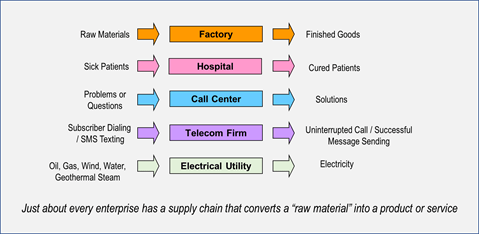
That means the delivery of items to the customers’ doorsteps, the making of the items, the marshalling of resources to make and deliver the items, and the shipping of the items.  In short, the enterprise’s supply chain. 

Enterprises, therefore, should have a chief supply chain officer who’d be in charge of making available what is promised.  

Having two or more persons handle supply chain operations or delegating the accountability of ATP to middle managers are common mistakes that lead to items that won’t be there as committed.  Having more than one person in charge of the fulfilment of customer demand just makes no sense. 

It’s like a kitchen with two chefs:  one is in charge of buying the ingredients, the other oversees the cooking.   Both men would be fighting each other in no time.  As the saying goes, “too many chefs spoil the soup.”

Keep It Simple

The more complicated an enterprise’s operations, the harder it is to keep promises. 

Thousands of items, multiple steps, shared production lines, and conflicting policies & targets are examples in which management becomes muddled as items weave through supply chain operations to get to customers. 

The advice is to keep it simple and use common sense.  Schedule milestones operation by operation to know how much can be committed at the end of the supply chain.  Deliver with smaller trucks or send single items through couriers.  Keep few stocks but set automatic re-order points for items that don’t move as much (e.g. spare parts).  Don’t keep stock of items that are make-to-order (e.g. tailored clothes). 

Nothing Wrong with Being Conservative

There’s nothing wrong with applying an allowance to an ATP.  If the schedule says an item will be ready in four (4) weeks, commit to five (5) when the customer asks.  Adding an extra week would allow for unforeseen events such as if a supplier falls short in delivering needed materials. 

No farmer can surely know how many fruits he will pick today. A fisherman wouldn’t know exactly how many fish he will catch tomorrow.  But experience will allow either to provide safe estimates.  The same is true for ATP.  We never really know exactly how much items will be available but we’d be more confident with conservative numbers, just as long as it doesn’t lead to over-padding or over-commitment. 

Enterprises and customers put a lot of weight in what is available to promise.  Customers rely on enterprises keeping their word.  Enterprises depend on their operations to have items ready when needed.

Enterprises should avoid promising nothing to make available and when they do, shouldn’t make last-minute changes.  There should be only person in charge and he or she should be the one who oversees the operations in making ATPs realities.  Planning ATPs should be as simple as possible and can be made with some conservatism.  We should not over-commit or pad too much. 

We make promises we can keep.  People value us for how we act based on our words.  It becomes not only a mark for success but also a way forward to mutually beneficial relationships.  

About Overtimers Anonymous

Four (4) Suggestions for a Client-Convenient Website

The phone company needs a password whenever I want to look at my bill. 

I enrolled into the phone company’s “paperless billing” system more than a year ago.  Before, the “paper” bills were arriving late such that when I received them, they were already past the due date.  With paperless billing, the phone company notifies me via email and SMS that the bills are ready for viewing (although the email arrives a few days after the bill date or when the bill had already been posted on the website). 

To view my bills, I have to log on with a user name and password and select the bills I want to see and save. 

It was simple as all I had to do was click on the bills I want to download.  But now, the phone company added a step in which I had to enter a 10-digit password for every bill. 

It turns out that the password is the 10-digit account number of the phone number which is displayed on the website menu.  So, what’s the logic of having to enter a password which is the same as the account number, in which anyone can see it? 

I’m already securely logged on and I still have to type a password that’s already displayed on my bill.  There’s no reason for it other than adding another layer of secrecy which doesn’t make sense.  Is the phone company afraid that someone else will maliciously pay my bills?  (I won’t mind).

Some corporations go overboard when it comes to cyber-security.  They encourage people to enrol into their websites but at the same time make it hard to get in.  It’s as if there were two people at the doors of company websites:  one who merrily welcomes you and a grouchy gatekeeper who wants to throw you out.   

I can understand the need for security given the number of high-profile hacks one sees in the news.  But does the phone company want me to get my bill or not?

Corporations also try to save money when it comes to website access. 

A large bank in the Philippines has a website which allows clients to pay taxes online to the government’s Bureau of Internal Revenue (BIR).  The only problem: the bank’s BIR portal closes at 5pm and opens again the next morning, and it is only accessible Mondays to Fridays.  I can’t pay my taxes at night or on weekends.  The bank advertises that its site is open 24 hours a day, 7 days a week, 365 days a year; it just didn’t say that you can’t use it to pay one’s taxes after office hours. 

The bank probably is trying to save money by turning off the portal’s server after daylight hours and on weekends.  Clients just have to schedule their tax payments during working hours in sync with the bank’s.  Meanwhile, its competitors don’t have such limits.  One can pay anytime any day on other banks’ portals.  One wonders if and when clients will migrate to other banks to pay their taxes.  I already warn friends and peers from opening accounts with this bank because of this quirky online limitation. 

One can understand the need to save money but should one do it at the expense of convenience of clients?  Especially if clients will migrate to the competition to avail of better services?   

I don’t believe it entails so much cost to make a website more convenient for clients.  At the same time, I think websites can still be compliant to data privacy and security standards. 

The following are some areas which I (a layman in information technology) propose companies focus on to make their Internet sites user-friendly and convenient:

  1.  User Interface

A mobile phone company has a website in which the log-in menu is located on a very small corner on the screen.  If one has bad eyesight (like me), one won’t be able to see it.  It took me eternity to find it the first time I was logging in.  I eventually found it after scouring every pixel of my computer screen. 

User interfaces are what are displayed on a website for users (you and I) to interact with.  It’s supposed to provide ease of access, that is, easy to see, understand, and navigate.  Making it hard for users to even see where to click defeats the purpose of a user-friendly interface. 

  •  Accessibility Anytime

It’s not only keeping a web portal open nights and weekends.  It’s also avoiding the unscheduled and scheduled downtimes at the times when clients need them most.  Some banks schedule “maintenance” of websites on weekends and holidays.  As much as I understand the value of maintenance, I suspect some banks use the pretext of “maintenance” on holidays and weekends so they don’t have to pay people to be on duty to watch their systems.  It’s convenient for them but inconvenient for some clients and goes against the intent of an online website:  24/7 availability, 365 days a year.   

  •  Availability on Any Platform

Many banks and companies offer access to their sites via personal computers, mobile phones, and tablets.  They also make sure the sites can be accessed on any of the three (3) most popular operating systems, i.e., Apple’s iOS, Alphabet’s (Google) Android, and Microsoft’s Windows. 

A few companies, however, spoil the convenience by designing their web portals for mobile phones the same way they do for desktop computers.  For example, a mobile phone company (the same one that has a lousy user interface descried above) re-routes users to desktop-designed websites.  If one is using a mobile phone, this can be a hassle as one has to go to a web browser made for a desktop computer and squint at the tiny words and letters not designed for a cell-phone. 

A very large bank, on the other hand, customised online websites for mobile phones, tablets, and personal computers respectively.  Displays and buttons are designed exclusively for whatever device and platform.  I’ve moved more of my hard-earned money to this bank because of the convenience of access. 

  •  Security That Would Let Us In, Not Keep Us Out

Of course, security is important to us.  Of course, we don’t want our data hacked and displayed for all the world to see.  But can’t companies have websites where we don’t have to spend 80% of our time entering passwords in letters, numbers, & symbols, wait for an SMS confirmation which sometimes never comes, declare we’re not robots by encoding undecipherable curved letters, and having to enter new passwords to read our own bills?  Can’t companies welcome clients without treating them as presumed-guilty-until-proven-innocent criminals?  

We as customers or clients want to be served with convenience and with the assurance our transactions will be secure.  But sometimes, enterprises do too much for security or try to save on cost by sacrificing convenience. 

They forget that whom they try to protect or the costs they want to save can backfire on the clients, who are the people who’re providing their business in the first place. 

I don’t believe it requires rocket science to tweak web pages to have friendly user-interfaces, wide availability, anytime access, and reasonable security.  A little understanding for clients can go a long way in serving them even via a virtual online website. 

About Overtimers Anonymous

Paying Attention versus Getting Attention

A columnist at a leading daily newspaper writes every week about ghosts, spirits, reincarnation, or in other words, supernatural stuff.  He is obviously popular as he’s been writing for the newspaper for decades.  He seems to be doing well as he’s consulted for some people and spoke at gatherings. 

I laugh at how people can believe the silly stuff this columnist writes about until I remind myself that I also have advised clients and spoke at gatherings in which I try to get people to believe everything I say. 

Am I really any different from the columnist who preaches unbelievable content?  I offer insights but they can be hard to digest especially if they entail big changes in mindsets. 

The columnist writes to get attention.  Apparently, so do I.  Many of us seek attention in our efforts to gain influence.  We advertise.  We preach.  We SHOUT. 

More so when it comes to management and staff.  Managers seeking attention talk a lot and remind their subordinates a lot.  I know because I do it a lot as a manager and I’m still working on getting to do it less. 

Sometimes and more often than not, it’s better to pay attention than get attention. 

As treasurer for several commercial buildings, I monitor the spending of property management companies the associations of these buildings hire.  In some cases, the property managers spend too much or they spend too little.  This causes budget overruns leading to running out of cash or under-runs in which a building hoards too much money that otherwise should have been spent for better services and infrastructure. 

When I sit down with a property manager to tell her how she should plan her spending, I’d often go into a long-winded speech about how she should have a vision for the building and how she should plan and present projects. 

Naturally, after several minutes, she’d be silent with a glassy stare.  And I know by then:

  1. She’s no longer listening;
  2. I’m talking too much. 

When I, however, ask questions about the challenges of her job, she starts talking.  As long as I keep asking, she keeps talking. 

And as she talks and I listen to what she’s saying, I realise she’s coming from a wholly different point of view than mine.  She’d start by saying that the property company she works demands numerous reports—reports that require considerable time to write and submit. 

The building manager also mentions that her superiors have pushed a roll-out of ISO (international standards for quality & compliance) in all their client projects and that she has deadlines to meet those standards. 

And so on and so forth the building manager would go about the training she has to go through, the meetings she has to attend at her company offices, the complaints of building tenants she has to address, etcetera, etcetera. 

At a point, it would take an effort for me not look at my watch, not put on a glassy stare, and not to pretend to listen.  Because from the effort to ask and the effort to listen, I get to learn what it’s like for the building manager.  And from learning what it’s like, I get to understand the backgrounds and rationale for how the building is managed. 

And as the building manager opens up, she opens up too to what I not only ask but also suggest.  Eventually, we come to a point where we both agree to ideas on how to better manage the building. 

By the way, this really happened.  In that building where I did ask and develop a rapport with the manager, both cashflow and spending for critical maintenance projects doubled in one year.  There were improvements in sewage, elevators, and air-conditioning equipment.  Collections of dues gained in efficiency and the manager was still able to comply with her company’s directives. 

Asking is a technique I’ve come to appreciate to have fruitful conversations and obtain tangible results.  Asking is a key component of listening, of what many in the human resources field are promoting as empathy. 

Taking away the buzzwords and hype, I’d just say asking works.  When we ask questions and listen to the answers, it starts a conversation.  As long as we don’t try cutting the other off, let the other talk, and digest what the other party is saying, we gain insights for ourselves which we can build on to suggest to the other side’s point of view.  Because when we work from another person’s point of view, the person seems to understand better what we’re talking about; they would welcome it more than if we were communicating from our own. 

We have a habit of trying to get attention to the things we want to say and preach.  It’s what we see what people do every day in the media and in our everyday lives.  We end up doing it too in our attempt to expand our turfs and gain influence. 

I’ve learned, however, that paying attention works better.  It’s done by asking, listening, and asking again, until rapport is built and ideas flow.  And by experience, when ideas flow, doable solutions to problems follow.  And I’ve seen the real-life benefits.  

Ask, listen, repeat.  It works. 

About Overtimers Anonymous

Seen and Not Heard, Speak Only When Spoken To, Why It’s Good to Listen

In the old days (as late as the mid-20th century), many parents told their kids that children were meant to be “seen not heard” and that children can only “speak when spoken to.”

This rule prevails among many families, never mind if it’s the 21st century and some people say we should be more liberal with our kids. 

Many enterprises apply this rule in their organizations too. 

In one company I was consulting with, the executive vice president disliked getting interrupted or being asked questions by her subordinates.  When they do, the EVP yells at them.  The subordinates believed they didn’t have the privilege of speaking out; only their bosses have. 

Whenever I sat in the top management meetings of large multinational corporations, I noticed only the executives seated around the conference table would be allowed to speak.  Those middle managers and staff who sit at the periphery in less comfortable chairs would only talk when they’re addressed.  Otherwise, they were expected to keep quiet.  (They can laugh at the chief executive’s jokes though).

It seemed that such an old-fashioned rule stifles the sharing of information and the emergence of innovative ideas.  And because of this, executives had become out of touch with their own people.  Instead, the executives form their own opinions and solutions and when they address their staff, they expect immediate agreement. 

New enterprises attribute their successes to the teamwork of their people.  This gets forgotten as enterprises grow in size and complexity.  But size and complexity shouldn’t be the reasons for not engaging with everyone in the organization. 

Whether big or small, everyone in an organization has always something to share.  Many of what they share may seem trivial but chances are there will be a gold nugget of an idea in the information they impart. 

So, what should an organisation do to encourage information sharing?  Meet with the people at their level is the first thing that comes to mind.  Go listen to them at their workplaces.  Note I said “listen” not “talk.”  Listening is the real key here.  It’s amazing how much an employee can open up when he or she realises there’s someone actually willing to listen. 

It will take time of course.  Some employees won’t open up at once especially when they’re face to face with the person who they believe holds the power of the organisation.  There is effort involved.  There always is when trying something not really done as much before.

But I think many have testified to the benefits of listening.  It promotes trust for one.  When the people of an organisation trust their executives more, when they see that executives are humans just like them, they tend to be more open to change.  At least they would be more open to share information as well as receive feedback from the executives. 

Some of us grew up in families where we were not allowed to speak unless spoken to.  This unwritten rule somehow carried over to organisations which some of us work for today.  It stifles information sharing and hampers innovation.  Executives can break this rule by simply going down to the level of their employees and listening. 

Listening builds trust and trust opens up communication which leads to information sharing and innovation.  Innovation drives growth and competitive advantage.  And it doesn’t cost a thing.  Just some effort will do. 

About Overtimers Anonymous