How Important Productivity is to the Value Chain

The fast-food restaurant drive-thru I go to every Sunday morning hasn’t been serving the liquid creamers that accompany the coffee I order with my meals.     

At first, they said the creamers were out of stock.  A week later, they said they can only serve one (1) creamer instead of the two (2) that should come with every coffee order.  Finally, they substituted the coffee creamer with a non-dairy powder cream in a sachet. 

The fast-food company saved money in all three (3) instances.  They saved when they served coffee without any creamer or with just one instead of the usual two.   They also saved when they started serving the powdered creamer in sachets as the liquid creamer is more expensive.   

The fast-food company can claim savings but did it deliver value? 

In his seminal book, Competitive Advantage,[1] Michael Porter introduced the value chain, a representation of a firm’s “collection of activities that are performed to design, produce, market, deliver, and support [the firm’s] product.”

Value is the “amount buyers are willing to pay for what a firm provides them.”  The typical strategy of the firm is to create value that “exceeds the cost of doing so.”  According to Porter, value is the key to competitive positioning.

The fast-food company normally served two (2) 10-ml cups of imported liquid creamer with every coffee order.  It was something I look forwarded to and expected whenever I went to the fast-food company’s drive-thru.  When the fast-food drive-thru stopped serving the creamer, I was not happy.  I felt I was no longer getting my money’s worth from my coffee order.

Bundling two (2) 10-ml creamers and two (2) packets of sugar was standard for every coffee order, according to the drive-thru attendant.  Unfortunately, the fast-food drive-thru no longer had the stock and substituted the creamer with a cheaper sachet of locally produced non-dairy powder. 

The fast-food company apparently thought substituting the imported creamer with a cheaper local product would be no big deal.  The management of the fast-food company probably didn’t believe its customers would buy less of its coffee, even with the downgrade. 

The cost of all the activities in the value chain must be less than the price of the product.  The difference between the price and the cost is the margin.    Enterprise executives tend to cut costs or differentiate their products to maximise margins. 

The problem arises when customers like me perceive a lower worth of the product as a result of the enterprise’s cost-cutting.  Perceived lower worth leads customers turning away from the enterprise and opting for alternatives from the competition, resulting in lower demand for the enterprise’s product.    

Many enterprises see-saw between cutting costs and differentiating their products as they struggle to maintain their products’ profit margins.  When they see costs going up, some enterprises buy cheaper materials and services.    When they see demand slowing, they spend more for product development and advertisement of their product’s features.  In either case, the enterprise ends up losing customers or spending more than it should.    
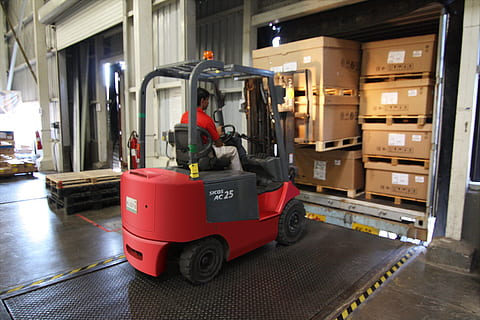
All functions in an enterprise make up its value chain.  Whether it be purchasing, marketing, logistics, sales, manufacturing, finance, accounting, human resources, information technology (IT) services, legal, public relations, research & development, etcetera–every department and individual play a part in delivering value for the enterprise.  Every one in an enterprise contributes.  There is no exemption.  If the value chain is to be competitive, everyone has to work and to work together toward the common cause of maximising the margins of the enterprise’s products. 

Every part of the value chain must be productive.  Productivity drives value. 

Productivity is output over input.  In the value chain, productivity is the output as delivered and accepted by customers versus how much was inputted in doing so. 

That means whatever function we work in, we must deliver output that would benefit the enterprise’s product margins.  Our performance, no matter how seemingly small or irrelevant, contributes to the value chain. 

Some of us equate value chains with supply chains.  This is wrong thinking and it is detrimental to an enterprise’s productivity.  Whereas the supply chain’s basic functions like purchasing, manufacturing, and logistics directly add value to a product, roles such as legal, human resources, marketing, sales, engineering, information technology, and research & development (R&D) are just as equally important. 

Human resources professionals hire talented people to staff the enterprise’s organisation.  In-house legal counsels ensure products are compliant to local laws and regulations and defend the enterprise’s products’ intellectual properties.  Finance executives ensure the capital needs for products.  Marketing cultivates ideas for R&D to develop into reality.   

A condiment such as a coffee creamer may seem trivial.  For value chains, nothing is trivial.  Every detail and process have a bearing on how a product’s value chain will bring worth to customers. 

The fast-food company may dismiss my disappointment if it turns out I’m alone in complaining about a downgraded coffee creamer.  If a vast majority of its customers continue to consume the fast-food company’s coffee, then well and good, the enterprise would have saved money without any dent to its coffee’s perceived value. 

But if my sentiments are shared with many coffee drinkers who decide to turn away and find alternatives, then the enterprise would no doubt be strongly encouraged to improve the productivity of its value chain.  Perhaps it will study how better to source its imported creamer to ensure it will always be bundled with the coffee it sells. 

In the meantime, I decided to get my Sunday morning coffee from the fast-food company’s competitor. 

About Overtimers Anonymous


[1] Michael E. Porter, Competitive Advantage,  (New York, N.Y. : The Free Press, 1985), pp. 36-38

Logistics Solutions Can Be Simple

A medium sized retailer of health food items imports products from abroad.  The retailer prides itself with a very well organised warehouse and a crew of workers that swiftly repack the imported products and send them to the retailer’s stores all over the country. 

The retailer’s sales department, however, has constantly complained about lack of enough fast-moving products to stock store shelves.  They frequently request for more items which the retailer’s purchasing department promptly orders.  Yet, the sales people still complain.  Why are store shelves empty despite the inbound volume of imports?

A consulting team the retailer engaged found that the retailer’s warehouse was indeed quickly repacking and delivering needed fast-moving imported items to stores.  Once they arrive at the stores, the fast-moving products were sold within days. 

But the warehouse inventories showed almost no stock available of the fast-moving items at the beginning of every work week.  How can this be since imports via container vans were arriving every week?  The stocks have been arriving but the warehouse says they are not on inventory.  Where were the items? 

It turned out that when container vans of imports arrived, it would take as long as ten (10) days to completely unload, put away, and enter items into the warehouse inventory records.  Every container van would have a mix of as many as a hundred products totalling to as much as a thousand cases or packages.  Some items like paper products were bulky, some like food supplements were tiny.  The warehouse’s personnel would unload products from the container van into pallets, but it would take several days to sort the items, inspect them, and scan them into inventory.

Hence, even as the imported items had arrived, they were still “in-transit” on the retailer’s inventory system.  The warehouse didn’t repack and deliver products until they were entered into the system. 

To complicate things further, sales people would ask the warehouse to put priority in receiving items that were running low on stock at stores.  That resulted in warehouse staff in receiving some items from inbound container vans and putting others in a holding area, in which these latter items would sometimes sit there for as long as one (1) month before anyone sorts and scans them.  This resulted in a vicious cycle where products were alternating in out-of-stock as warehouse staff switched priorities in receiving one item to another. 

The solution to the problem was simple.  Management just had to re-enforce the retailer’s policy of unloading every container van completely before receiving another one.  Management also had to shorten the time to receive inbound imports.  More than a week was too long.  It turned out that the employees assigned to receive inbound container vans sometimes were pulled to do other jobs in the warehouse.  Management only had to put a stop to that and have the assigned employees work full-time in receiving the vans. 

The consulting team also suggested the management review the retailer’s purchasing and inventory policies.  It wasn’t that the purchasing department was buying enough; it was that they weren’t buying frequently enough. 

The purchasing management preferred to buy items in bulk to take advantage of pricing discounts.  They would order only once a month or even less so.  As inventories ran down, the next scheduled arrival of vans would sometimes be weeks away.  Planners and purchasers ended up rushing the dispatch of container vans which sometimes delayed the delivery of other items and again brought on a vicious merry-go-round of items running out of stock. 

Purchasing just needed to balance buying in bulk and scheduling shipments to arrive more frequently, such as weekly versus monthly.  Purchasers could negotiate contracts with vendors to commit to buy in bulk at competitive prices but ask that deliveries arrive in smaller quantities more frequently. 

Logistics is about ensuring a smooth supply of materials and products from one point of the supply chain to the next.  It’s about planning, buying, and transporting enough.  Not too much to cause pile-ups of stock that tie up space and cash.  And not too few that risk run-outs that interrupt production and compromise services.

Logistics is broad.  It covers what comes in, what comes out, where it goes, and where it leads to.  One may say it covers all the things that sales, marketing, and manufacturing do not. 

Logistics is not the supply chain.  It’s a big part of it but not the whole of it.  Logistics is the life-blood that courses through the supply chain but it isn’t the supply chain.  It works with counterparts such as planning, procurement, and production to make sure merchandise moves through suppliers and manufacturers to meet the demands of customers. 

Improving logistics is about improving the flow between points in the supply chain.  That means minimising bottlenecks and focusing resources to move things where they are slowest.  It means making sure stuff are put away and at least cost and risk of damage, at the same time making sure they don’t over-stay in one place.  Scrap and out-of-stock are what logistics practitioners avoid as much as they could.  For when there is scrap or out-of-stock, it’s a failing mark for logistics. 

As the case of the health food retailer illustrated, logistics solutions usually come back to basics.   Inbound receipts were moving too slow and caused stocks to run out at stores.  What was needed was re-enforcing policy and focusing on finishing every job of unloading the container van and putting away the items.  With items flowing with fewer delays, the warehouse would be able to repack and deliver to stores the items they sorely needed week to week. 

Logistics can look complicated but the solutions can often be simple. 

About Overtimers Anonymous

How to Deal with Insults

I was insulted the other day.  A senior director on the board of trustees of a high-rise building said I lacked technical education and experience.  For a person who is an engineering graduate and has been in business for almost 40 years, that sounded very much at least like an insult. 

It’s not the first time.  The same senior director accused me of being out of touch and living in an “ivory tower.”   A priest once called me a liar.  Others have called me “stupid” and an “idiot.” 

As we get older in our jobs, conflicts are inevitable.  We will have disagreements with people we work with.  There will be debates that lead to heated arguments.  Almost always, the parties involved will be professional and will focus on the issues.  Once in a while, however, the conflicts would escalate into quarrels that would result in name-calling and insults, and sometimes fist-fights.

People have gotten angry at me and have scolded me.  Some of them I deserve for errors I made; some because I took a stand on an issue. 

We as professionals know better not to insult others.  Yet, it happens, sometimes unintentionally due to emotional outbursts, and sometimes unfortunately because the person doing the insulting is just plain bad.     

We were taught that insults are wrong.  Most religions tell us to respect our neighbours.  Social and legal norms urge restraint and resolution with the help of third parties. 

The latest trend is to exercise empathy, that is, to foster understanding of the points of view of others.  Understanding others would cool any conflict down. 

Exercising empathy is a skill.  It requires practice and it takes time to master.  There’s also no clear standard to know if one has even mastered empathy.  We’d have to rely on the results. 

In this cut-throat world we live in, we play to win.  We therefore become defensive or frustrated when someone else disagrees with us and seems to be putting up barriers to where we want to go.  When that happens, we sometimes lose our cool and we end up insulting others. 

There are also people who just have that personality to insult others.  It’s like they adapted a policy to insult others so as to overcome and step over them.  Whatever we do or say, as much as we try to empathise, they just go on to insult us.  We respond by either avoiding them or insulting them back.  The first is an escape; the other leads to war. 

There are people who don’t let insults affect them and are very good in cultivating relationships with difficult people.  We call these people charismatic and gifted.  We try to emulate them.  But they seem to be in a class by themselves. 

Insults, left by themselves, escalate conflicts and cause wars.  We can avoid those who insult us or become like them and insult them back.  Or we can somehow patiently learn and practice the skills of empathy and become impervious to insults.

It’s our call. 

About Overtimers Anonymous

Six (6) Principles to Successful Flexibility

Flexible manufacturing was popular in the 1990’s.  Twenty years into the 21st century, we don’t hear much about it anymore.  Instead, we hear a lot more about digital and connectivity.  Amid a raging pandemic, people also talk about resilience.

Whatever the buzzword, what matters in the end is how well enterprises deliver versus customer demand.  It’s nice to have a robot that does twice the job of an ordinary person, but it’s another thing when an enterprise didn’t make available items when the customer needed them, which happens more often than not. 

Flexibility is the capability to change quickly and adapt to fickle demand.  It is the ability to switch from one product to another or the means to swiftly tweak a service to meet a customer’s unique needs.    

Flexibility does not happen by itself.  It’s the result of a strategy or a policy.  An enterprise becomes flexible because it decides to do so.

Flexibility is not agility and it isn’t responsiveness, although all three work well together.   Versatility is the combination of flexibility, agility, and responsiveness and is an ideal an enterprise wouldn’t mind having.  But we’re getting ahead of ourselves. 

Flexible systems are applied popularly in manufacturing.  They come in different forms.  The following are some examples:

  • Cells.  Groups of machines run by one to three operators.  For instance, a machine shop that has several groups in which each consists of a lathe, drill, and milling machine run by a single operator.  Each group does its own product from start to finish. 
  • Parallel Lines. Several identical production lines in which each makes a variant of an item.  For instance, three to four soap lines in which each produces a different colour of soap. 
  • Fast Change-Overs.  A production line in which operators can quickly change from one item to another.  For instance, a steel pipe manufacturer which is equipped with jigs and fixtures that are easily adjustable that allows operators to change from one diameter of pipe to another within minutes;
  • Common Core. A product line that has a common base or module to build varieties of items on to.  For instance, an auto assembly line that uses the same chassis for different models of cars and vans;
  • Modular Manufacturing. Using pre-assembled or pre-fabricated modules and assembling them into varieties of products.  For instance, suppliers to an aircraft manufacturer deliver pre-assembled portions such as the fuselage and wing such that the aircraft manufacturer can not only quickly put together an airplane but also mingle the parts differently to produce a different variant (such as a longer fuselage for one aircraft and a shorter one for another). 

Successfully implementing flexibility relies on a few principles:

Think Small

The larger the manufacturing group, the more complicated and rigid the operation.  The smaller the group, the more flexible it becomes.  Having multiple small groups such as cells allows more leeway to customise items of different specifications, at smaller lot quantities, and in shorter time.    

Balance Integration with Autonomy

Integration means connection toward a common goal of delivering value for the finished product or service. It is not centralisation. An enterprise would do well to give individual managers some freedom and authority to design their operations without sacrificing coordination with others. 

Innovate to Invest

Enterprises sometimes have it the other way around.  They invest to innovate.  They pour resources to consultants and outsiders to design the flexibilities.  The enterprise’s stakeholders are supposed to be the experts, so shouldn’t the innovation come from within and not without?  Wouldn’t it better to first tap home-grown expertise and then invest in the innovations that are brought forth?

Cultivate Talent, Not Acquire It

Likewise, with talent.  Enterprises sometimes try to hire the best talent outright.  But those in the organisation know its workings better than anyone else.  We don’t have to limit an operator to one machine; we can train her with another and reward her for the skills she gained on top of the performance she will contribute.  The enterprise reaps productivity as a result.    

Use Multiple Measures

Flexibility has that quirk that it’s not measurable by one metric.  We can measure capacity and service because they are singular.  Flexibility is multi-dimensional.  It requires several metrics and analytics to see. 

Everyone is a Member of the Team

We hear it again and again.  Top management support.  Commitment by everyone.  At the same time, we form task forces that include only a few and leave out the others.  When it comes to flexibility, that one cell, production line, or module does not perform alone.  It needs coordination and synchronisation as much as it needs the space and design to work freely within itself.  The operators in a group are a team, yes, but the group is part of a larger team that puts the groups together toward one goal.  It may have been difficult then, but modern day technology has allowed everyone to stay in touch and be a member of the overall enterprise team. 

Flexibility may be a bygone buzzword.  But it still is very much applicable for enterprises seeking to stay in business amid the challenges and disruptions of the present-day.  They are ways to be flexible, such as via cells, parallel lines, fast change-overs, common cores, and modular manufacturing.   Following some principles, enterprises can progress in productivity and remain on top of the heap.

About Overtimers Anonymous

The Terror Boss

Most of us will eventually encounter the Terror Boss.

The Terror boss is that direct superior who shreds a subordinate’s self-esteem.  He or she:

  • Yells at you, with expletives and words not acceptable for children below 18 years old;
  • Finds faults, never praises, never has anything good to say about you;
  • Assigns lots of work that require overtime beyond the laws of physics;
  • Criticizes you and your work in front of the whole office;
  • Takes credit for any good results arising from your work;
  • Tells you that you don’t deserve a promotion or raise but should be thankful you still have a job;
  • Disapproves requests for off-site training;
  • Doesn’t allow you to reimburse your expenses for official business meetings;
  • Calls you about work when you’re at home or on vacation;
  • Accuses you of stealing when something goes missing;
  • Says you’re lazy;
  • Orders you to do personal errands such as shopping at the drug store and delivering the stuff to his or her residence;
  • Blames you for his or her wrong decisions;
  • Does everything possible to make you feel worthless.

One would eventually have a Terror Boss.  How we respond will determine what we become. 

Managing Multiple Risks

Threats of fire, natural disasters, and supply chain disruptions don’t take breaks.  They don’t necessarily come one at a time.  Risks are mutually exclusive.  They can occur simultaneously. 

Ongoing threats make our lives complicated. We are constantly stretching resources to keep workplaces and homes safe and secure from risks.  We need to always consider that bad things may happen never mind if we have fewer people to count on and less time to allocate. 

Individuals make up organizations and each individual has his or her special role that contributes to the collective success of the organization.  It is in our individual role that we also anticipate, mitigate, and manage the particular risk that each of us would first encounter. 

  • It is the information technology expert who updates software security to protect against cyber threats;
  • It is the engineer who designs facilities for adequate protection against fire and earthquakes;
  • It is the technician who conducts preventive maintenance to minimize unscheduled equipment shutdowns;
  • It is the security officer who sees to it that offices and personnel are protected;
  • It is the human resource professional who checks on the morale and health of employees.

If all of us do our part, we keep risks at bay.  Not just one risk.  But all risks.  Even if they come all at once. 

About Overtimers Anonymous

It’s Time to Start Listening

Joseph Biden wins the American presidency.  Donald Trump has lost.  Many people are rejoicing. 

But the election results were close.  Very close.  So close that one cannot discount that nearly half of the American electorate voted for either candidate.  While President-elect Biden garnered more votes overall, soon-to-be former President Trump won as many as 2,500 out of 3,143 counties in the United States favoured Trump. 

President-elect Biden has called for unity and healing.  I wish him the best.  I’m not optimistic but neither I am pessimistic.  As much as there is hope, it’s going to be really hard for his new administration to do what he said. 

I worked in a factory at West Virginia for a brief year in 1984.  Before that, I studied at the University of Wisonsin-Milwaukee.  Bridgeport was and is the American epitome of small-town America, an apt model for the American folk artist, Grandma Moses

I worked well with the people at the factory and they became good friends.  Managers, foremen, and workers on the floor were a mix of young and old, and predominantly white.

None looked at me as different or inferior.  I was treated the same as everyone else. 

American media got it right when they said that the country needed soul-searching after Trump shockingly won the 2016 elections.  America voted for Trump and many who voted for his opponent, Hillary Clinton, wondered why people would vote for a man who was belligerent and crass in his speeches and social media posts. 

Four (4) years later, Trump again almost won.  The majority of rural America, making up most of the geography of the country, favoured Trump.  Some are asking why, but many just shrug their shoulders. 

I agree with President-elect Biden that America needs to unite and heal.  And it should start with finding out why rural America still liked an incumbent president who seemed to fan flames of racism and conflict.  It starts with listening. 

Listening is not easy.  It requires time and empathy.  It is a skill that is honed.  One has to be patient and be willing to take in the information and views of the other, and painstakingly digest the details. 

Listening’s result is understanding.  We see what the other is saying, thinking, and feeling.  We don’t filter; we mirror; we absorb; we identify. 

Listening requires the setting aside of mindsets and first impressions.  That makes it hard.  But if we reproach people before we even know what they’re thinking and feeling, we’d have an impossible mission to influence them, at least heal any wounds we might have with them. 

The American election experience exposed wide rifts within its society.  It’s a lesson for not only Americans but also for everyone to embrace listening as a first step to healing and unity. 

I learned to listen at that factory in Bridgeport, West Virginia.  I had to.  The projects I undertook as a new engineer required the enrolment of employees to my ideas.  But as I got to know them, saw their situation, and understood their jobs a little, their views instead shaped my ideas.  My project solutions became more of theirs.  Many turned out simple and successful.

America is divided.  A newly elected president calls for healing.  Realistically, it will be a challenge.  It starts with listening.  Listening won’t be easy.  But when one invests in it, even a little, it will be well worth it. 

About Overtimers Anonymous

Six Elements to Find in a Digital Roadmap

A large producer of canned fruit items installed a brand-new radio-frequency identification (RFID) system at its manufacturing facility.  The RFID system aimed to streamline the producer’s inventory management system. 

The canned fruit producer’s workers stuck RFID tags on every case of canned fruit and on the pallets where the cases were stacked.  As forklift operators picked up the pallets and brought them to the warehouse, RFID scanners tagged each pallet and automatically added the cases into the finished goods inventory.  When a warehouse worker picked a case of canned fruit to be staged for shipment, an RFID scanner at the door tagged it and immediately deducted it from inventory. 

The point of the RFID system was to update inventories accurately and in real time.  It would improve inventory record accuracy and information timeliness compared to the traditional system in which workers entered data manually via pen and paper and accountants computed the inventories which took time to do.

The accountants of the canned fruit producer, however, distrusted the RFID system and insisted the workers continue doing the manual system.  Hence, even as the RFID system tagged incoming and outgoing pallets and cases, the workers continued to fill out forms to record what they produced and what cases they brought in and out of the warehouse.  The RFID system ended up not delivering any tangible benefits and gradually, it became useless. 

The canned fruit producer’s executives liked RFID technology for its features but didn’t take into account the complexity of building it into its business.  The executives thought that installation of an RFID system was easy.  They didn’t realise that putting in RFID was more than just buying tags and installing transmitters, receivers, and additional computer hardware.  It required adoption of a system that involved acceptance not just by production and logistics but also by accounting and other functions as well. 

RFID is a digital technology, one of many hyped by The Fourth Industrial Revolution, also known as Industry 4.0.  Unlike a new computer system or a new machine, digital technology taps data for visibility and productivity improvement.  It’s what McKinsey cites as “creating value in the processes that execute a vision of customer experiences.”

Building in digital technology like an RFID system applies principles from project management but at a much wider scale.  It’s not as simple as constructing a new warehouse or installing a new machine.  It requires fitting in with functions that will be affected. 

It’s like a human organ transplant.  One cannot just outright replace a heart, liver, or kidney with another.  A transplant entails a multitude of diagnostic tests, procedures, and regimens pre- and post-transplant to ensure success. 

The canned fruit producer brought in an RFID system that was liked by supply chain managers but was rejected by accountants.  Like a failed organ transplant, the enterprise’s “body”, its organisation, did not accept the RFID system.    

Bringing in digital technology requires what one would call a Digital Roadmap, a plan that considers the unique characteristics of new technologies. 

A Digital Roadmap emphasises the following elements:

  • Terms of Reference (TOR)

TOR is a narrative of what an enterprise’s organisation envisions a new technology will contribute.  It isn’t a scope of work or detailed specifications.  Rather, it’s a set of features, functions, and criteria that the organisation wants.  A TOR is the foundation for decision-making when it comes to choosing from technological options. 

  • Dedicated Team of Qualified Individuals

There should be a team of dedicated individuals to plan, decide, and carry out any new technology.  The team should not only have skilled members but also members who are recognised as authorities in their fields.  Note that members need not be employees of the enterprise; they can be contractors, consultants, or just plain advisors.  It’s important that each member has the devotion and expertise to participate. 

  • Consensus

Consensus is a necessity for the organisation to be enrolled into the introduction of new digital technology.  Consensus will likely be tough to attain because digital technologies are new and will entail significant changes in the workplace.  Debates and disagreements are inevitable.  Executives will be expected to lead and enrol everyone to adopt and accept new roles and responsibilities.   The Digital Roadmap cannot progress without consensus and commitment. 

  • Useful Content

The Digital Roadmap should define the needed content from any new digital technology.  Content is the information gleaned from data and software that would be useful to apply for productivity improvement.  With an RFID system, for instance, the data gathered from scanned tags provide the content for real-time inventory visibility which leads to the opportunity to turn over inventories faster. 

  • A Cash-Flow Schedule

New digital technologies often need much investment in capital.  Other than time and human resources, the enterprise will be spending money to pay for software, hardware, and the expenses that come with implementation, including education for everyone in the organisation.  The Digital Roadmap should therefore include a schedule of cash outlays that tells how much and when budgets will be needed and spent.

  • Competitive Timeline

A Digital Roadmap shouldn’t have too long a timeline lest newer technologies render obsolete the digital technology the roadmap was aiming to achieve.  Digital technologies don’t have long life cycles.  What seems state-of-the-art today may be obsolete tomorrow.  Artificial intelligence (AI), for example, has grown in popularity versus RFID systems.  A Digital Roadmap should therefore be swift in rolling out a new digital technology that will ensure its applicability and competitive edge. 

Digital technologies marry data and operations for productivity improvement and have become popular thanks to Industry 4.0.  Yet, enterprises hesitate to delve into digital technologies and when they do, often encounter difficulties. 

A Digital Roadmap resolves this by providing a pathway that stresses a TOR, formation of a dedicated team, encourages consensus, clarifying useful content, a cash-flow schedule, and a competitive timeline. 

New technologies are always exciting but just like anything new, it requires acceptance by all. 

Ten (10) Examples Towards Building Better Supply Chains

For years, experts have cited the urgent need for supply chains to adapt and get better.  In 2005, Paul Michelman via the Harvard Business Review wrote:

“Threats to your supply chain, and therefore to your company, abound—natural disasters, accidents, and intentional disruptions—their likelihood and consequences heightened by long, global supply chains, ever-shrinking product lifecycles, and volatile and unpredictable markets.”

Fifteen (15) years later, amid a pandemic that has wreaked economic havoc, executives are hearing the need even louder.  Supply chains must become resilient and robust in a new normal of constant disruption.  Supply chains must change

Experts have urged enterprises to map their supply chains, identify risks, review their networks, and innovate via technologies such as robotics and automation.  But what does an enterprise do when it’s got the maps, identified the risks, and has the network review results? How does an enterprise innovate via technologies? 

We cannot just manage supply chains to make them better.  We need to build them. 

It’s like a house.  When we manage our houses, we do things like fix a leaky roof, replace lightbulbs, and unclog drain pipes.  But we can only do things ourselves up to a certain extent. 

When the job gets too big to handle, we seek experts.  Civil engineers help us replace the roofs and retrofit the foundations.  Electrical engineers help re-wire our electrical circuits. 

The analogy applies for supply chains as well.  We can manage supply chains only so much.  When we need to make significant improvements, when we can no longer just manage them, when we need to rebuild them, we’d seek engineering help.  The most qualified to do so are Industrial Engineers (IEs), or more specifically, Supply Chain Engineers (SCEs). 

How can SCEs help rebuild our supply chains? 

The following are examples:

  • Developing the Digital Supply Chain.   

With the advent of Industry 4.0, enterprises, more than ever, are investing in new technologies that marry data and process productivity.  SCE’s can help enterprises implement state-of-the-art technologies into their supply chains which will provide the means towards real-time operations visibility and automated process improvement. 

  • Setting Up Flexible Manufacturing Systems (FMS)

SCE’s can help integrate flexible manufacturing systems (FMS) into supply chains.  FMS is an alternative to traditional production systems in that it focuses on short-run small-lot-size manufacturing versus long continuous mass production.  SCE’s can build in flexible systems into supply chains via integration with logistics, production planning, and procurement. 

  • Improving Inbound & Outbound Logistics

Supply chain engineers can streamline the flow of goods coming into and out of storage facilities.  They can identify and ubblock bottlenecks, and recommend how manpower and facilities should be laid out such that merchandise can flow continuously and smoothly.  SCE’s can also study the economics of procurement and delivery practices that underlie their impacts on logistics flow. 

  • Simplifying Storage & Handling

Storage and handling are very high on the list of many supply chain managers’ preoccupations.  Enterprise executives don’t like them because they connote cost and they’re seen as not adding value.  But with the SCE’s help, enterprises can turn them into the assets they really are. 

  • Tuning Up Transportation’s Last-Mile Productivity

SCE’s can offer options that would boost the productivity of last-mile freight deliveries and services.  These include recommending changes in transportation structure, improving route planning & scheduling, and balancing loads maximisation with delivery turnarounds.

  • Perfecting Order Fulfilment

SCE’s can come up with order fulfilment systems that seamlessly connect anticipated customer demand with available-to-promise (ATP) inventories.  The goal is perfect orders: deliveries that meet 100% of customers’ service requirements 100% of the time.  

  • Factoring the Worker in the Workplace

Enterprises want efficiency but need to be mindful of the welfare of their workers.  Popularly known as ergonomics, SCE’s apply human factors engineering to improve labour productivity by adopting the workplace to the person, rather than adopting the person to the workplace. 

  • Re-Implementing Total Quality

It’s an old buzzword from a bygone era, but Total Quality still serves as an applicable approach to ensuring supply chains deliver what they’re supposed to.  SCE’s provide the in-depth tools and means to make sure processes work right the first time. 

  • Re-Defining Cost Engineering

To many enterprises, it’s a glorified clerical function that estimates job expenses and checks the billings from vendors and contractors.  But it’s more than that and SCE’s can show how cost engineering can not only tame the expenses but also provide competitive value for supply chains.

  • Pruning the Value Stream

Value-Stream Mapping (VSM) is the basic tool of Lean, and it tells us where the non-value added and value-added activities are.  SCE’s show how to optimise the value stream after we know the results of VSM. 

Enterprise executives have heard the need to reform their supply chains.  But they can do only so much managing them.  Enterprises would need the assistance of Supply Chain Engineers to build in better structures and systems. 

The ten (10) examples described above illustrate how SCE’s can help enterprises change their supply chains for the better.  And given the ever increasing clamour for change in these challenging times, we could use all the help we can get. 

About Overtimers Anonymous

The Four (4) Priorities of Business

San Miguel Corporation (SMC) is the largest business enterprise in the Philippines and is among the top 2,000 global firms listed by Forbes magazine.  SMC’s gross revenue was PhP 384 billion ($USD 7.6 billion approximately) in 2018 earned from its diversified portfolio that includes food & beverage products, real estate properties, and infrastructure & energy investments.

Steering the SMC behemoth is the corporation’s president and chief executive officer, Mr. Ramon Ang, who has been actively overseeing not only the growth of the corporation but also its investments in infrastructure and contributions to rural communities.  Mr. Ang has received accolades for the continuing profitability of SMC but he stands out for his pursuit of high-capital projects such as construction of a new international airport and the building of an elevated expressway passing over the heart of Manila. 

Mr. Ang apparently recognises the challenging responsibilities of running the largest enterprise in the country.  He demonstrates that profit cannot be the sole priority. He recognises the value of SMC’s standing in society while at the same time makes sure the corporation maintains its competitive edge over rivals and continues to grow in the industries it does business in. 

Every business enterprise has four (4) priorities.  These are:

  1. accumulate wealth;
  2. attain & sustain competitive advantage;
  3. establish esteem;
  4. grow in influence.

Accumulate Wealth

The aim of an enterprise is not only to make a profit but to reap cash from that profit and ensure that the amount it earns exceeds the minimum rates of return of investments.  Furthermore, the wealth that’s gained should translate into cumulatively higher net worth in the form of increased cash liquidity and added equity or stakeholders’ value as invested into the enterprise. 

The priority of the enterprise, to put it another way, is to make money and increase it. 

Attain and Sustain Competitive Advantage

A successful enterprise gains competitive advantage and maintains it.  An enterprise would wither if it cannot compete versus its counterparts in the marketplace. 

Michael Porter defines competitive advantage as one’s position and degree of advantage possessed by an organisation over its competition.[1]

According to Porter, an enterprise gains competitive advantage via either of the following strategies:

  • Cost Leadership
  • Differentiation
  • Focus

Enterprises that position their products or service as the lowest cost in the market are applying the Cost Leadership strategy. 

An enterprise adopts a strategy of Differentiation when it positions its products or services as superior in quality or utility versus others in the market.

Firms that target a certain group or niche of society are using a strategy of Focus.  When firms use a Focus strategy, they either offer products at the lowest cost for that particular group or niche or they advertise superiority but to a specific audience.  In other words, firms apply either the generic Cost Leadership strategy or a Differentiation strategy but for only a specific target market.

An enterprise can only adopt one strategy though large conglomerates may apply an exclusive strategy for each of its business divisions.

Porter’s Generic Competitive Strategies1

Elevate Esteem & Reputation

Enterprises have learned that public perception has bearing on how their products and services will perform in the marketplace. 

How a firm presents itself in public has become a management requisite.  When it comes to esteem and reputation, managers are bound to address the following:

  • Corporate Citizenship
  • Community Relations
  • Communications
  • Environmental Stewardship
  • Global Citizenship

Corporate Citizenship refers to a firm’s compliance to laws and regulations.  These include paying the right taxes, cooperating with regulators and government agencies, providing transparent information on finances and operations, and following the spirit and letter of the law in all manners of conduct. 

Community Relations is the enterprise’s outreach to its neighbours and to charitable institutions.  Enterprises receive and provide feedback from and to community leaders and with private associations especially those directly affected by the enterprise’s operations (e.g.  factories and distribution centres).  Enterprises also proactively donate time and resources for those less fortunate.  The purpose of all of these is to establish cordial and synergistic ties with communities the enterprises co-exist with. 

Communications take the form of public bulletins via media as in printed (newspapers), broadcast (television & radio), and social (internet networks). Communications may either be external or internal.  Either the audience is the outside world (the external) or for the benefit of employees and their families (the internal).  The purpose of communications would be to present an enterprise’s positive agenda whether it be clarifying a stand on controversial issues, or the quick dissemination of information on product issues (e.g. details on product recalls, clarifications versus rumours). 

Environmental Management has has to do with the enterprise’s initiatives in regard to environmental protection.  It is more than just compliance to existing laws.  Enterprises are expected to show effort in appeasing the ever growing movement to protect the planet Earth and its resources.  These include the participation in programs such as waste recycling, energy conservation, anti-pollution projects, and in public activities such as tree-planting, placing of artificial coral reefs, and hearings on environmental impact studies. 

Global Citizenship goes one step further especially for enterprises that are involved with suppliers and/or customers in different countries and territories.  Whether the involvement is foreign-based operations, partnerships or joint ventures, or sourcing of materials and labour, enterprises are expected to exercise compliance with domestic and international laws and treaties.  They are also expected to respect cultural and economic differences and proactively reach out to local communities they co-exist with.  It is complicated and comprehensive work but it helps the enterprise attain a reputation of admiration on a global level.       

Grow in Influence

Despite the pressures to deliver results in the short-term, enterprises have to plan for long-term sustainability and growth.  They also realize growth isn’t just about numbers in the balance sheet; it is about expanding their sphere of influence in the markets they compete in.

Enterprises need to have strong influence not only with their customers but also with their stakeholders, their suppliers, their employees, and with the communities they work with.  Having influence assures lasting stability and sustenance.  Successful enterprises therefore always plan for the long-term even as they may have to deal with the demands in the short-term.

Typical approaches for long-term influence and growth are business leadership, and vertical and horizontal integration.  Business leadership includes dominating markets with superior products and services. Vertical integration means gaining influence over suppliers on the upstream and customers or distribution channels on the downstream.  Horizontal integration means widening influence with firms with similar industries or expanding one’s business to new markets.  This often means mergers and acquisitions of other enterprises to gain greater market share and capital.

The four (4) priorities apply to all enterprises.  A start-up business may perhaps work more on wealth while a global manufacturing firm may busy itself boosting its reputation.  The level of importance an enterprise gives may not be evenly spread among the four (4) priorities.  Despite whatever emphasis given to each of its priorities, the enterprise should not lose focus altogether on all, lest it risks the potential downsides.      

The four (4) priorities and the level of focus an enterprise places on each sets the foundation for an overall direction that inspires the subsequent strategies in operations, organisation, marketing, and finance. 

About Overtimers Anonymous

[1] Michael E. Porter, Competitive Strategy,  (New York, N.Y. : The Free Press, 1980), p. 35