We Need Better Monitoring Systems

Most executives like performance measures.  Otherwise known as metrics, key performance indicators (KPI’s), analytics, or scorecards, enterprises embrace performance measures as a means to assess how their businesses are doing.

The point of a performance measure is to check how an individual or team is doing against a target that is set by superiors.  (No matter what people may say, it’s always the superior who sets the targets).  Targets are set in line with strategic goals.  Individuals and teams strive to perform such that resulting measures would meet targets to attain the goals. 

But after more than twenty (20) long years since they’ve become popular, performance measures are no longer good enough, especially for supply chains. 

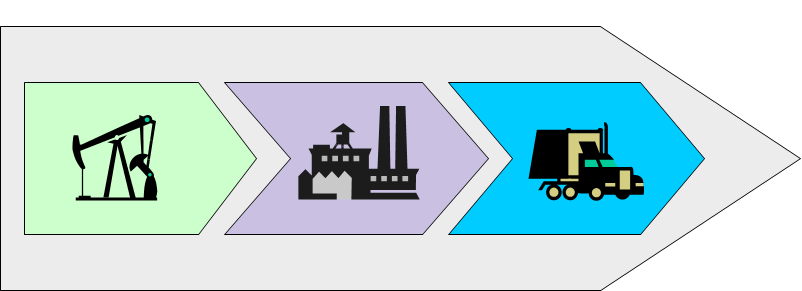
Supply chains are product and service streams.  Materials, merchandise, and information (printed and digital) flow through networks within and between enterprises.  From one operational step to the next, products and services transcend in value as they make their way to their final destinations: the end users.

Supply chains are sensitive to disruption.  When a disruption hits one process, every part of the supply chain feels it.  A delay in the loading of a truck, for instance, may entail a change in production schedules at a manufacturing facility it is supposed to deliver to, which in turn may cause a shortage of a product the facility is supposed to make. 

Performance measures are popular as many people could relate to them.  They are simple and easy to appreciate.  They show how a person’s work is doing versus a target that fits to that person’s tasks.  The performance target would be linked to higher levels of performance measures that would finally connect to a strategic goal. 

Unfortunately, performance measures do not work very well when there are disruptions.  Whereas they are designed such that different levels of an organisation can be made accountable for them, performance measures are not flexible to changing circumstances.  

For example, a production line supervisor is accountable for how many overtime hours his crew works in a week.  His target is that each crew member does not work more than 4 out of 40 hours of overtime per week.  He controls the overtime by rotating his crew members’ leaves such that not many of them have days off at the same time.  But if the supervisor receives a surprise rush order such that he has to make double his weekly volume, he would be forced to ask his crew to go on overtime to meet that order.  His boss, however, would ask him later to explain why he exceeded his weekly overtime target. 

Disruptions are nothing new for supply chains.  They can be big or small.  They are the results of both adversities and opportunities  And they can come periodically or frequently.  They are never identical in cause and they sometimes come in the most mundane manner, like a surprise doubling of a production order such as in the example mentioned above

Performance measures work when supply chains run routinely, much like in a game of sports.  Sports games operate under fixed sets of rules and conditions.  Players score and meet goals to win. But if it rains, the game stops.  In similar fashion, supply chain professionals perform to achieve objectives set by schedules under favourable and predictable working conditions.  But if someone changes the schedule or everyone has to go home because of a disruption like a virus-causing government-mandated lock-down, the performance measures become useless. 

Disruptions are normal.  They aren’t exceptions.  Disruptions occur often as a result of frequent adversities and opportunities that ripple through the fast-paced interconnected world we live in.

What supply chains need are monitoring systems that tell us not only what is going on but also notify us when there is a need to respond.  We need monitoring systems that will tell us about upcoming disruptions and give us time to take action.             

Two things comprise a monitoring system:   visibility and guidance.  Visibility in the form of real-time information and guidance in the form of alerts to events that merit a response. 

An example is a fuel gauge in a car.  The gauge provides visibility on how much fuel is there in a tank.  It also gives guidance via a flashing light that alerts the driver that the fuel tank is almost empty. 

Monitoring systems are not new to supply chains.  Manufacturing managers harness instruments and gauges to monitor production lines and facilitate process control.  A number of enterprises have adopted technologies such as radio-frequency identification (RFID) tags, block-chains, and artificially intelligent command-and-control systems to oversee supply chains even from long distances.   

Many enterprises, however, have had little success in mitigating disruption in their supply chains despite the growth of high-tech monitoring systems.  This is because many monitoring systems aren’t focused towards disruption.  Instead, they are geared towards performance for the sake of measuring results versus strategic goals, which as aforementioned don’t really contribute very much in a frequently disruptive environment. 

We, therefore, need to re-orient supply chains towards monitoring for disruption, not performance.  By watching out for disruption and responding to it, supply chains would be able to muster resources to mitigate it, even perhaps take advantage of it. 

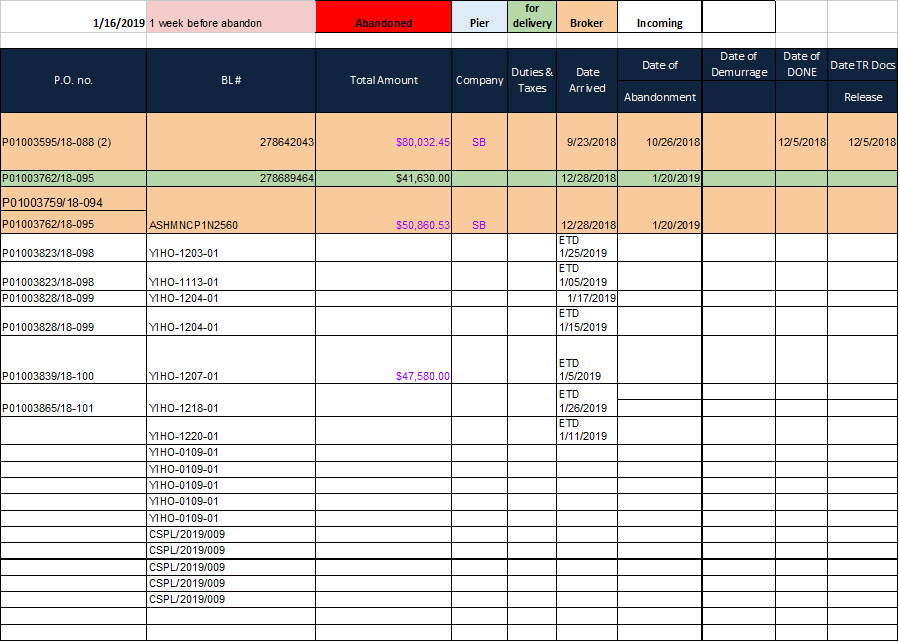
One doesn’t have to start with an intricate, complicated or expensive system.  One can begin with simple reports from various operations along the chain.  For instance, vendors, brokerages firms, and shipping companies can email the status of orders for imported materials. 

Import status report

A status report such as the one above can tell stakeholders about impending issues such as a shipment that’s about to be considered abandoned and subject to penalties.

Supply chain engineers can make improvements step-by-step by tailoring feedback systems to fit different processes.  SMS texts summarising daily customer orders, entered orders in the database, communicated factory orders, MRP II real-time plans are examples.     


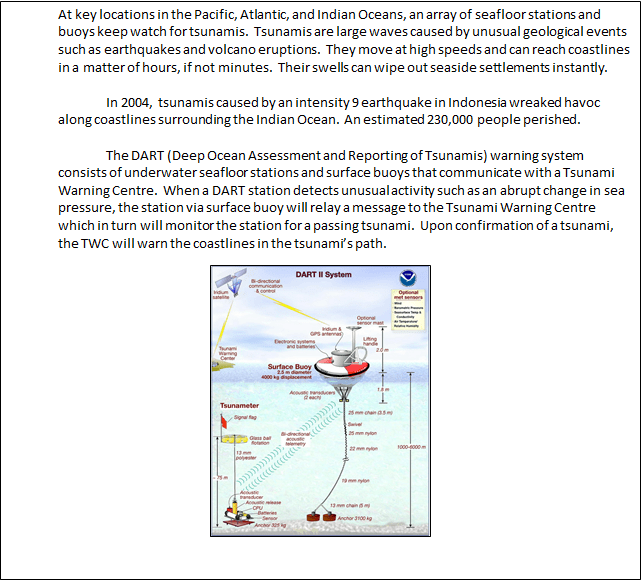
A supply chain monitoring system can also be like a tsunami warning system: 

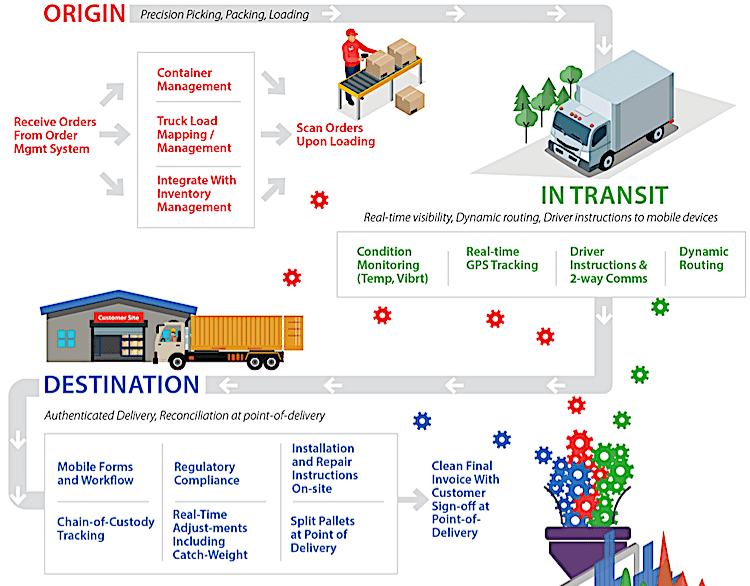
Or it can be manifested like a dashboard for supply chain professionals to see:

Whatever the design, the purpose of the monitoring system is to allow stakeholders to watch out for disruption and respond when needed. 

Performance measures have not proven to be helpful in our disruptive-driven world.  We need monitoring systems that provide visibility and guidance especially for supply chains.  They don’t have to be complicated; they just have to be adequate enough to bring attention to disruptions.

Disruptions are a result of both adversity and opportunity.  In either case, it’s always best to be one step ahead whether it be to mitigate or to take advantage of whatever’s out there.  

The Basics of Supply Chain Mapping

A map is a visual representation.  In the context of supply chains, it describes the flow of operations and/or information pertaining to the procurement, transformation, and logistics of products and services. 

To put it another way, it’s a visual aid that shows what a supply chain looks like and how it functions. 

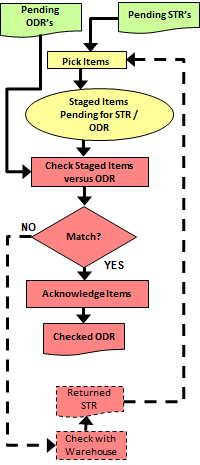
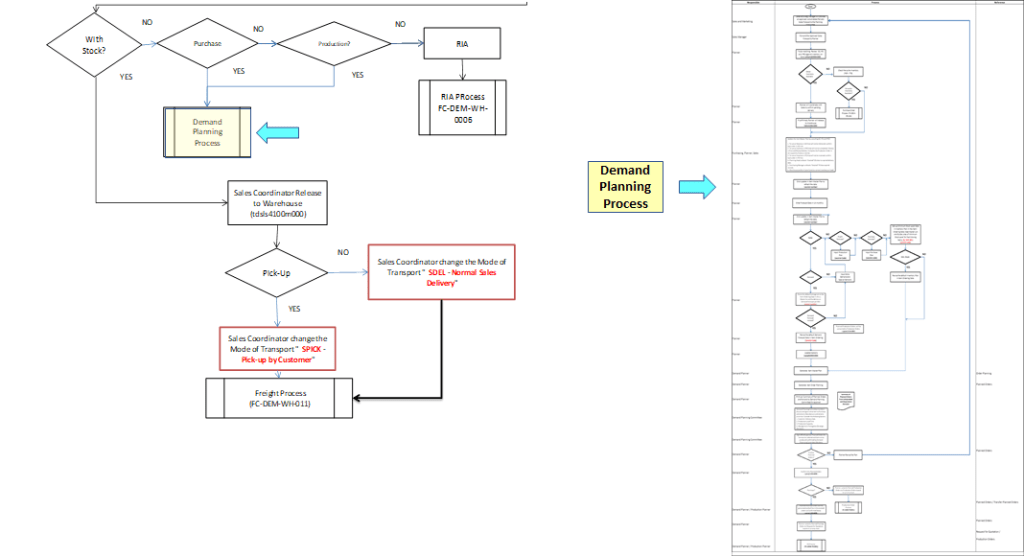
The simplest way to map a supply chain is via the flow chart:

Some supply chain professionals (consultants especially) use different shapes to distinguish the kinds of processes in their maps.  Rectangles, for instance, may represent a transformation process; a triangle is a checkpoint or a quality inspection; a circle is a starting point, endpoint, or a reference to another flow map. Lines can be solid for physical flow or dotted for information flow:

 Other mapmakers go further by organising steps by departments: 

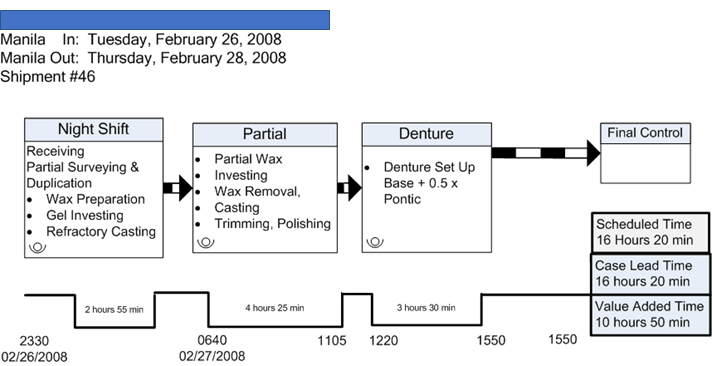
Followers of the Lean concept use Value-Stream Maps (VSMs) to show the lengths of time steps take during a process.  The point is to show which process adds value (such as where there is transformation) and which does not (such as waiting, inspection, movement):

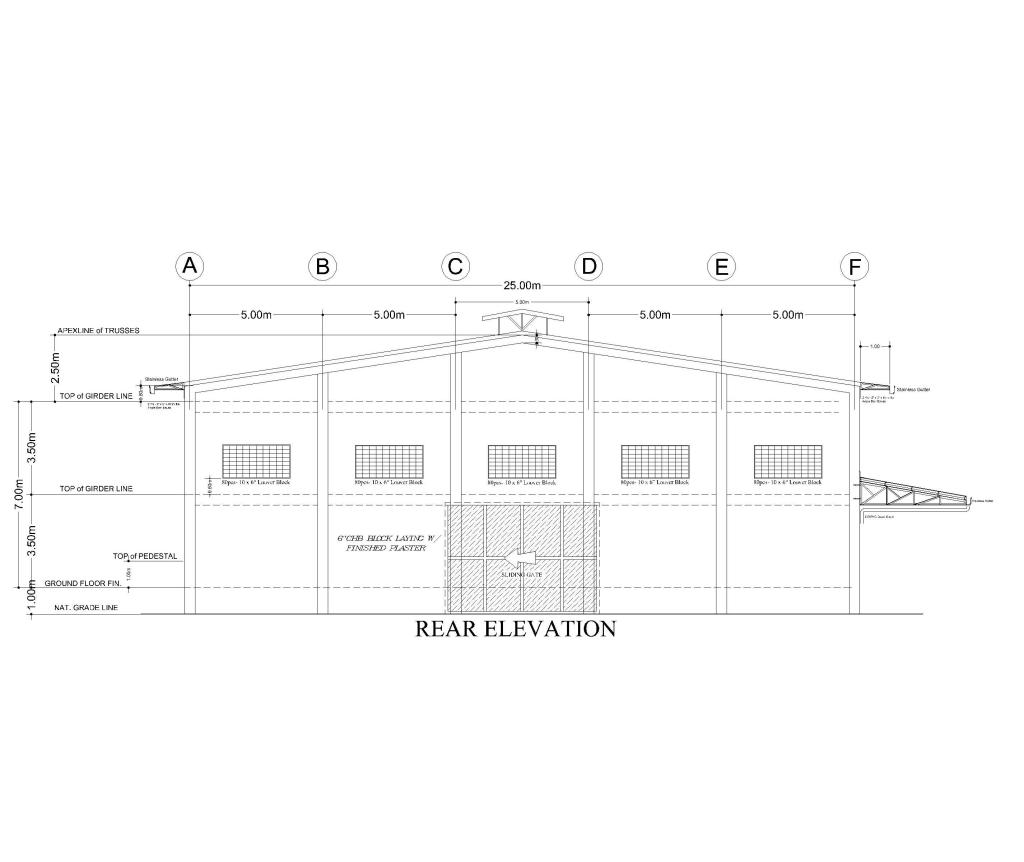
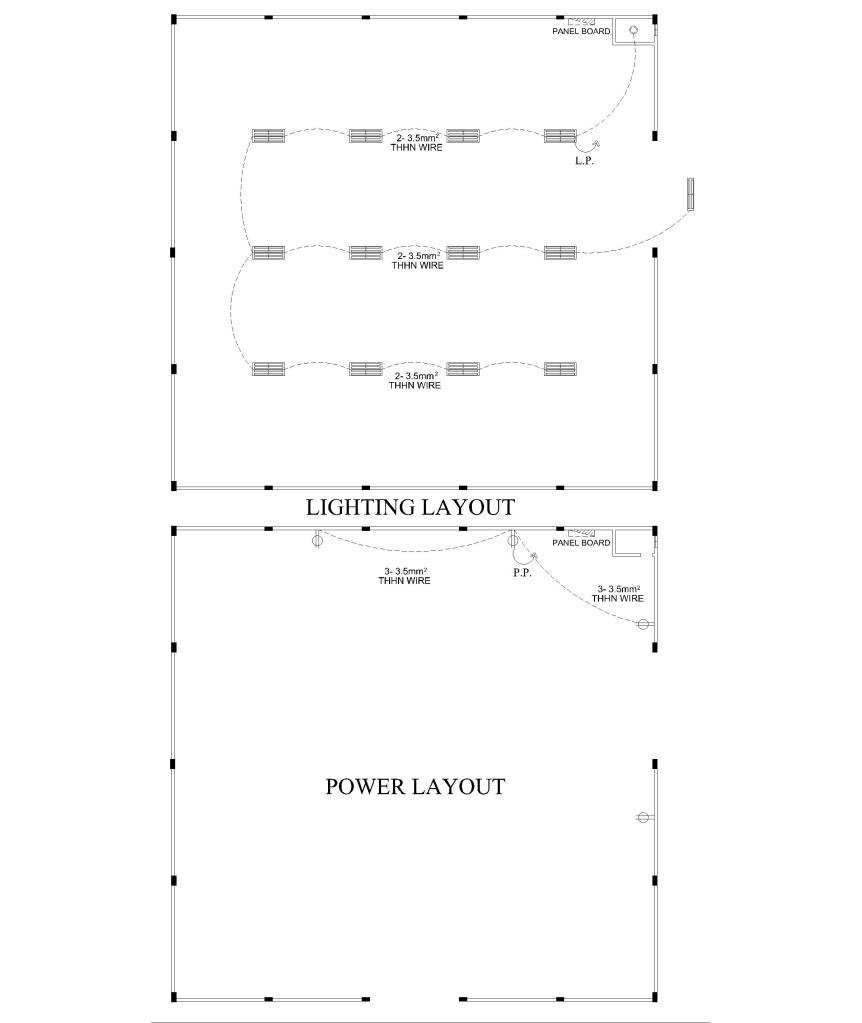
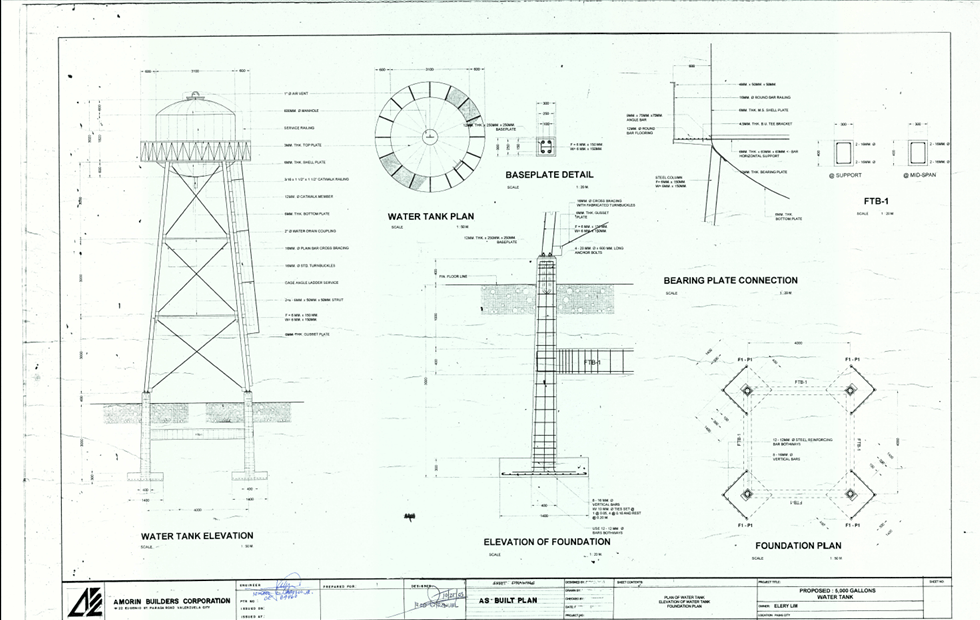
Maps are to Supply Chain Engineers as structural plans are to Civil Engineers and as circuit schematics are to Electrical Engineers.  Whether it be to build, repair, troubleshoot, improve, or optimise, Supply Chain Engineers need maps just as every other engineer needs a diagram.   

Typical civil engineering construction plan


Typical simple electrical layout

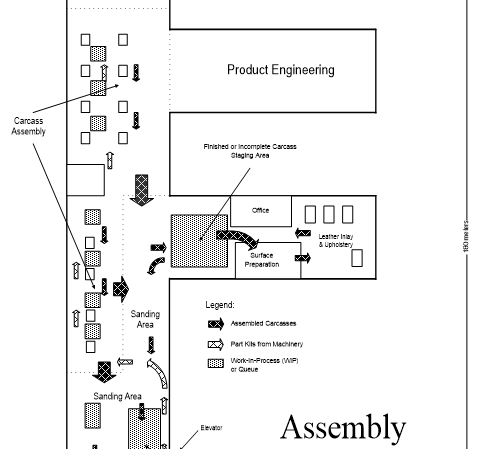
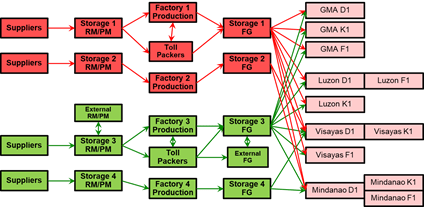
Unlike engineering drawings which focus a lot on structures and specifications, supply chain maps put more attention on flow.  But this does not mean supply chain mapping doesn’t consider structures.  One can have supply chain maps in the context of facility plans. 

Supply chain maps can become more detailed and thereby look more complicated.  The level of detail in a supply chain map depends on how small a step is to be made visible. 

Engineering drawings are arbitrarily detailed depending on the audiences they address.  Engineers draw their plans and diagrams on differing levels of details.  They usually start with an overall plan and then break down the plan into varying descriptive drawings.  For example, civil engineers would draw an overall structural plan which would be supported by plans showing sectional details and specifications.

In the same way, SCEs would draw an overall map and add more detailed maps showing specific details of processes or steps. 

Executives, managers, staff, and stakeholders should be able to easily understand supply chain maps such that they can make rational decisions. 

Supply chain maps should be treated the same way as engineering drawings when it comes to setting up new product and logistics streams.  Many times, enterprise executives would build facilities first and then hand them over to supply chain professionals to set up and run operations.  And in those many times, the operations would start in spectacular failure or experience immense and expensive difficulties.

This is what happened when a large multinational built a new factory.  Equipment was high-tech and the manufacturing process assured high quality coupled with high-capacity production.  The drawback was the facility was located far south of the city.  Logistics managers were just told to adapt the transportation flow to the new facility.  Deliveries at the start ran into problems as truckers complained to having to drive longer distances for the same contracted freight prices.  This was eventually resolved but only after the company shouldered significant expenses. 

Supply Chain Engineering must go hand-in-hand with any planning and implementation of a new or improved process.  It cannot be a discipline that takes care of what was neglected.  It should be an active and equal participant from the start to end of any product and service strategy. 

Mapping is a basic first-step tactic Supply Chain Engineers use to make visible the supply streams they study.  Maps come in form of flow charts, value-stream maps, or operational plans.  They differ depending on how they are applied.  Their purpose is not only for visibility but also for planning.  Maps are useful for building and improving supply chains. 

We build after all based on our visions. 

Twelve (12) Things Supply Chain Engineers Do for Enterprises

Supply Chain Engineers (SCE’s) are much like any other engineer.  Just as engineers design, build, and install structures and systems, SCE’s do the same specifically for supply chains. 

Supply chain engineers shape the networks, processes, and systems that underlie product and service streams.  Their projects are either big and small.  Project scopes can range from setting up a whole new distribution network to the simple improvement of inspecting inbound materials at a receiving dock. 

Most supply chain managers try to solve their operations’ problems by themselves.  If a customer order was undelivered because there was no room on a delivery truck, the manager would find another truck to load and ship the ordered items.  But if the manager observed that pending orders were accumulating and it’s because demand is outstripping trucking capacity, he’d ask truckers to just get more trucks.  He wouldn’t realize that an SCE can determine the best transport asset mix and routing system instead of having more trucks a freight provider will eventually charge to the enterprise.  Without SCE’s, supply chain managers often patch problems with band-aid solutions. 

SCE’s offer an engineering expertise that go beyond the scope of supply chain management.  They synchronise the interconnecting links of supply chains by designing, building, and implementing systems, facilities, devices and processes that would sustain the productive flow of goods, services, and data.  To put it another way, SCE’s bring about supply chains that run reliably at lowest cost and at best quality and service for enterprises and customers. 

SCE’s do a number of tasks that help enterprises with their supply chains.  The following are twelve (12) examples:

  1. Map Supply Chains. SCE’s can lay out the flows of supply chains and make visible the nitty-gritties of an enterprise’s operations, including the processes involving vendors and customers.  Supply chain maps are instrumental in identifying weak points along product and service streams;
  2. Set Up Monitoring Systems. SCE’s can set up systems that would show what’s going on in supply chains as well as alert managers of impending disruptions.  SCE’s can create dashboards that would show key data about supply chain operations, such as status of imports, inventories, pending orders, losses, and scheduled deliveries;
  3. Customise Order-to-Delivery. SCE’s can tailor order fulfilment systems for companies depending on their industries and customer service strategies;
  4. Propose Supply Chain Models for New Products.  SCE’s can design supply chain models for new or relaunched products and services;
  5. Balance Operations to Synchronise Flow. SCE’s can devise systems that synchronise the flow of merchandise from vendors to enterprise to customers.  It is an SCE’s aim to streamline flow to minimize waste in waiting times and work-in-process inventories;
  6. Implement Statistically Based Process Control Systems. SCE’s can implement systems that minimize variability, what some would call statistical control.   At the same time, SCE’s can tweak operational capabilities to churn products and services consistently for quality assurance;
  7. Study Feasibility of Projects. SCE’s can study the feasibility of capital expenditure projects via their expertise in engineering economics and evaluate options to determine which would provide the best rates of returns;
  8. Introduce Ideas to Spread Inventories.   SCE’s can develop inventory planning methods that would spread product stocks along various points of the supply chain which would lead to better customer service and minimal working capital;
  9. Design Operations That Adapt to Supply & Demand Variability. SCE’s can plan and lay out work-place operations that would be flexible to fluctuating merchandise volumes;
  10. Determine Supply Chain Capacities and Baseline Efficiencies.  SCE’s have the technical prowess to compute supply chain operational capacities and efficiencies, whether they be machine, labour, or logistics-related. 
  11. Find the Best Method to Maintain Fixed Assets. SCE’s can evaluate what would be the best maintenance program for the supply chain’s equipment, facilities, and logistical infrastructure.   
  12. Develop Frameworks to Support Collaboration.  SCE’s can help enterprises set up support structures to collaborate better with vendors and customers.  These range from simple communication protocols such as mobile messaging of purchase order status to shared networks and methods for vendor-managed inventories and customer inventory replenishment;

These tasks may sound familiar to industrial engineers.  That’s because they are from industrial engineering.  Supply Chain Engineering is an offshoot of Industrial Engineering in that both share the same purpose:  finding ways to continuously improve productivity.    

Whereas IE’s traditionally work within the confines of an enterprise, SCE’s look at the entirety of supply chains. SCE’s judge their work in the context of supply chains. SCE’s seek beneficial value for all stakeholders along the supply chain from vendors to customers, from in-house departments to 3rd party providers. SCE’s strengthen the interdependencies that exist in supply chains.

Supply Chain Engineers build supply chains.  They do what engineers do but more so for supply chains.  SCE’s have the abilities to do a number of things that would benefit enterprises. 

SCE’s are a new breed of industrial engineers and they have a lot to offer.  It is hoped enterprises will welcome their opportunity to contribute.    

About Overtimers Anonymous

Bad Things Happen to Everyone

Jpeg

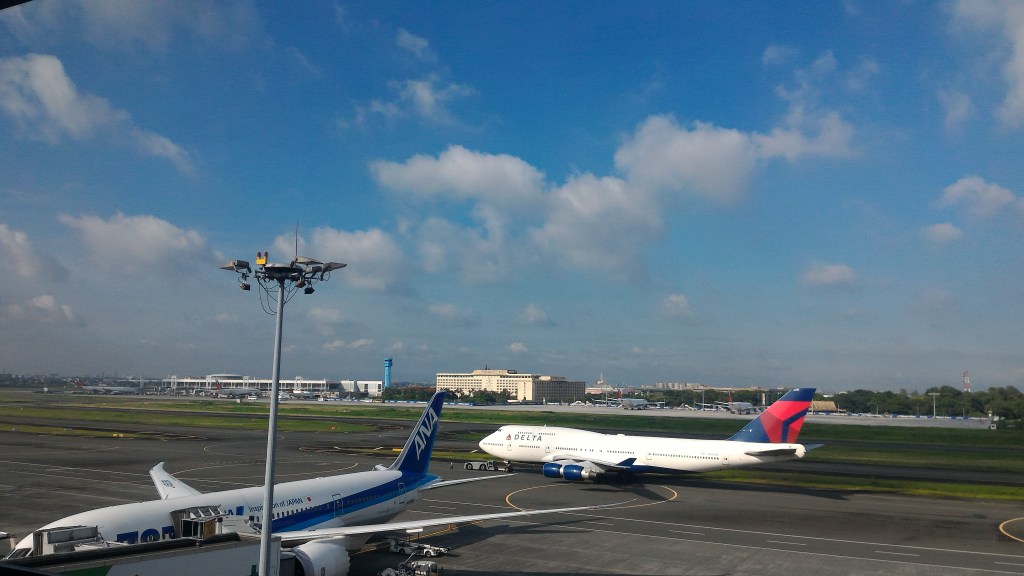
Asian airlines such as Cathay Pacific, Singapore Airlines, and ANA are known for their excellence in customer service.  A lot of people love flying with these airlines. 

But thanks to the coronavirus (COVID-19) pandemic, these same airlines are experiencing their worst business slump in recent memory.  No one wants to fly these airlines not because their service deteriorated but because nations have closed borders or people risk losing days in quarantine if they travel. 

Customer service excellence has made Asian Airlines the pride of their nations and has given them leadership in competitive air travel industry.  But it took just one adverse virus to bring down their business.    

Adversities such as the coronavirus can quickly kill an enterprise.  It doesn’t matter whether business has been bad or good, whether the enterprise has a very high reputation for service, or whether the enterprise has a very nice reputation.  Adversity has no bias. 

Customer service is very much defined as in we know it when we experience it.    Adversity is the opposite.  We know it when it’s there but we don’t know what shape, size, or form it would take and we don’t really know what the experience will be like.  Adversity comes unexpectedly, without any warning, and we can’t determine its degree until it’s there. 

One may manage service but one cannot manage adversity.  Service is controllable but adversity is not. 

We may mitigate adversity.  At least we can make our enterprises capable to ride them out. 

As much as we don’t know what, when, and how an adversity would arrive, we only have the weapon of our experiences to help us.

It is in experience that we design the drills and exercises to simulate how to deal with adversities like earthquakes and fires.  It is in experience that we formulate security protocols such as daily back-ups of files, updating our anti-malware software, and the simple locking of our doors at night.  It is in experience that we spend time and money to see our dentists and doctors on a regular basis.  And it is in experience that we set emergency response plans that automatically trigger without any delay or need of approval from executive management. 

Drills, exercises, protocols, and check-ups make us ready to meet the next adversity.  They may not address an incoming adversity directly but they help our enterprises become structurally fit to withstand the possibly damaging effects. 

Bad things happen to everyone.  It doesn’t matter if your enterprise is riding high as a reputable service provider or as a ruthless start-up.  Adversity hits without warning and without prejudice.  Only those who are fit with ready methods and structures have the best chances to overcome the impacts. 

About Overtimers Anonymous

Why We Need to Build Supply Chains

Enterprises are planning to rebuild their supply chains in the wake of the pandemic of 2020. 

Well, no, not really. 

Many enterprises are planning to resume production and boost inventories in the aftermath of the COVID19 pandemic.1 Some firms will narrow their product lines to those that are in high demand (e.g. toilet paper).  Others will stock up on raw materials and seek vendors that are nearer to their production sites as alternatives to risky international sources.

Not many firms, however, plan to build or rebuild supply chains.  I don’t blame them. 

Building a supply chain is not an attractive option, at least at first glance.  Most enterprises work within existing supply chains and would not outright see a good reason to build one that overlaps with other organisations. 

Enterprises would likely focus internally in their own operations if there’s any supply chain building that needs to be done.  And even then, enterprise executives would hesitate to do any major change if they perceive it would entail too much work and cost that wouldn’t reap much beneficial return.

Some companies in the past did try to rebuild their supply chains.  They called it “re-engineering” and it was popular in the 1990’s.  The idea was to redesign business operations from scratch and then apply sweeping changes to existing operations. 

It didn’t last long.2 Many companies ended up downsizing instead of changing.  A lot of people lost their jobs and companies didn’t realize much of any reward.  Re-engineering quickly lost its luster as fast as it was introduced. 

Some consultants, academics, and information technology (IT) vendors still push for re-engineering though they avoid the term.  Some pitch IT platforms such as Enterprise Resource Planning (ERP) to drive operations improvements.3 Alas, ERP and other similar platforms have not been as successful as hoped.   Many projects have fallen to the wayside

Many enterprises took to managing supply chains than into re-engineering them.  They sought talented people who’d know how to regulate inventories, negotiate with vendors, process orders, and make sure operations would comply with the latest environmental sustainability rules and occupational safety & health guidelines.  Executives also placed hopes that supply chain managers can lead in implementing new technologies such as artificial intelligence.  Supply chain management had become the norm.  Re-engineering was forgotten. 

Then the pandemic came. 

Enterprise executives know that supply chains need to change in the aftermath of COVID19.  And it isn’t just because of COVID19.  Before that, it was the tariff war between the United States and China that turned global trade upside down, not to mention similar disputes such as the British exit (Brexit) from the European Union.  There were also the supply and price fluctuations in commodities from metals, rare earths, to crude oil.  There were also the natural disasters. There were also the cyber-security data breaches.  And there were also the numerous upstart entrepreneurs who were introducing technologies such as drones, ride-sharing, video-streaming, and ecommerce mobile apps that threatened traditional businesses. 

Enterprises had to accept: supply chains, especially the global ones, were vulnerable.  They don’t work well in a disruptive environment.  The pandemic proved it.  All one had to see were the idle factories, closed warehouses, shut stores, and empty shelves.  The present supply chain set-up no longer applies. 

Building supply chains isn’t really that hard and expensive.  Sure, it requires investment but just like supply chain management, the key is talent.  One just has to employ the right people with the right talent.  The good news is that the talent is there in front of us, ready to work and available.  They are the industrial engineers; they have the tools and the skills and whom I’d rather call supply chain engineers.   

It’s not management but engineering that would drive the building of supply chains.  Engineers build things.  That’s their role.  Managers don’t do building; that’s not their role. 

The process of building supply chains is not too far off from constructing a factory or warehouse.  One has to have a plan, a timeline, and a full list of resources and costs.  And one has to have a engineer with the expertise and leadership to design and oversee. 

The difference lies in the nature and scope.  Whereas a facility such as an office and warehouse lies within the bounds of an enterprise, a supply chain encompasses the stream of products and services that crosses organisations and borders. 

A supply chain is like a river.  Build a dam and that’s a facility at a point in the river, with the purpose of harnessing the river’s water.   Building the supply chain involves setting up systems and facilities along the river to ensure the continuous and sustainable flow of water from start to finish. 

The supply chain engineer works not only with stakeholders within the enterprise but with stakeholders from other enterprises, such as but not limited to vendors and customers.  The engineer identifies and designs what needs to be built along the supply chain river. 

Most of what would be built first would likely be the networks and systems that link along the supply chain stream*.  The engineer would seek the optimal design that would synchronise and sustain flow that would uphold competitive standards of reliability, quality, and versatility. 

The 2020 pandemic is the latest in the series of 21st century disruptions to supply chains. It was the worst and it won’t be the last.  Enterprises who realize that their supply chains are vulnerable and need to be built with engineering talent would be on the right track to reviving their competitive edge.  

*Note:  I wrote a similar blog in LinkedIn in July 2019 in which I stressed structures in supply chain building. 

About Overtimers Anonymous

I’ve been immersed in work since 1984.  My long-spanning career since graduation from the University of Wisconsin-Milwaukee include managerial assignments at P&G Philippines, a harrowing experience as an entrepreneur in freight logistics, participation in several successful consultancy projects, and finally as an administrator of a company that builds and leases warehouses and offices.

Overtimers Anonymous is a blog about the experiences many of us have in our professional lives and how we can become more productive. (A long time ago, OA was a newsletter about the social lives of young professionals; but that was really a long time ago). 

I write quite a bit about supply chains. Supply chains are product and service streams that run around the world.  They cover just about everything that has to do with getting, making, and delivering stuff from one place to the next. 

Because supply chains haven’t really been doing so well recently [circa 2020], I’m hoping that this blog, for all what it’s worth, would also offer some help for enterprises in finding ways to make things better. 

And why do I call it Overtimers Anonymous? Because many of us who work are in our jobs more than eight hour a day and are more often than not unseen. 

If you want to pick my brains for information and ideas, please feel free to contact me (ellery_l@yahoo.com) or drop me a text at +639178353546. [I’m also on Viber and Messenger]. 

E. S. Lim

“Are You Happy With Our Service?”

This Photo by Unknown Author is licensed under CC BY-SA

A bank had a survey booth near its front door in which one drops a small plastic ball in either of two (2) slots:

  1. Happy With Our Service
  2. Unhappy With Our Service

I dropped the ball on the Happy slot.  The teller was courteous and polite and since I was just updating a passbook, I was in and out of the bank in just a few minutes. 

But I’m not really happy with the bank. 

The bank recently announced it won’t allow online tax payments in the evenings and over the weekends.  I thought this was ridiculous since the point of having an online payment system was to have available banking services 24 hours a day, 365 days a year. 

Going to the bank to deposit money and pay bills had also become a time-wasting experience.  Lines can be long and the time spent can run up to several hours.  Tellers would tell me that the bank’s computer system was slow. 

But despite it all, the bank’s tellers were always polite and courteous, although sometimes they’d have a hard time smiling as they’d be overworked with the unending influx of customers.  The bank hasn’t hired extra tellers since it opened some years back and even as its number of customers grew tenfold. 

The bank’s service is good.  Its system of management is not. 

Beating the No-Win Scenario

https://www.youtube.com/watch?v=vB_UtemSm3s

In the movie, Star Trek: the Wrath of Khan, Lieutenant Saavik (played by Kirstie Alley) asks Captain Kirk (played by William Shatner) how he handled a no-win scenario called the Kobiyashi Maru when he was a cadet at the Starfleet Academy.  It turns out Kirk is the only cadet in Starfleet history who ever beat the no-win scenario.  “I don’t believe in the no-win scenario,” he replied when Saavik opined Kirk didn’t face the point of the simulation, which is to train cadets to face the prospect of losing and death.  (The Wrath of Khan, 1982, https://www.youtube.com/watch?v=vB_UtemSm3s

Our work, and more so our life, can feel like a no-win scenario.

We sometimes feel we are stuck.  We want to earn more money but we can’t.  We want to travel but we can’t.  We want to have more time but we can’t. 

We want to start a new business but we don’t have enough capital. We want to travel but our employer doesn’t allow us enough vacation leave.  We want to make a change in how things are done at work, but we can’t seem to get people to cooperate. 

We read from the news and social media how other people become successful.  There are entrepreneurs who started small and are now earning big.  There are the blog writers who have millions of followers in social media.  There are the very happy families who seem to have all the time in the world to travel together.  There are the companies where improvements in products and processes are happening in real time. 

We wonder how they do it.  And we say we can’t do what they did because they were lucky or rich in the first place.  They had the resources, we didn’t.  They had the opportunities, we didn’t.  They have the talent, we don’t.  They have the upper management support, we don’t. 

When we do try and end up failing, we believe more strongly we can’t win.  We can’t progress.  We’re stuck. 

But we can be whatever we want to be once we realize we can change ourselves or the environment we live in.   

We can adapt or we can change the rules of the game of real-life. 

A lot of people stress innovation and guts.  But I believe It starts with initiative and confidence.  One just needs to begin by saying “I can do it.”

“Change your world.” 

Robert McCall, The Equalizer, played by Denzel Washington (The Equalizer, 2014, https://www.youtube.com/watch?v=AsGTnJM1O4g)

Seizing Opportunity and Addressing Adversity via Supply Chain Engineering

We should not focus just on adversity.  We should also focus on opportunity.  We tend to point to adversity when there’s disruption.  But as much as there is adversity behind every disruption, there is also opportunity. 

          This should be common business sense but it can be difficult to accept when there’s a raging disruption going on; something like a pandemic, for example.           

          It’s supply chains that often feel the highest impact when there’s a disruption.  This is because supply chains are made up of vast interconnections within and between enterprises. 

          We blame all sorts of adversities for disruptions.  Adversities can be natural like typhoons and tsunamis or they can be man-made like sudden price increases or an entrepreneur that introduces a new e-commerce app that challenges a traditional corporation’s business. 

          Disruptions, however, are also a result of opportunity.  When an enterprise seizes an opportunity, it means more often than not disrupting its normal way of doing business to make way for a new idea.   

          In the early 1990’s, a company that used to deliver telegrams (i.e. short typed messages) decided to overhaul its operations and sell mobile phones.  Today, Globe Telecom is one of the world’s leading telecommunications firms.   

          Netflix started as an online DVD (digital video-disc) rental company in 1997 and has transformed itself into a video entertainment streaming service and movie-production behemoth.  Netflix caused disruption in the video rental service industry and is causing disruption to the traditional film-making industry.  At the same time, Netflix disrupts its own enterprise by constantly changing its business model.

          Disruptions are the new normal, especially for supply chains.  And since just about every enterprise depends on supply chains, there has never been a greater need for Supply Chain Engineering

          Supply Chain Engineering is about building supply chains with the purpose of boosting productivity and adding versatility so enterprises can not only be competitive but also have the ability to transform. 

          Supply Chain Engineering is Industrial Engineering redefined.  It isn’t scientific management.  It is engineering as it stresses the design and setting up of supply chain systems and structures. 

          Supply Chain Engineering takes into account both adversity and opportunity.  This is because as an engineering discipline, it focuses on putting up systems and structures that will support enterprise strategy.  Engineers construct facilities and install equipment for enterprises to make available their products and services.  In the same way, Supply Chain Engineers (SCEs) bring into reality supply chain systems and structures so enterprises can procure materials and deliver products and services to customers. 

          SCEs are challenged to develop supply chains into ones which will have the capability to change whether in response to adversity or to be ready when enterprises remodel themselves. 

           Disruption is the common denominator of adversity and opportunity.  We tend to sometimes get too preoccupied with adversities such that we pass up opportunities.  Our enterprises should be ready for both.  And the best path to do to do is via Supply Chain Engineering. 

What Have We Learned About Adversity vis-à-vis COVID19?

COVID19 is the latest and worst adversity to global economies in recent memory.  Despite the early warnings in late 2019, enterprises around the world were caught off guard.  Executives could only watch helplessly as borders closed and governments enforced lock-downs that shut many businesses down worldwide.   

          Despite all our talents, experiences, and knowledge, we were unable to prevent COVID19.   What went wrong?  What can we learn from this catastrophic experience?

          First, we need to realize that COVID19 is not a single once-in-a-lifetime adversity.  It is only one and the latest in a series of adversities.  

          For example, before COVID19, there were the Australian bush-fires that razed thousands of hectares of land and caused widespread environmental damage.  Before that, there was the Hong Kong protests which disrupted financial transactions in Asia-Pacific.  And at the same time, there was the United Kingdom’s chaotic exit, a.k.a. Brexit, from the European Union.  And let’s not forget the United States’ sudden imposition of tariffs against China which disrupted international trade.   

          Second, adversities are never identical.  They come in different shapes, sizes, and intensities.  There can be visible or invisible, tangible or intangible.  Each adversity is unique, a class by itself.  They can last long or go away in a day.  The 2011 Japan earthquake, for example, lasted just six (6) minutes but caused damage that took months for the country to recover from.  

          Third, adversities can be natural like typhoons and earthquakes or they can be man-made like trade tariffs and terrorism.  They can be intentionally created such as when activists blocked a railway system at Canada, causing delays in shipments.  They can also be the result of business and technological innovations such as the introduction of same-day drone deliveries.  

          Fourth, adversities happen frequently and unpredictably, in which most are low-profile or localized.  A vendor delays his deliveries.  A truck heading to a customer breaks down.  Public utility transport operators stage a strike such that employees couldn’t go to work.  A power failure shuts down a production line.  The boss gets sick on the day of an important meeting with a customer. 

          Fifth, how big the disruptive effect of an adversity is dependent on the vulnerability of who or what it affects.  When the Pope visited Manila in 2015, the government enforced a week-long ban on cargo trucks going to and from the Manila International Container Terminal (MICT).  This caused delays in unloading of imported goods from container vessels.  Shipping lines and truckers experienced losses.  Enterprises who were waiting for deliveries but who stocked up with buffer inventories, however, did not feel much of an impact. 

          We can conclude adversities are part and parcel of daily life.  They occur all the time, are never identical, and come in different intensities.  Enterprises, their supply chains in particular, are most vulnerable to the disruptions resulting from adversities. 

          Enterprises have resorted to Risk Management to mitigate adversity but judging by the results, it has been less than effective.  Enterprises would need to widen the scope. 

          What do we need to do to address adversity? 

          We need to change our mindset and our approach