Problems vs. Situations

Problems have solutions. Situations are simply things we need to live with, Seth Godin writes. 

He goes on to say:

Once we realize that a problem we have isn’t a problem at all, but actually a situation, it’s easier to do our best to move on and thrive. Focusing on a situation is usually a source of stress, not a way forward.

I disagree.

There may be problems where there are no available solutions; it doesn’t mean there aren’t. 

A mediocre person says: “I’ll do my best.”

A great person says: “I don’t believe in no-win scenarios.” 

About Ellery’s Essays

Productivity: They Still Don’t Get It

Leading global consultancy McKinsey defines productivity as Gross Value Added (GVA) per work-person and reports that the world needs productivity growth on top of balance sheet profitability.

McKinsey still doesn’t get it.  The world doesn’t need labour productivity, it needs supply chain productivity, which is how fast and how much organisations sell merchandise and collect revenue vis-à-vis utilisation of resources & assets. 

Limiting productivity to labour alone is narrow-minded.  It propels bias towards reducing headcount and adding workloads to employees. 

Focus should be on performance of operations, not just people. 

About Ellery’s Essays

The Marimba Player

Maybe you should try the marimba.”

It was a statement, not a question. 

My music teacher was exasperated with my piano lessons.  The teacher believed the piano was not for me. 

The marimba, which is unfairly labelled as an oversized xylophone, utilises only one scale versus the piano’s two, which made it easier to teach.

I got the hang of the mallets in no time, and my music improved. 

Like most students, I played in a recital before I graduated high school.  My music teacher gifted me a cheap plastic bust of Mozart, which I treasure to this day. 

I never saw my music teacher again. 

How I very much regret for not ever thanking her.

About Ellery’s Essays

The Good Problem

The repairman sighed.  No one called; there was nothing to do. 

The ad said it best:  we make dependable appliances

That meant that the repairmen, even though employed and salaried, had no jobs pending.  They were there just in case, nothing else. 

It was a lonely life, and the repairmen complained about the loneliness. 

For the company’s executives, having lonely repairmen was a good problem.  They would rather have that than the alternative, which wouldn’t be good. 

The brand, however, was long gone.  They don’t build them like they used to. 

About Ellery’s Essays

The Need to Change the Supply Chain

When a parcel arrives at my doorstep, I see myself at the end of a supply chain process—a process which involved multiple operations from procurement, manufacturing, to logistics.

But I could care less.  What mattered is I got my parcel and the items I ordered.

The individuals in the respective supply chain processes which enabled the delivery of my items could care less too.  What mattered to them was that they did their jobs, got paid for it, and were moving on to delivering their next order. 

Many a mission of supply chain managers is to deliver products & services at the right time, at the right quantity, at the right quality, and at the least cost.  Supply chain professionals deemed their jobs done as soon as they finish delivering the orders of their respective enterprises’ customers.   

Unfortunately, the adverse events of the 2020s taught me that this mission was flawed.  The mission was too limited in scope in that it did not consider the many processes which laid outside the boundaries of individual enterprises.   

A first reaction would be that supply chain managers should work with their partners, i.e., vendors, service providers, & customers.  It, however, went deeper than that.  Supply chain managers had look at not only those who were next door to them but also at those who were further before or after the vendors & customers of their enterprises.  Supply chain managers needed to work with partners to improve the productivities of all the connections of the supply chain from the sources to the end-users. 

That was a tall order to ask, as a lot of work would be required just to establish the relationships between all the members of the supply chain. 

But it was becoming necessary because of the adversities. 

Adversities are unfavourable situations which arrive in untimely fashion.  They not only disrupt the operations of enterprises but also entire supply chains as well.  They can be natural or man-made such as earthquakes, weather disturbances, epidemics, wars, trade barriers, or a groundbreaking app invented by an entrepreneur.  They can originate from outside or inside enterprises and the disruptions they cause could be far from predictable. 

Adversities had become fiercer as supply chains went global and became more complicated.  Selling to global markets and sourcing from locations halfway around the world came with compounded risks.  Enterprises had not adapted or anticipated these risks.  

Unprecedented adversities, thus, buffeted supply chains at the onset of the 2020s.  Executives found themselves at a loss as they had no influence or upper hand over the adversities.  They did not know what to do as disruptions made demand & supply more uncertain.   

Executives complained to government leaders which was futile since many politicians were just as much as the reason for many adversities in the first place.    

Executives preached resilience but what did that even mean, other than hunkering down and weathering through storms? 

Some hoped that benefits of new breakthrough technologies like Artificial Intelligence (AI) would outweigh the impacts of adversities setback.  But then again, many executives could not comprehend what AI was or how it could be applied.  AI wasn’t a know-it-all computerised oracle which could solve any problem. 

Supply chain managers resorted to traditional playbooks to seek ways out of adversities. 

They looked for alternative suppliers, preferably nearer to their manufacturing & logistics locales, and thereby closer to customers. 

They attempted to re-negotiate contracts with existing vendors & service providers, especially those their enterprises could not quickly switch away from.

They asked for help.  They argued with legal teams to lobby for government relief (like Apple asking the American administration to defer tariffs on smartphones & other computer equipment).  They requested chief finance officers (CFOs) to allocate more working capital to build inventories.  They worked with human resource managers & labour union leaders in seeking concessions to optimise head counts & payroll expenses. 

But the playbooks could go only so far (if they didn’t fail outright). 

Supply chain managers had to face reality.  The traditional playbooks were no longer useful in overcoming adversities especially those which affected entire supply chains.   Managers needed new methods to solve problems pertaining to the overall supply chain than to operations within the walls of their respective enterprises.   They needed to change the systems & structures that underlie the supply chain. 

Supply chain managers had to first embrace productivity as their aim.  It was no longer about respective enterprises delivering the goods at the right quantities, right qualities, right times, at lowest cost to the next direct link on the supply chain.  It was more about adding value to the merchandise & services which flowed through the supply chain.   Productivity was the aspiration to bringing about more value or worth to every linked enterprise in the supply chain.      

Supply chain management by itself won’t be enough in bringing about productivity improvement.  Supply chain managers needed supply chain engineers.  

Engineers build systems & structures that enable supply chain operations.  Managers oversee operations.  Engineers build or change them. 

Managers plan, organise, direct, & control resources & people.  Engineers design, experiment, test, and commission systems, structures, & equipment. 

If enterprises were to work together to boost the productivities of the supply chain they belong in, they’d had to adopt engineering principles and methodologies. 

Industries had become global in the 2020s and in the territories where enterprises set up shop, adversities became more severe.  So much so that enterprise executives were dumbfounded on how to mitigate the risks and tackle the disruptions.  Supply chains needed to change and supply chain management wasn’t the means to do so.  Organisations needed supply chain engineering.     

The good news is that supply chain engineering (SCE) stems from industrial engineering (IE), a field that has been around since the end of the 19th century, right before the height of the Industrial Revolution. 

The bad news is that many executives and engineers themselves are not familiar with SCE and some have very little recognition of IE itself. 

Nevertheless, executives are slowly recognising the need to communicate & collaborate with their partners & linked enterprises along the supply chain.  Many businesspeople had experienced the disruptions of entire supply chains but don’t know what to do afterward. 

The answer is to boost productivity and to do this via supply chain engineering. 

About Ellery’s Essays

Four (4) Starting Points to Getting the Reliability You Want

MANILA, Philippines, October 3, 2019. An electrical transformer (rectifier) at the Light Rail Transit Line 2’s (LRT-2) commuter railway tripped and caught fire. The fire knocked out train service from downtown Manila to the eastern suburbs of Marikina and Cainta. Thousands of commuters from workers to students were forced to find alternative transportation.

The day after, October 4, the Light Rail Transit Authority (LRTA), which manages the LRT-2, said there was a need to import a new transformer to replace the one that burned. Because it would take almost nine (9) months to import a new transformer and because the transformer is a key component of the electrical system that provides the power for the eastern end of the railway, three (3) commuter stations at the railway’s eastern extreme would have to close and remain shut until the new transformer arrives and the power system is fixed.

Workers and students, who would be inconvenienced by the long shutdown of the three (3) stations, complained about the prospectively longer commute. Even as the LRT-2 resumed operations at the stations unaffected by the burnt transformer, commuters grumbled on social media over statements from the LRTA and the government that either pleaded for patience or told people to accept the situation and adjust their schedules accordingly. With roads already clogged and a major highway partly closed due to ongoing construction, commuters from neighbouring cities, Marikina & Cainta, found themselves resigned to cramming into overcrowded public buses and jeepneys and enduring Manila’s traffic gridlock.

The solution to the problem is simple. Replace the transformer. How come it would take so long? Because the LRT-2 management didn’t keep a spare. Management apparently didn’t want to keep a spare because it was expensive. Price tag of a brand-new heavy-duty transformer would cost the LRTA up to two (2) million pesos [$USD 35,000]), not including the additional expenses for storage and security.

It’s a norm of not only the Philippine government but also many businesses not to keep spares, especially those that are not locally available and had to be imported from abroad. Owners hesitate to spend for spares not only because of the high cost but also because they fear the spares may become obsolete or deteriorate over time.

For the case of the LRT-2, not keeping spares saved the LRTA from tying up cash but brought the risk of breakdowns and disastrously long shutdowns.

If the LRT-2 had a spare, downtime of the railway would have been at most only a few days. The LRT-2’s customers would not need to experience such utter inconvenience for so long.

In January 2024, the LRTA announced that the LRT-2 was fully rehabilitated and back to fully normal service, almost five (5) years since the fire that hit the commuter train’s substations.

The LRTA, however, did not say whether they would change policy and keep spares.  It’s likely they wouldn’t.  The LRTA leadership would still be reluctant to spend for expensive spares even if having some would maintain the reliability of Manila’s railways and prevent long inconvenient shutdowns. 

Many executives trade off reliability in favour of continued financial health, i.e., sustained positive cashflow instead of sunk capital in fixed assets.   They also probably will push operations and maintenance subordinates to work harder to ensure reliability with the limited resources and capital available. 

Attaining reliability in one’s system isn’t complicated and it doesn’t have to be costly. Done properly, a reliable system would reduce costs and increase revenues. 

Reliability is the probability that a system will perform to expected standards in a scheduled period.  We measure reliability from its performance (e.g., output) versus expectations or standards (e.g., schedule, capacity).

The reliability of a system, such as a railway, depends on the combined reliabilities of its components, especially when they are in series or inter-connected. The combined reliabilities of the components in a system can go only as far as the reliability of each individual component.

For example, if five (5) components of a system are in a series and each has a reliability of 99%, the reliability of the system would come out as:

99% x 99% x 99% x 99% x 99% = 95%

[0.99 x 0.99 x 0.99 x 0.99 x 0.99 = 0.95]

The resulting total reliability would be 95%, or the system would likely run 95% of the time, or there’s a 5% chance it would fail. To put it another way, there’s a good chance that system failure would occur in as any of five (5) days within a 100-day period.

For a larger system with more components, such as up to a hundred (100) components in series, the reliability of the system will come out as:

(99%)100  = 37%

That is, the system would be reliable only 37% of the time. 63% of the time the system would likely fail. Despite having components with 99% reliability, the total system would be plainly unreliable.

The LRT-2 system in our example was bound to fail given that it incorporates hundreds of components, from its cables, wiring connections, and transformers. Even if each component may have a 99+% reliability, the total system would have a cumulatively high likelihood of failure.

But as much as failure seems certain, one can still improve the reliability of a system and this can be done via four (4) basic starting points:

1.  Map the layout of the system and assess the reliability of each component;

a.  What is the component’s function?

b.  Is a component a stand-alone item or is it a set of parallel items that

back up each other? (e.g. is there grounding wire to avoid short-circuits?)

2.  Identify the weakest components or the ones likely to fail the soonest;

a.   Seek the oldest components, especially those that have exceeded their designed life expectancies.

b.  Identify the components that show signs of wear or abnormalities (e.g. hot bus-bars, rusty bolts, loose breakers).

3.  Replace the components that are old, expired, worn, or showing abnormal indications, even if these items still seem to be performing up to par.

4.  Install parallel back-ups or invest in spares for components that require long lead times for replacement, such as transformers.

From these starting points, management can incorporate a preventive maintenance protocol that regularly monitors the system’s components, especially those identified as weakest or critical.

Preventive maintenance, by the way, doesn’t just mean continuous monitoring and diagnoses of components. It also includes changing parts or upgrading components when they reach the scheduled end of their expected lives even if they are still working well. 

As much as organizations such as the LRTA may have to invest somewhat in spares or back-ups, reliability can be attained via some common sense and via the four (4) starting points mentioned.

Reliability doesn’t mean fewer breakdowns. Components will still break down as the above reliability equations show. But the total system will not, because back-ups and spares at the weakest points coupled with a protocol that continuously replaces or upgrades critical components shall keep the system running like new day-in and day-out.  A system that doesn’t shut down is a system that runs continuously which means a continuing positive experience for customers.  The system becomes more productive which translates to optimally lower operating costs. 

Many organizations and enterprises are reluctant to keep spares because it costs money. Despite the risks, many organizations would rather ‘save’ than maintain reliability. But reliability isn’t just about keeping a spare. Reliability is about making sure the system is performing, that is, identifying the weakest points and beefing up its components’ reliabilities either by having back-ups, spares, and/or them having parts replaced not when needed but when scheduled.

It’s not complicated to do and an organization that does so would benefit in lower costs and higher revenues because a reliable system not only ensures things keep running at minimal risk of disruption but also because it leads to positive outcomes resulting into higher productivity.

About Ellery’s Essays

Elements of Productivity

Our objectives stem from our business priorities, which usually consist of:

  1. Accumulation of Wealth
  2. Attaining Competitive Advantage
  3. Establishing Esteem or Reputation
  4. Growth in Influence

How managers perform against objectives relative to meeting their business organisations’ priorities define their productivity. 

The mistake managers make is classifying productivity as a mere performance measure.  As much as it does make visible how well the enterprise performs, productivity is more an attribute than a measure. 

Some managers limit productivity to labour performance or to how many tasks teams finish in a fixed time. This is a misleading view of productivity.   Productivity looks at how much value a supply chain generates for its stakeholders vis-à-vis their strategic goals. 

It’s no secret that one very hard part in managing supply chains is getting stakeholders, not only between the ones within enterprises but also between partners, i.e., vendors, customers, & service providers, to agree on common objectives.  No progress in productivity will happen until every enterprise on the supply chain can agree to an end in mind. 

It may not be that tough, however, to lay down common objectives.  As much as supply chain operations can be complex, many business owners have similar expectations about them:

  1. Supply chains must be reliable
  2. They must be efficient
  3. They must be versatile

I have surmised, therefore, that three elements* dictate supply chain productivity:

  1. Reliability
  2. Efficiency
  3. Versatility

Reliability is “the ability of an item to perform a required function under stated conditions for a specified period of time.”

Versatility denotes our supply chain’s readiness to transform itself as the need arises.

Efficiency measures how fast we produce [deliver] versus how much resources we use.  (I see efficiency as one that addresses stakeholders’ clamour for cost control or reduction). 

Common sense seems to say that productivity and its elements of reliability, versatility, & efficiency are what we look for in our supply chains and are the answers indeed to the challenges supply chain professionals & executives face. 

So, why aren’t executives & stakeholders focusing on these? 

Is it maybe because many owners simply don’t yet get it? 

*I formerly identified five (5) traits supply chains must have.  This essay reflects my updated thinking that productivity is the one ultimate attribute supply chains must pursue in which reliability, efficiency, & versatility are its elements.

About Ellery’s Essays

The Benefits of Management By Walking Around

Some of us may remember Management by Walking Around.  It was a buzz phrase from the 1980’s, credited to Hewlett-Packard executives and made popular from the book, In Search of Excellence, by Tom Peters and Robert Waterman. 

Management by Walking Around (also known as Management by Wandering Around) or just MBWA for short, is essentially making time to roam around one’s facilities and talk to people who are on the frontlines of our businesses.  We watch & talk with workers.  We spot things that need immediate action.  Or we just observe and update ourselves to what’s going on whether at the shop floor or within our own offices. 

In our world where even though remote surveillance technology has become mainstream, MBWA is good advice for supply chain managers and more so for property managers & building superintendents. 

I must admit I hadn’t done MBWA since I was a junior manufacturing operations manager at P&G in the 1980s.  I decided to revive the idea as a property manager of my family’s business (45 years later!). 

What inspired me at first to walk around wasn’t the needs of the business but the necessity of health.  My doctor said I should move around more as I grew older.  So, one early morning I decided to do a short walk around my family residence. 

Being responsible for the maintenance of the place, I inspected the premises as I strolled.  Little things I’ve never really noticed came to the fore.  Tree branches needed pruning.  An eave on the house’s corner required minor repair.  The gardener was doing a good job keeping the yard clean and taking care of my mom’s orchids (we took his job too much for granted, it seemed). 

I then started doing MBWA at the family’s warehouse compound a few kilometres away.  I noticed more things than I would have otherwise as I wandered around the perimeter of the less-than-a-hectare storage facility.  The outdoor passage from the fire exits was rocky, which could impede quick evacuation in case of an emergency.  The fire exit doorknob didn’t look right; I should have it checked.  Vegetation was growing and hanging over the wall toward our neighbours’ properties.  A gate leading to the back of the warehouse had broken hinges and looked like it could collapse any minute.  I also saw several blind spots in the warehouse’s closed-circuit television (CCTV) coverage which could be taken advantage of by nefarious characters. 

I took several photos and asked the manager in charge to look at the “deviations’ himself and if necessary, schedule rectifications.  Most would be done speedily and without much investment, but which if continued to be ignored could spell potentially unwelcome results in the future.  It’s always better to be safe than sorry. 

MBWA as a management routine waned at the turn of the 21st century, as managers embraced performance measuring concepts such as the Balanced Scorecard and remote management (overseeing operations from afar by watching CCTV cameras streamed via the Internet).  As businesses expanded globally, we found it more efficient and of course, more convenient to ask subordinates to set targets, report performance, and provide their action plans.  And we did this via virtual conferences from our offices or homes, without having to travel to faraway locations. 

Business, after all, had become more complicated as our portfolios and our scopes of oversight expanded, not to mention the baggage of additional regulations stemming from evolving political climates. 

We have so much on our plates.  We tie ourselves up conducting meetings and writing reports in the hope we’d find quick-fix resolutions or answers to whatever pressing problems.  We had forgotten the value of information gleaned from the old-fashioned act of observation of what goes on in our workplaces.

On the bright side, many organisational leaders regularly practice MBWA. 

The late Henry Sy Jr., founder of Philippine-based SM retail chain conglomerate, for instance, made it a point to visit at least one of his dozens of department stores once a week.  Mr. Sy, with his adult children in tow, would examine the shoes at the footwear department, which was his initial business at the start of his entrepreneurial career. 

I remember the Jesuit director of my school walking the corridors peeking and waving to the teachers and students in classrooms, every year of his long stint which covered my entire educational history from kindergarten to senior high. 

There are some executives who do MBWA more for show, however. For example, a government official takes a one-time bus ride with his media entourage to demonstrate his empathy with the commuting public’s daily ordeal with traffic (and campaign for votes in a coming election).

MBWA encourages MBTP, Management by Talking with People.  We meet people when we walk around and in so doing, we converse with them.  A variation of MBTP is MBSUL, Management by Shutting Up & Listen, in which we hear people out rather than making speeches or sermons to subordinates.  We don’t meet people on the frontlines to finger-point or find fault. We’re there to get their feedback, understand what’s happening, and fill in what we are missing in our day-to-day situational oversights. 

Executives of global companies may find it difficult to do MBWA of facilities halfway around the world, but even if they could do it a once or few times a year, I think there would be some benefits in seeing what’s happening in person and having face-to-face conversations with the people they don’t see often.     

MBWA is a simple concept, one that requires the investment of time.  But if the results of spending that time consist of knowing what’s really going on and understanding what frontliners are experiencing, wouldn’t it be worth it? 

About Ellery’s Essays

“Where’s My Order?”

“Where’s my order?”  I heard the lady say to the server at the diner. 

A family of four had been waiting for their food.  Their appetizers and some entrees arrived but not all.   The lady who was apparently the wife and mother of the family was impatient.

“Please cancel the order if you cannot serve the dish,” the mother firmly but politely said to the server. 

“We’ll follow up,” the server replied. 

Within a minute, another server arrived with the delayed dish.  

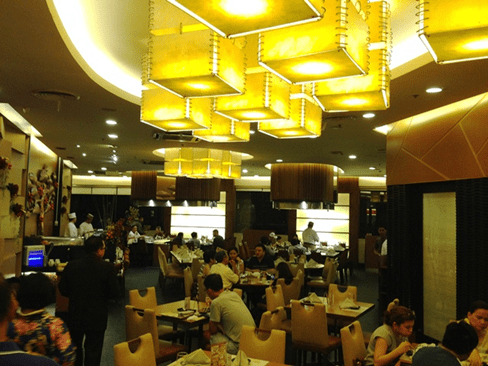
I noticed that there were only two (2) servers and a busboy attendant (one who brought the food and cleared the tables after customers left) at the diner which was fully occupied with hungry patrons.  The servers also did the billing and receiving of payments on top of taking orders and communicating them to the kitchen. 

But the lady and her family could care less.  What mattered was they got what they asked and will pay for. 

It’s a scene repeated in many restaurants, in retail stores, and in other service firms as well.  Customers make orders.  Orders don’t get delivered.  Customers threaten cancellation.  Establishment is understaffed. 

Customers don’t notice or care if service firms have enough people or capacity to take and serve orders.  It’s not their problem.  They assume that because service providers are open for business and selling to make money, they deserve the products & services as they demand them. 

The last thing you want is for your customers to forward their frustrations such as in posting negative social media stories and even legal actions.  Yet, many business owners hesitate to add capacity or hire more staff to ensure better customer services. 

Why do business owners not spend more to hire people or invest more in improving services? 

Because they’re afraid the costs would diminish profits.  They fear that they won’t get any more added revenue.  Would the diner earn more money with more staff if the dining seating capacity remains the same? The diner owner wouldn’t know for sure.

What’s certain, however, is if the diner doesn’t serve its customers to the level they expect, they are more likely to not come back.  Patrons would post or feedback by word-of-mouth that the diner’s service is not up to par.  This would constitute a threat to sales. 

The owners of the diner would frown if they hired extra staff only to see them busy only during mealtimes and not in between.  Many business owners don’t, after all, want to pay people who wouldn’t be working all the time. 

The diner’s owners would also prefer not to prepare pre-cooked food in advance in which although such could be served immediately, would risk of being thrown away customers don’t order all of them.    You don’t want to produce too much that would just end up in the trash can. 

Serving customers is what enterprise owners pursue in the basic course of doing business.  Rather than dwell on the uncertainty of whether we’ll make more money by improving customer service, we should not cut costs knowing the certainty that customers won’t be happy with our services. 

Running a business that sells and deliver products is complicated.  It gets more challenging when the products we sell rely on raw & packaging materials we’d need to buy, on manufacturing operations to convert & pack the materials into saleable items, and on a logistics network to convey them to customers who could be next-door or half a world away. 

We’ll never be 100% certain about procuring, making, and delivering the merchandise we need.  Supply chains are far from perfect and just about everyone has experienced failures such as out-of-stock, off-quality items, and tardy deliveries. 

But it doesn’t mean we can’t do something.  Upping service by boosting productivity has a better chance of counting for something.  If the diner’s owner invested to ensure customers come out happy instead of disappointed, it would boost, if not at least maintain, the diner’s reputation as a place worth eating at. 

Maybe we won’t reap an immediate tangible gain by spending more for service, but we’d earn a prospectively positive reputation to customers.  And isn’t reputation just as much a priority than simply making a profit?

About Ellery’s Essays

Pursuing Productivity Amid Adversity

The year 2025 arrived and what many businesses dreaded came true.  Newly inaugurated American President Donald Trump and his economic hawks swooped and threw global trade into turmoil.

Arguing unfair trade practices from many nations, President Trump imposed tariffs on billions of dollars of imports from Canada, Mexico, China, and the European Union (EU), with threats of more to come. 

A lot more probably would happen in 2025 and beyond, but the crux of the matter is that adversities, not just from disruptive American economic policies, shall continue to challenge supply chains. 

So-called industry leaders repeatedly preach resilience and cost optimisation.  Some strongly advised renegotiation of supply contracts.      

Some know-it-all self-proclaimed supply chain gurus say that enterprises should shift to importing ingredients & components instead of bringing in finished or fully assembled products in which the latter are charged higher duties.  Others say vendors, enterprises, and customers should just share the costs from new tariffs.

All these knee-jerk messages have something in common:  they’re no different from the ones we heard before (such as from the height of the CoVID-19 global pandemic to the Russian-Ukraine war) when supply chains virtually shut down due to lockdowns and border closures. 

Many chief executive officers (CEOs) tell their operations managers to fix and improve supply chains without a clue whether it will make an impact or not (in most cast, they don’t).  They look for quick solutions without first understanding and accepting what supply chains are. 

And what indeed are supply chains? 

Supply chains are made up of relationships.  They’re not ecosystems.  They’re not information networks.  They’re not limited to just the procurement & logistics operations within enterprises.

Supply chains start from the very resources we mine or harvest.  From there, materials and merchandise flow through various processes such as conversion, transportation, and storage & handling before we sell them as products finally served, used, or consumed. 

Every supply chain is unique. Not one is identical to the other although some share or overlap their activities with others. 

We manage both the internal operations of our enterprises and relationships we have with our partners (i.e., vendors, service providers, and customers) for the purpose of making our supply chains productive.  Because we share similar priorities between us as stakeholders and our partners, we strive to perform up to or above par to achieve our aims.  Productivity is the overall virtue we work and measure ourselves in supply chain performance. 

Every supply chain, however, is subject to risk and adversity.  It is because of risk and adversity we put a lot of attention on our supply chains.  We have learned that many things could and do go wrong with supply chains.  We suffered losses, wasted resources, and lost opportunities because adversities affected our supply chains’ productivities. 

We made and continue to make mistakes in how we manage our supply chains.  We don’t realise that we shouldn’t only be managing supply chains but rather, engineering them.  And we don’t realise that the goal we should look for in improving them is productivity

Whatever strategy we undertake to improve supply chain productivity would likely not be easy, however.  Supply chains are broad and go beyond our businesses’ borders and we’d need to work together with our partners (vendors, customers, service providers).  We cannot solve supply chain problems just by managing our businesses’ operations. 

In taking on supply chain challenges, we also need to accept that we should not see ourselves as dominant protagonists.  We are no more than peers or equals with the vendors and customers we do business with.  (We can try just as Walmart does with its vendors, but sometimes it does not come out beneficially: Chinese officials repudiated Walmart executives for hinting vendors should lower prices to mitigate the impact from US tariffs).

Whereas we measure our operations’ performances differently than others, we can gauge the common thread of productivity running to and from between enterprises. 

Productivity encompasses key elements such as quality, cost, and reliability.  We can index productivity via measures like these or simply monitor and act on each individually.  How we work together with our partners and perform towards improving these measures will define our productivity progress.

Supply chains are subject to relentless adversities.  We have been on the defensive combating them as we make the same mistakes in thinking we can just manage supply chains instead of engineering them for productivity improvement. 

Productivity is the common aim of organisations along the supply chain.  When we pursue it, when we focus on it, when we and our partners collaborate towards it, we can overcome adversity and mitigate risks. 

About Ellery’s Essays