Ergonomics Can Be Helpful, Really Helpful

When it comes to productivity improvement, the first thing many executives think of is head count, how many people are needed for the job.  The last thing many managers think of is the human factor, how to better improve the working conditions for the individual person. 

Ergonomics (or human factors) is the scientific discipline concerned with the understanding of interactions among humans and other elements of a system, and the profession that applies theory, principles, data and methods to design in order to optimize human well-being and overall system performance.

Ergonomics, strictly speaking, is a subset of Human Factors Engineering (HFE).  Ergonomics refers more to the individual’s physical make-up and how it interfaces with the individual’s workplace.  Human Factors Engineering is broader as it considers the environment and involves even how facilities are designed and built.  Both Ergonomics and Human Factors Engineering have become interchangeable, however, and many people nowadays see both as one and the same. 

Whether we call it ergonomics or human factors engineering, the study of how to improve the human individual’s interface can be very helpful to an organisation or an enterprise.  

Despite its growth in popularity since the 1980’s, Ergonomics remains a field where applications have been spotty.  Certainly, Ergonomics has been a key influence in the development of workplace standards and has been instrumental in the design of products such as automobiles, furniture, tools, and appliances.  Yet, there is plenty of potential for Ergonomics and we can see this in our daily experiences. 

We notice ergonomic applications in the vehicles we drive.  Seats are fitted to the contours of our human physiques.  Temperature and humidity inside the vehicles are ‘climate-controlled.’  Front- and rear-cameras supplement the wide windshields, mirrors, and rear-windows that maximise our fields of view.  And engineers have invested a great deal into passenger safety, such as airbags and seat-belts. 

But for many us who do drive, we still have to contend with blind spots, where we would be unable to see cars or trucks at certain corners of our visual field.  We have difficulties reading road signs, especially those with lettering that are too small or insufficiently illuminated.  We can’t be expected to anticipate the vehicle that stops suddenly in front of us.  And we can’t still see too well during heavy downpours of rain or when there is heavy fog or smoke.  There is indeed still much to improve in the ergonomics of automobiles. 

The popular coffee shop where I frequently dine in has very comfortable furniture where one can relax while having conversation.  But its chairs and tables aren’t that friendly when I want to type on a laptop or just write with paper & pen; the chairs are too low & the round tables don’t provide enough space.  As much as furniture may have come a long way in being more comfortable, there is still much room for improvement when it comes to being more ergonomic. 

The challenges for ergonomics aren’t limited to driving cars or sitting on coffee shop furniture.  We can see the need for better ergonomics in just about every profession, from the cockpits of airplanes to call centre work stations, from restaurant kitchens to factories.  Despite whatever progress or awareness we have gained in making workplaces friendlier for workers, we can do better. 

Traditional industrial engineering has focused on making the worker more efficient by instituting methods and quotas; the focus is on the workers making more by telling them to comply with standard operating procedures.   Industrial engineers would set up workplaces from the point of the view of the job.  IEs would instruct workers on how to do their jobs and they would set up reward & penalty systems to motivate them to optimise output. 

Ergonomics sees it the other way around.  The focus is on the well-being of the worker.  The workplace should be illuminated, not noisy, and not burdensome to the physical & mental health of the individual worker.  Hence, ergonomic experts establish standards for illumination, sound, environment, and for anthropometry, in which the latter deals with the measurements & movements of the human body vis-à-vis the workplace. 

The point of ergonomics is productivity via human occupational safety & health.  Just as IEs promote productivity via the design of the job, ergonomics seeks the same purpose but via adapting the workplace to the worker.  Hence, ergonomics doesn’t adapt the worker to the job, but instead, the job adapts to the worker. 

The major challenge of ergonomics is to find the right conditions, the optimal human factors so to speak, that would accommodate all individual workers and assure the best productivity performance possible.  With each person being different, it has been a huge challenge for ergonomic scientists.  How can ergonomics tweak a workplace to fit anyone, big or small, petite or tall, young or senior, without discrimination to gender, ethnicity, and other physical limitations?

The obvious answer is:  we can’t.  We can’t adapt everything at work to everyone.  But what we can do is adapt conditions flexibly to accommodate just about everyone.  

Furniture companies already supply adjustable office chairs and desks.   Automotive firms already build in seats that can be programmed to the anthropometry of the driver.  Not everyone (like seven-foot basketball players, for instance) may fit comfortably on a chair, but at least it would to a lot of people, if not most. 

One good example towards an ergonomic-for-all-approach is in office space design.  Enterprises recently have learned that the fad of open-plan office spaces in which, instead of cubicles, workers share tables in large open spaces, doesn’t lead to better performance; on the other hand, it has brought forth negative feedback as workers complain of distractions, not to mention endless meetings.

Designers, as a response, have put in small private rooms to offices and workers have welcomed not only the privacy the rooms bring but also the exclusivity of environmental control (e.g. the setting of the room thermostat).  Offices have more than accommodated most, if not all, their personnel in improving their working environment. 

As the coronavirus pandemic from 2020 to 2021 (hopefully) subsides, offices and factories that invest in better ventilation, cleaner surroundings, and exclusive private spaces will have an advantage to attract back their much-valued workers.  It’s not only about productivity, nor just safety, but the well-being and health of the individual person.  The pandemic may have made offices a pariah but enterprises by their initiatives to improve the office environment can make that negative idea temporary. 

Ergonomics is a science that focuses on the well-being of individuals for the sake of they doing better productively for those they are engaged with.  As ergonomics and its broader partner, human factors, become more synonymous, enterprises should continue to promote the science of adapting the job to the person and seek its benefits.  Ergonomics’ challenge is to accommodate for all types of individuals and this can be achieved through innovation, if not via simple common sense. 

Ergonomics can be helpful, really helpful. 

About Ellery’s Essays

Basic Needs Come First

A parish church conducted a field census of an impoverished neighbourhood.  The purpose of the census was to gather demographics, that is, how much households were earning, how many family members, if parents were married in a church, etc. 

When the census takers asked about what were their most important priorities, every household replied:  money.  It wasn’t employment, food, or security.  Just:  money. 

Money was the single focus of families who lived in shanties in the impoverished neighbourhood.  Nothing else was of higher importance.  Families and their breadwinners woke up every morning and worked throughout the day to get money that would at least tide them through the day. 

Money to the neighbourhood’s families was their number one singular basic need.  It wasn’t because of greed but need that drove them to pursue getting money.  Many families didn’t have members with steady jobs.  Heads of households went out every day looking and working to get cash to buy just enough to meet the basic needs for that day. 

Some religious groups label money as the root of evils.  They preach against focusing on money and tell people to pay attention to prayer and attending services.  The people hear the preachers, nod their heads, but go back home to return to their routine of earning money to survive. 

It’s always best to know what the priorities are of those we’re solving the problems for.  Famed American psychologist Abraham Maslow placed physiological needs like food, water, and sleep on the bottom of his pyramid model of the Hierarchy of Needs.  The bottom represented the most basic needs of humans—the ones we prioritise to satisfy first before we would move on the “higher” needs of safety, belonging, esteem, and self-actualisation. 

People have different priorities based on the needs they have at the moment.  Poorer people need money more importantly than rich people.  Rich people might be more obsessed with the security of their assets than poor people.  Established enterprise executives may contemplate more on becoming more influential than a start-up entrepreneur who is insecure about his finances.  Teenagers may search for belonging while retired people look for meaning. 

Needs vary.  And whatever they are for whomever at the moment will determine how problems are defined and solved. 

A final example about basic needs coming first:

A psychiatrist shows a little girl a series of inkblots as part of a routine psychological evaluation.  For every inkblot, the little girl sees hamburgers, fries, and eggs.  When the psychiatrist asks the little girl why she keeps seeing food in every inkblot, the little girl says because it’s close to lunchtime and she’s hungry.  We don’t seek meaning in our lives when we’re hungry.

About Ellery’s Essays

About The Supply Chain Engineer

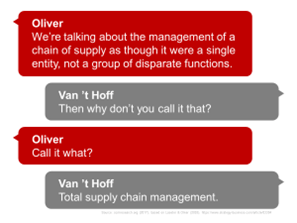
Supply chain management has figured prominently in organisational priorities since Keith Oliver in a reported conversation with a Philips manager, Mr. Van t’Hof, coined the term in the 1970’s, and it has become even more so at the onset of the 2020 coronavirus pandemic. 

Supply chains are operational relationships made up of activities that transform and carry merchandise from their sources to their final point of use.  Supply chain operations cross borders and through enterprises, making it a requisite for managers to deal with counterparts from other places and firms as they strive to productively fulfil the demand of products and services. 

Despite just about everyone’s familiarity with supply chains, it has become a challenge managing them.  This is because supply chains are very comprehensive in scope and as such, it covers all functions that have anything to do with the procurement, manufacture, and logistics of products & services. From the mining of materials, the harvest of fruits, grains, & vegetables, to the manufacture of metals, consumer goods, & appliances, to the purchase of merchandise plus the logistics of storage, handling, transport, and delivery, supply chains intertwine through industries. 

Management is about the exercise of stewardship of activities and operations in a facility, department, and an organisation for the purpose of meeting strategic visions, missions, and objectives of stakeholders.  Managers work with systems and structures as they bring forth value for the enterprises they work for. 

The design and construction of said systems and structures, however, are not the jobs of managers.  Much as they may be charged to initiate and oversee their set-ups, they’re not the ones who build and fix them. 

That job goes to the engineer. 

Both supply chain managers and engineers have one common purpose:  deliver productivity

Productivity is how much is accomplished versus of how much is put in.  It’s output over input where the higher the ratio, the more ‘productive’ one is. 

Supply chain managers plan, organise, control, and direct the operations they oversee towards higher productivity in the delivery of merchandise and services for the enterprises they work for.  Supply chain managers have the added task of establishing interdependency between their employers and the vendors, service-providers, & customers that are the links in the supply chain.

Supply chain engineers plan and build the systems and structures the supply chain managers work in and with.  Supply chain engineers study, design, plan, build, set up, buy, install, and fix facilities, networks, methods, equipment, vehicles, workplaces, and flow patterns of activities, resources, services, and merchandise that underlie supply chain operations.

Whereas supply chain management has become a high-profile profession given the growing challenges of scope, complexity, and disruption in the global, regional, and local exchange of goods and services, supply chain engineering remains as an unrecognised, if not ignored, field. 

It is my aim to promote Supply Chain Engineering as a very much needed discipline that goes hand-in-hand with Supply Chain Management.  This is in line with my vocation to boost the productivity of the operations of organisations. 

One cannot achieve optimal productivity if supply chain managers have shoddy systems and structures to work with.  It’s hard enough that supply chain managers have to negotiate with other organisations given the over-reaching scopes of operations.  They could use the help of engineers in ensuring they have the optimal systems and structures that support the strategic productivity goals of enterprises. 

About Ellery’s Essays

We Get More Via Mutually Beneficial Relationships

The parish priest wanted to construct a building beside the church.  The new building would be a venue to host church gatherings and organisational meetings.  He asked his parishioners for help. 

A construction contractor approached the priest and offered to build the church at what he said would be half his standard price.  The 50% discount would be the contractor’s donation to the parish church community.  The priest and the parish laity leadership accepted the contractor’s offer. 

The contractor finished the building in six (6) months. 

But it wasn’t well built.  The contractor used cheap pipes for plumbing which began to leak as soon as they were used.  Because the pipes were embedded in the concrete floor, cracks and water seeped from the building’s second floor to the ground floor. 

The concrete flooring of the building was plain as in no tiles or quality finishing.  The building looked more like it was suited for a warehouse than a venue for gatherings. 

The doors were made of cheap lumber and poorly installed such that some fell apart in a short time. 

The building was also dark.  The contractor installed few lights and for those rooms which had lights, he bought the cheapest light bulbs and fixtures.  Windows were also few and small so that even during the day, it was hard to see where one was going without the lights turned on. 

And because there were not many windows, ventilation was poor.  Air-conditioning equipment bought and installed were the cheapest models and they conked out within months.  Groups who used the new venue complained about the heat. 

Even though the building had only two floors, climbing the stairs felt like climbing a mountain.  Steps were built so steep that senior parish lay people would have difficulties going to the second floor.  There was no elevator. 

The contractor billed the parish priest for the construction and collected his so-called half-price fee.  It was obvious that the contractor cut back on so much to keep costs down such that he would eke out a profit from his 50% discounted price.  The contractor never really donated “half of his fee”; he simply snagged a contract from an unsuspecting parish priest to earn some money. 

Suppliers, vendors, and contractors are in business to make money.  They may offer discounts and even position low prices as donations.  Whatever they may say, their true intent will always be to earn a profit.  No enterprise does business for charity. 

When we deal with private enterprises, the name of the game is not to ask for donations or ask other parties to discount for our benefit only.  It’s about knowing what we want and getting what we pay for, at the same time seeking mutual benefit with the ones we are engaging with. 

Many of us don’t seek mutual benefit.  Most of the time, we push for prices and terms that benefit only ourselves without thinking how the lower prices and better terms we weasel from suppliers, vendors, and contractors will boomerang back in the forms of poor quality and shoddy service.  In other words, we get what we pay for. 

Mutual benefit does not mean giving up our interests.  It is about pursuing a win-win arrangement with those we deal with. 

Some people criticise me for example when I charge a lower rent for a warehouse I lease.  “Why am I so nice?,” the critics will ask.  I could have raked in quite a bit more money, the critics would argue. 

The reply I give is that I don’t just look at price.  I also look at how long a period a potential tenant wants to lease.  I also consider the tenant’s profile.  I would, for example, offer discounts for entrepreneurs or start-ups but ask for escalations in rent prices as the tenant’s business grows.  I also would discount to tenants who pay in advance or agree to give post-dated checks.  I, however, would argue for higher prices if the tenant is an established firm that requires me to undergo a complicated process of collecting the rent every month. 

Mutual benefit as an ideal has worked for me.  Critics may argue I could have earned more.  But profit alone is not how I measure success.  Good relationships with customers, vendors, suppliers, and contractors have resulted in a steady continuous stream of income for my business. 

We get what we pay for.  But we get more via mutually beneficial relationships. 

About Ellery’s Essays

Find Ellery

Hi, I’m Ellery Lim.  I like to work with people to make their operations, particularly supply chains, more productive.    

I’ve been immersed in supply chains since 1984.  I did industrial engineering at a West Virginia flat glass facility, managed production & logistics for P&G, and ran a trucking business.  Presently, I’m an administrator for a corporation which rents out warehouses & offices. 

I co-wrote a book, Speed Kills, with the esteemed Jovy J. Jader and from that pivotal point, I’ve gone on to write blogs then essays.

Formerly Overtimers Anonymous, Ellery’s Essays discusses supply chain issues and share Aha! insights from everyday life. 

I like to help businesses build their supply chains.  If you want to pick my brains, please feel free to contact me (ellery_l@yahoo.com).  I’m also on LinkedIn, Viber, X, and Facebook

Ellery S. Lim

A Reminder to Walk Around

I finalised a contract to lease an office unit to a new tenant in February 2022.  I obliged to give the tenant two (2) free months of rent or up to the end of March 2022 to allow him to make improvements and buy & move in his furniture & equipment.  I didn’t see the need to check the office periodically as I didn’t want to go out from home as the coronavirus pandemic wasn’t over yet.

That was a mistake.  I should have made the effort to inspect. 

At the end of March, the tenant hardly finished his improvements and wasn’t ready to move in.  His contractor was going too slow. 

The tenant also wanted to buy additional air-conditioning equipment as the building’s existing centralised air-conditioning operated only from 8am to 5pm Mondays to Fridays.  The tenant’s business was a back-room operation for a North American firm and had to operate afternoons to evenings.  The tenant needed air-conditioning after 5pm.

I had entrusted the oversight of the improvements to the building’s engineer.  But when I asked how come he didn’t update me on the tenant’s slow progress and the need for additional air-conditioning, the engineer said it wasn’t his job.  The tenant wasn’t doing any major renovation so citing building policy, the engineer said he didn’t have to oversee what was going on in the office unit.  In other words, the responsibility of oversight was mine.

Even as I was frustrated with the engineer’s apathy and failure to communicate, I knew I made the mistake of not being on top of what was happening at the office unit. 

And because I made that mistake, I had to grant another month of free rent to the tenant and had to rush assisting the tenant in regard to the air-conditioning.  Any new air-conditioning would fall under my ownership so even though there was a re-negotiation on the lease contract with the tenant, I was responsible for the purchase and installation. 

This is what happens when I don’t take time to walk around and see for myself what’s happening at what I’m managing.  It is a simple core of the idea of Management by Walking Around, or MBWA, in which managers should habitually get out of their desk chairs and visit the operations they oversee.

By seeing with one’s own senses what’s happening on the ground and what people are doing, managers keep themselves in touch with the operations and personnel they manage.  They don’t rely solely on status reports and staff meeting agenda. 

Because of a raging coronavirus pandemic that forced restrictions on movement, managers have resorted to overseeing their operations remotely from 2020 to 2022.  Most of what managers have done in the pandemic period had been via online meetings (e.g. Zoom), email, text messaging, phone calls, and project management software (e.g. Trello, Basecamp).

Many managers have not been to the sites they were assigned to for months, if not for more than a year.  Many lost touch with their workplaces. 

It didn’t seem to matter at the height of the pandemic.  Many businesses were shut or scaled down due to government-mandated restrictions.  But as the pandemic eased in mid-2022, enterprises have emerged and asked workers to slowly but surely return to their offices and factories. 

Because managers mix their schedules with work at the office and work from home and because they want to be cautious in meeting people face-to-face, they didn’t see MBWA as a viable exercise, and it seems that many managers would no longer take MBWA as seriously as before. 

Which is too bad.  Numerous challenges have faced enterprises as they resumed their businesses in 2022.  Customers were clamouring for deliveries and supply chains were gridlocked due to higher demand for merchandise coupled with daily disruptions arising from festering coronavirus surges in some nations and from conflicts between nations (e.g. Russia’s war with Ukraine). 

Managers need to know what’s going on with what they’re managing.  They need to see things first-hand to empathise what their people are experiencing.  Veteran managers may claim that they can know what’s happening just by reading the reports as they may say they’ve been in the business long enough to know.  But they won’t.    

Wise managers who have been in the business for a long time know not walking around on the pretext of experience is more an excuse than a truth.  Wise managers know that every next day is always different.  Challenges never come back identical to those from the past.  The numbers on a report may be similar to one some time ago but the circumstances would not really be the same.  It’s one thing for a report to say something; it’s another to see it for oneself. 

The problem with MBWA is there isn’t much statistics to back up its effectiveness.  What we can only rely on is what managers have said about it.  And from my experience, it is effective. 

MBWA has become an idea shelved by the urgency of a plague in 2020.  But as enterprises re-emerge and face many issues, it may be a good time to consider MBWA as a basic tactic in the exercise of management.     

About Overtimers Anonymous

Our Waiting Nation

This blog was written on May 19, 2013 and was re-published a few weeks after the 2022 elections.

-Editor

Waiting area to a school classroom turned precinct on Election Day 2022 (Mandaluyong, Philippines)

12 noon, Election Day, May 13, 2013

I’ve been in line for almost two (2) hours waiting with about 40 other people to vote at our election precinct at the elementary school at Mandaluyong City, Manila, Philippines. 

I sit uncomfortably in a chair and desk made for perhaps a 7-year old child inside a classroom that serves as a holding room for waiting voters.  It’s hot and humid and most of the electric fans aren’t working.  It doesn’t help my shorts has a gaping hole thanks to a hidden nail on the desk that I didn’t notice till it was too late. A teacher assigned as an election worker constantly barks at us to move forward as we were on a line outside the classroom that was slowly moving towards the voting area. 

Six (6) years or two (2) elections ago, voting would take not more than a few minutes.  There was no holding room and no line.  I’d come into the precinct, sign up on the voters’ list, fill my ballot, punch it into the ballot box, and go.  I’d have the rest of the day to myself as Election Day is always a holiday in the Philippines.

It no longer is like that.  With the introduction of automated elections in 2010, practically everyone has to wait in line unless you’re a senior citizen, a person with disability, or an arrogant politician with bodyguards who can cut to the front. 

The centrepiece of the automated elections is the Precinct Count Optical Scan Machine or PCOS for short.  It’s a black machine that looks like a photocopier.  After a voter signs in and fills his ballot, one would feed the custom-made ballot into the PCOS where one’s shaded choices would be scanned and stored, ready for transmission after voting ends later in the day. 

It takes two hours to vote because there aren’t that many PCOS machines.  The government, via the Commission on Elections or COMELEC for short, allocated several precincts to every PCOS machine.  Whereas before, where one would vote inside a classroom exclusive for a single or couple of precincts, voters have to vote in a room designated for as many as seven to ten precincts.  That has resulted to a significant increase in the number of voters in the same place I used to vote in.

This brings us back to my situation that election day morning.  Even though about seven precincts, including the one I’m assigned to, were combined into one classroom, there were at most only three (3) public school teachers working as election coordinators.  Teachers that used to man each of the seven individual precincts 6 years ago were not assigned correspondingly to the classroom which now hosted the same precincts.  The COMELEC apparently thought that even though there were going to be more voters, a classroom with seven precincts could still be managed with three teachers. 

It’s a downright misleading notion that just because a process is automated, one can do just as well or better with same or fewer resources.   Well, the COMELEC can always argue that because of PCOS, the Philippine nation would now know the results within hours after voting ended.  So what if I and a million others wasted two (2) hours waiting in line?  It was a holiday and the economy wasn’t like to going lose any percentage points in gross domestic product or something, was it? 

Anytime anybody spends time doing nothing like waiting in line, there is a waste.  Time that could have been spent doing something other than nothing may not contribute to the economy significantly but it sure would contribute to the ever-so-many things there are to do.  I lost time I could have otherwise spent for chores I could have done at home.  Others lost time which they could have used with their families. 

We see the same mindset in banks, utility companies, movie theatres, factories, retail stores, or just about every service business.  Managers ignore the importance of time clients waste in waiting as the managers scrimp on service.  We wait in traffic and we wait for the elevator at the office.  We wait at bank teller machines and we wait at the grocery check-out line.  We wait to order in what is supposed to be a fast-food restaurant!  Every day, office workers who live in the suburbs waste four (4) hours commuting an average distance of about 16 kilometres to their work places in the business districts.  

Many executives and political leaders don’t recognize the value of reducing waiting time.  To them, improving service entails additional investment in manpower and equipment.  And in the first place, many well-to-do executives or politicians don’t know what waiting is all about as more often than not, they are given special treatment from having their own private elevator or just by having the influence to get to the front of any line.

The irony is one can reduce waiting time without having to spend too much. At that election precinct where I voted, many voters didn’t know what precinct they belonged in.  They or the teachers had to read through several lists to find out.  The incumbent Mandaluyong mayor, Benhur Abalos, wisely mailed my precinct number a few days before the elections so when it was my turn to vote, I knew what and where I was supposed to go and I was able to quickly sign in and wait for my ballot. Others who for some reason didn’t know their precinct numbers wasted precious minutes looking through all of the lists, searching for where they were assigned to vote.

The line would have been much shorter if everyone knew their precinct numbers.  Six years ago, before the automated elections, the voters’ lists were posted on the doors of classroom precincts.  Anyone could simply just look their number up and knew what list to sign onto when their turn came to vote.   [Voters’ lists were posted on precinct entrances in succeeding elections but some voters still couldn’t find their names. -Ed].  It would have been quick and easy.  If the same was done this past election, perhaps a few million people wouldn’t have had to wait so long and waste precious time otherwise spent for better use. 

About Overtimers Anonymous

Adversities versus Miracles

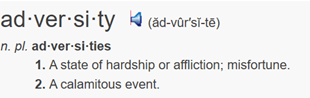
Adversities are events that we don’t look forward to.  They are the disasters that set us back, the incidents which lead to outcomes that we rather not face.  Adversity is the unfavourable situation that we run into or that arrives in untimely fashion.

Adversities have become more prominent in our daily lives and even if they are hard to anticipate, we are tasked to prepare for them.

It was implied that opportunity is the opposite of adversity.  

It isn’t. Miracles are the opposite of adversities. 

Miracles, like adversities, are events that disrupt our daily lives but unlike adversities, bring pleasant results, often accompanied with welcome benefits.  

We usually categorise an event as a miracle when it is unexpected, spiritually uplifting, and just plain wonderful.  Miracles are the awesome surprises that we classify as rare and we usually reserve them for those that arrive only once-in-a-lifetime and that are life-changing.  To those that have strong religious beliefs, miracles are those attributed to a provident deity either as rewards for strong faith or as presentations of power. 

But I believe miracles happen every day just as much and just as often as adversities.  We experience disruptions from both, although we’d classify one as good and the other bad. 

For many of us who call ourselves ordinary people who work hard to earn a living to support ourselves and others, we’d prefer not have disruption of any sort in our daily lives.  If many of us were to choose, we’d rather have predictability than uncertainty.  Disruption implies changing of plans and the likelihood of extra expense in resource and time.  We have enough to do already so please let there be no disturbance if possible.

Unfortunately, disruption is a part and parcel of life.  And we get it, big and small, just about every day.

We therefor try to anticipate, mitigate, and plan contingencies.  No matter how much we try, however, there would always be one that we didn’t see coming. 

Natural disasters, unexpected traffic on the road, the unannounced visit of a relative or friend, flight departure delays, and the unscheduled power failure.  We undergo disruptions all the time.

But disruptions aren’t all bad.  There can be good ones too. 

These “good” disruptions are from the miracles that occur just as much the adversities that bring the “bad” ones.  We may not recognise miracles because we are too busy managing the “bad” ones, we don’t consider them as miracles based on our expectations, or we don’t recognise the benefits outright. 

What are examples of miracles that come with “good” disruptions? 

  • It’s the weather forecast for rain that turned out wrong and in which the day ended up sunny and nice;
  • It’s the good friend who calls and whom we haven’t heard from for a long time;
  • It’s the email of our CoVID test results that shows we are negative of the virus despite we being sick with cold symptoms;
  • It’s the surprise gift from a sibling working overseas who just got a bonus and wanted to share;
  • It’s the boss granting you permission to go home early because you finished a job ahead of time. 

Some of us would discount these miraculous disruptions as mere events that don’t really brighten our day enough versus the adversities we also are facing. 

This may be because adversities demand our attention and action.  We become preoccupied and at the same time frustrated and downcast by the disruption we did not expect and want. 

Unlike adversity, miracles don’t need to be addressed outright and don’t need to be acted upon immediately.  The benefits have been felt and all that’s needed is to give thanks. 

Giving thanks after all is not urgent; addressing adversity, however, is. 

Adversities are seen as threats.  Miracles are not.  But as much as we need to focus on adversity more than we do for miracles, we should make sure that what we perceive as adversity is really what it is. 

Adversities can be miracles in disguise.  They can be clouds with silver linings.  And the actions we take to address adversities may also result into potential miracles. 

  • A typhoon that disrupted our operations may have brought rainfall that replenished the nearby reservoir and alleviated a potential water shortage;
  • The traffic standstill that is making us late for work gave us the opportunity to call clients via our smartphones in which we were able to collect some past-due accounts;
  • Spending time with a relative who arrived unannounced ended up with the family becoming closer;
  • The unscheduled power failure resulted in the family playing an impromptu board game that resulted in a cheerful and enjoyable night of bonding. 

Miracles are the opposite of adversities.  Either one doesn’t have to be earth-shaking; they both can arrive big or small. 

We tend to preoccupy ourselves with adversities since they vie for our immediate attention.  But miracles can be adversities in disguise or may be concealed in what may look like “bad” disruptions. 

How we respond, how we perceive, and how we determine what our attitudes will be can turn some, if not all, adversities into miracles. 

About Overtimers Anonymous

We All Have Superpowers

Ed was a retiree who lived near our family store.  One day, Ed saw me and asked me what kind of business he could get into. Ed said he could use some extra income as his pension wasn’t really enough. 

I asked Ed what he used to do.  He said his job before retirement was at a petroleum company’s main facility, doing office work.  As a hobby, he learned Taekwondo and became a black belt master.  He used to instruct one or two people a month in Taekwondo.

There you have it, I told Ed.  You’re a black belt Taekwondo master qualified to be an instructor.  You can earn some extra income teaching students in Taekwondo.  Ed nodded his head and said that’s right. 

We all have superpowers.  We just have to acknowledge them and tap them for our benefit and for the benefit of others. 

A superpower doesn’t have to be a unique kind of ability.  It can be a skill every person may have.  The idea is that whatever superpower we have, we do it well.  So well that we stand out. 

A janitor nicknamed Poning at the factory where I used to work was a very hard worker.  He cleaned the offices of the executives early in the morning every day before people would arrive for work.  Poning learned how to proficiently operate the office photocopier, the stand-by generator, and the centralised air-conditioning system.  From an everyday janitor, Poning practically transformed himself into the office’s all-around utility man.  The office staff would not let him go when his agency’s contract was up for renewal.  He stayed for many years. 

Tony used to be a construction worker.  He took it upon himself to learn about plumbing, carpentry, and welding and became pretty good in each.  He became a free-lance handyman.  With a trained pool of helpers, he was able to snare job after job with households and buildings to repair or renovate bathrooms, kitchens, and furniture.  He later set up his own private business and continues to get jobs with clients all over the city. 

A security commander at an office building learned how to fix desktop computers and laptops.  He now has a side-line repairing computers of office workers.  He also invested in an eight-seater van and during the 2020 pandemic, shuttled workers to and from their residences to the office building where his duty as security commander was.  Needless to say, he earns much more than his peers. 

We don’t need to look for some super-duper skill or invent some super-duper product or service.  We don’t need to be geniuses or Olympic-level athletes to be successful.  We just need to decide what kind of stuff we want to do and be good at it. 

All of us have superpowers.  We don’t need to find them because they are already within us.  We just have to cultivate the ones we like to do and become excellent in doing them.  We become super-people when we do. 

About Overtimers Anonymous

The True Benefits of Earth Hour

Since 2007, countries around the world have turned off lights at landmarks, homes, and offices in a united symbolic effort to fight the perils of environmental degradation. 

Every year, the WWF (World Wildlife Fund) and partners promote Earth Hour.  People around the world at 8:30pm on the last Saturday evening of March are asked to turn off lights at homes and offices to “call attention to climate change.”   

In 2022, at Manila, Philippines, where I live, Earth Hour passed with nary a notice.  Some malls had posted signs about Earth Hour but generally no one really paid much attention.  The latest deadly surge from the coronavirus pandemic had just passed two (2) months earlier and people wanted to enjoy going out to make up for lost time with families and friends.  They didn’t want to turn off lights even for one hour as they felt that they had enough inconveniences from the coronavirus in the pandemic’s two (2) years of lockdowns and restrictions. 

Earth Hour had demonstrated, however, that collective global action even via the simple turning off of lights for one hour can have significant effect.  In previous years before the pandemic, Earth Hour participation resulted in decreased energy demand, as much as 4% in a survey of ten (10) countries. 

The demand drop, however, doesn’t translate to outright energy savings.  Power plants continued to run during Earth Hour and their consumption of resources generally remained the same.  Even as Earth Hour intends to showcase the benefit of people around the world coming together to combat climate change, it remains a symbolic effort that doesn’t result in real savings in resources. 

Real savings occur when resources are significantly reduced in the delivery and consumption of a product or in the experience of a service.  Real savings happen when we make more with less or we use less to experience the benefits of products and services.  There is no savings if less usage in one resource leads to more usage in another.  

For example, an enterprise successfully reduces the number of defects of metal products it makes.  The fewer number of defects have resulted in less scrap and rejections from customers.  The enterprise has reduced the amount of money it refunds to customers not to mention the costs of logistics to retrieve and rework bad products. 

The enterprise, however, had to add steps to its production operation to reduce the defects.  The enterprise also added inspections to ensure products made were of higher quality.  The cost of adding steps and inspectors ended up almost equivalent to the savings from fewer defects.  Real savings did not end up at all that much significant. 

Some executives would express frustration at the lack of significant real savings from projects. 

But they shouldn’t.  At least not by first checking all the benefits of any endeavour they initiated. 

Again, from our example above, fewer defects resulting from added production steps and inspections may not provide much of real savings but it would propel the enterprise’s product quality reputation.  Customers would see better quality as an attraction to buy more from the enterprise versus its competitors.  This would lead to higher sales that might be even better than what was expected from just real savings. 

Real savings is not easy to realise as trade-offs are likely whenever we try to change our operations.  But it shouldn’t be our one and only yardstick of measure of performance. 

Critics say that real savings from Earth Hour is negligible and it is nothing more than a “feel good event.”  As much as Earth Hour really hasn’t contributed to better energy savings, it has helped raise funds for environmental projects that have resulted in nature conservation benefits.  

Real savings is nice to shoot for but we shouldn’t take our eyes off the big picture of what we are really pursuing. 

About Overtimers Anonymous