Before we change, improve, or build our supply chains, we must first have a vision. We must first agree with our partners what we want our supply chains to become.
Envisioning is not an activity of a single individual or enterprise when it comes to transforming our supply chains. It requires consensus between stakeholders of our organisations and our partners, who include our suppliers, service providers, and customers.
We as human individuals have different personalities. Some of us are extroverts and some of us are introverts. Some of us are assertive and some of us are shy. When it comes to social interactions, some of us dominate the discussion while others remain silent. Hence, it is always a challenge to collaborate to envision, especially for our large, complicated supply chains.
Nevertheless, for envisioning to succeed, we all must participate. We each must have our say and contribute. If any one of us and our partners don’t agree with the majority on a common vision, we won’t fully realise our desired future state.
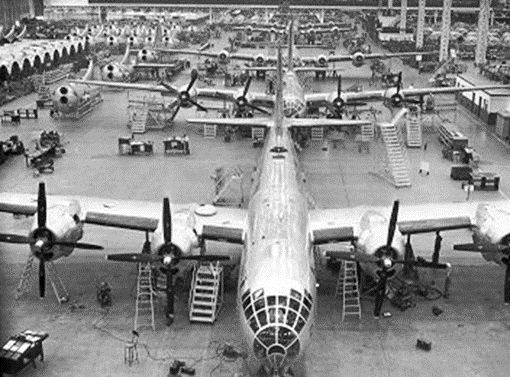
A large aviation company decided to streamline its supply chain. Top management decided to outsource a large part of its in-house production operations. The aviation company contracted vendors to fabricate thousands of aircraft parts and arranged with 3rd party service contractors to put the parts together into modules such as fuselages, cockpits, wings, and passenger seating areas. The aviation company would then join the modules into completely assembled aircrafts at their main facility. The aviation company would benefit from shorter production lead times as vendors & 3rd party contractors would be given deadlines and quotas to deliver parts & modules.
Things did not go as the aviation company envisioned. Vendors could not meet deadlines & quotas. Contractors were not delivering modules within the aviation company’s time frame. When modules did arrive at the aviation company’s assembly site, inspectors found that some did not meet specifications. Contractors had to rework modules. The aviation company mandated more frequent inspections of parts & components which in turn caused more delays.
The aviation company did not consult its partners about its vision. It simply told vendors and service providers what they wanted from them. Partners (which in this case were treated more as subordinates) were just told to comply otherwise the aviation company will find someone else to do the job. As much as partners tried, they could not immediately comply with the aviation company’s standards and the aviation company could not find better suppliers than the ones they already had.
Over a period of months, the aviation company worked with its suppliers and contractors to communicate concerns and fix the problems. Finally, suppliers and the aviation company would share common goals. The company was able to shorten lead times and deliver to customers. Both the aviation company and its suppliers still had many challenges to hurdle, but at last, they promised to work together.
Envisioning is a group effort, not in which an enterprise does and dictates to others. No matter how large or reputable our enterprise may be, it is always best to work with suppliers and customers, rather than tell them what to do.
True, it can be and is difficult to work with partners. They are after all differently managed and have agenda of their own. We may even unfairly prejudge them as inferior in how they manage their organisations. But our partners are there because they are our key connections in the supply chains which we are part and parcel of. As much as they may be willing to kowtow to our standards, they don’t answer to us. We must not subjugate them but instead, we should treat them as associates which we could cultivate mutually beneficial relationships.
Envisioning is a collaborative process. And because there will be much communication and negotiation as we hammer out accords for a shared vision, we should take care with some do’s and don’ts in how we interact with our supply chain partners:
- Do Our Homework
Before we negotiate with partners, we must understand the supply chains we are a part of. We should be familiar not only with the operations of our enterprises but also with the activities that precede and come after ours. It saves time when we invest in understanding what is happening in our supply chains, both inside and outside the walls of our businesses.
2. Do Get Our Acts Together
We should know what we want before we communicate our interests to partners. We also should ensure that we and our in-house colleagues are aligned to our enterprises’ objectives. In short, we and the people of our organisations should be united, if not at least aligned, to our enterprise’s standards and goals.
3. Do Take a Stand
We know what we want in our enterprises, and this should be basis for the positions we present to our partners. Having a stand becomes a springboard for discussion and negotiation.
4. …But Do Be Prepared to Bend
As much as we have standards which are non-negotiable, we, at the same time, should be willing to bend some for the sake of give-and-take negotiating especially if it would lead to win-win agreements which would provide gains we won’t get on our own.
5. Don’t Hold Back But Do Be Polite
We should be blunt but respectful. There’s nothing to lose by being tactful and polite. It may be wise to be hesitant to present privileged data, but we should be prepared to voice our views with supporting information if it would help negotiations progress.
6. Do Give or Take
Negotiations is always about give-or-take. It’s about accepting to do our share of work and sharing information & resources. But it’s also a two-way street. Partners should also agree to do their share and we should insist what we believe we deserve to take from them.
7. Don’t Give Up
Stalemates are expected in any negotiation. We and who we talk to may come to disagreement in which we each would refuse to give what one asks. We, therefore, should give each other time and leeway to think things over. But we should not give up or quit. We should always seek some innovative alternative because our supply chains’ future depends on it.
8. Don’t Delegate
Do not ask someone else to do the negotiating especially if we’re the supply chain leader of an enterprise. Because when we do, it immediately sends a message we, who supposedly are in charge, are not serious in the first place.
9. Don’t Overly Assert
Don’t push partners too hard even if we perceive that they will easily cede to whatever we ask for. Partners, as mentioned earlier, are not like us. They may just say ‘yes’ to our every request to ensure they have our business but we both may not end up what we were aiming for. We are after benefits for them as well as for us and if we push without considering their interests, it would surely backfire.
10. Don’t Come with Closed Minds
Listening is essential in the joint activity of envisioning. It isn’t just about hearing or about empathic understanding; it’s also about having an open mind to ideas the other side may propose.
11. Don’t Pretend
We should come into any envisioning process with authenticity, that is, without masks which disguise our true selves. Honesty is the best policy.
12. Don’t Leave as if Nothing Happened
It’s not a good idea after meeting partners to go back to work as if nothing happened. Just like #8 above, it makes us look phony as much as we have wasted time and effort.
13. Don’t Rebel
The worst thing we can do is go back against what we promised to our partners. It’s one thing to work out an elegantly shared vision; it’s a way bad thing if we treat it nothing more than a scrap of paper & ink which we mean to not comply or oppose subsequently. That is one sure way of ending relationships and going backward in our supply chain efforts.
Envisioning is a collaborative process. But it’s not necessarily a smooth easy one. There will be disagreements as we hear views & see data we may not like. Our partners are unlike us as we each are individuals with our own agenda. But because we are connected via the supply chains we are embedded in, it’s at least worth the try to formulate a common future state for what we want our supply chains to become.
 Ellery's Essays