My mother told me why she and my father were sending me to college in the United States.
“They have better facilities,” she said.
She was right.
The Philippines where I came from had good teachers. Philippine universities also offered courses and curricula similar as one would find in the USA. What the country lacked, however, were facilities, e.g., laboratories, computers, libraries, gyms. Facilities gave American colleges their competitive edge over their counterparts in the Philippines.
Facilities are not top of mind to many enterprise executives when it comes to supply chains. Much focus is on transportation, purchasing, materials & inventories management, planning, and information flow. Some would equate supply chains with supply lines—the logistics of the flow of merchandise from sources to end-users. When manufacturing is included in a supply chain manager’s job description, emphasis would be on production reliabilities & capacities.
Not much discussion, however, would be on facilities. Except maybe for the cost of managing them.
And this is why many supply chains fail. Or at least, never live up to their full potentials.
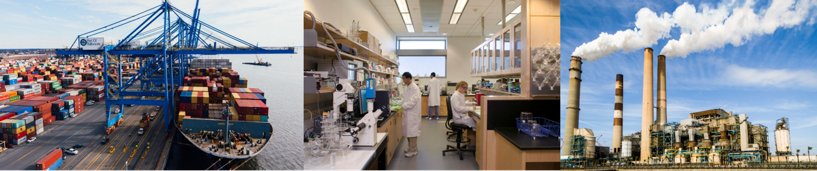
Facilities are the sites where static operations, or those activities that aren’t mobile, take place. They include storage facilities like warehouses, silos, & tank farms, transportation terminals like piers, stations, & airports, and manufacturing locations like mines, farms, factories, assembly lines, & chemical plants.
Facilities by their numbers and availabilities could make or break supply chains.
Japan, for example, has forty -four (44) shipyards for fishing vessels versus only eight (8) in the Philippines. The shipyards had helped the Japanese deep-sea fishing industry become very productive, as fishing boats experience less delay and turnaround in maintenance and dry-dock repairs. Deep sea fishing in the Philippines, on the other hand, had been not as bountiful given the lack of available facilities leading to long wait times for vessels awaiting repairs. It’s no surprise that the Japanese seafood industry flourishes versus that of the Philippines.
Some executives think that construction is the one and only answer to any necessity for facilities. Executives would allocate capital and hire engineering contractors to build warehouses and factories and expect that the finished structures would be enough for any need for additional space and increased production capabilities.
A flat-glass manufacturing company where I once worked decided to invest in a tempered glass production line. The company’s in-house engineers thoroughly planned the tempered glass production line’s detailed designs from the selection to purchase of machinery, the design & connection of electrical & plumbing requirements, and the installation of conveyors.
The engineers didn’t plan too much for the building that would house the tempering line. They didn’t consider how the raw material, the un-tempered glass, would be brought to the new production line, how much space should be allocated for packing & storing the tempered glass, and how the products would be loaded & shipped out.
I was a junior industrial engineer at that flat-glass manufacturing company and midway through the construction of the tempered glass building, the chief engineer assigned me to lay out the space for storing the finished tempered glass products.
I reported to the chief engineer that the building had only one (1) door and that there were no restroom facilities planned for the personnel who would be working on the tempered line. Receiving & shipping would pass through only one doorway, and employees would have to walk far to the nearest restrooms, which was a violation of occupational safety regulations. I also informed the engineers that there may not be enough forklifts to move the tempered glass to and from the production line.
The engineers took up my findings but didn’t immediately address them.
When the warehouse opened, production people complained about the lack of restrooms which led to longer breaktimes and shorter uptime for the tempered glass line. Shipping was slow to move glass to and from the production line due to shortage of staff and forklifts. And when shipping did move products, it took longer than usual to load trucks because forklift operators travelled lengthy distances from the line to the dock via the building’s solo doorway.
All of these could have been avoided if engineers or someone bothered to consider the support operations when they were planning construction of the building.
This wasn’t the first time I encountered this kind of management thinking, where executives would approve the construction of facilities and then assign industrial engineers to work with whatever had already been finally approved or finished. It was shoot-first-before-asking-questions thinking and it was prevalent when it came to facilities planning in most companies I worked with.
Facilities design isn’t just about planning how to construct them. It entails answering several questions, such as:
- How many facilities should there be?
- Where would the facilities be located?
- How much capacity or what size should each facility have or be?
- What operations (e.g., production, logistics) would be planned at each facility?
- What would the flow of merchandise & materials be like at each facility?
- What policies would be governing each facility (e.g., inventory, customer service, internal control, quality assurance)?
Answering these questions should be part of any engineering project for any facility.
Facilities are key links in supply chains. Their existence and management are just as vital as other supply chain operations such as transportation, planning, and purchasing. They should not be treated simplistically as in just constructing them and then working with what had already been built. They require study and design, from finding the ideal site locations to identifying needed capabilities.

