We who are supply chain managers have their hands full doing their jobs. The problem is we work with what we only have. Executives of enterprises determine our scopes; executives also decide what resources & assets we will have at our disposal or have authority over.
Supply chains extend beyond the borders of enterprises, and this is one key reason why our supply chains are dysfunctional. We are limited to working within our scopes and in what we have. Executive strategic policies govern the relationships we have with those outside the jurisdiction of the enterprise, i.e., vendors, customers, & service providers.
To build or improve supply chains, we need engineering, not management. We who are engineers are tasked to solve problems without working with we have. We determine what we need to work with and what resources & assets enterprises need to procure and invest in.
Engineers build new structures & systems. Managers work within existing structures & systems.
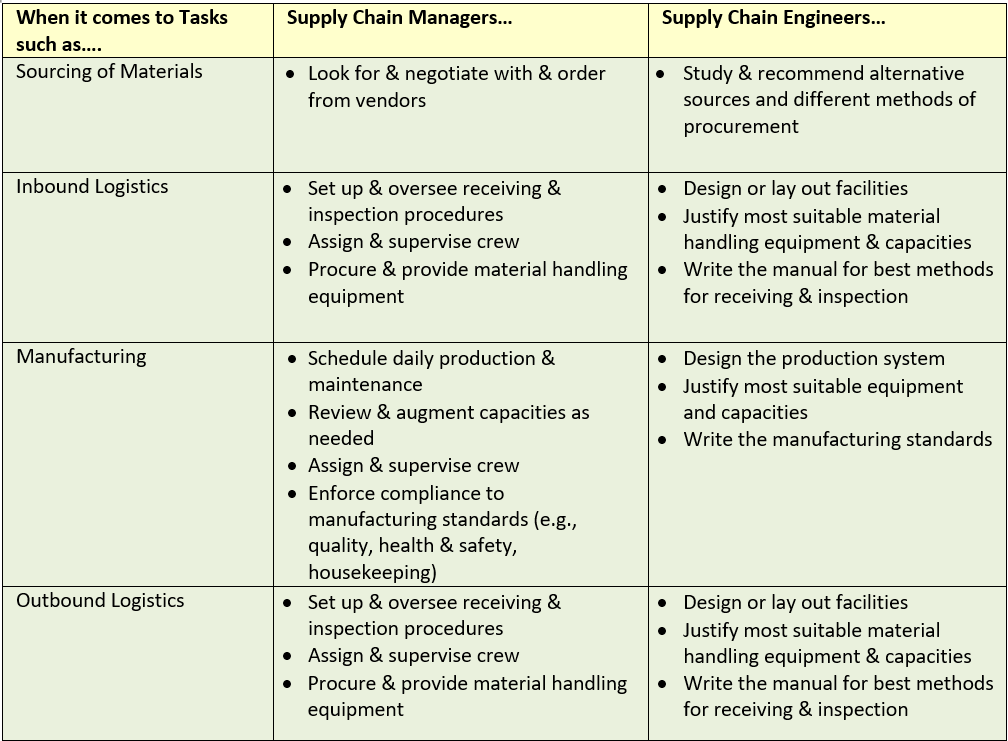
When it comes to tasks, supply chain managers look at what’s happening in their operations and plan, organise, direct, and control the people, resources, and assets they oversee.
Supply chain engineers, on the other hand, don’t oversee or supervise. They assess the conditions of people, assets, and resources and figure out how to boost the productivities of each and all. Engineers don’t limit themselves to what’s there but instead, study what can be added or changed.
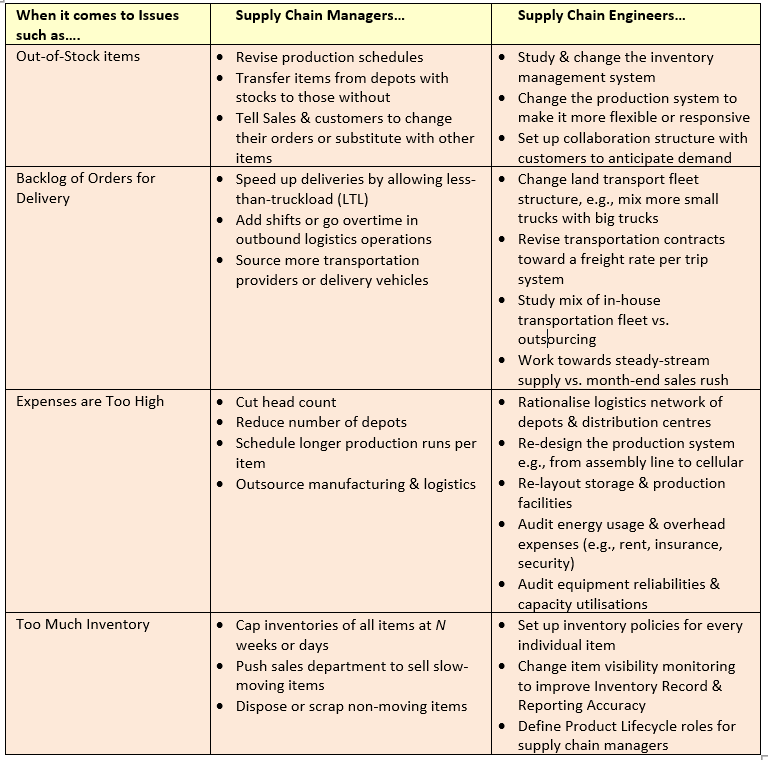
Supply chain engineers become more worthy when they tackle issues. Whereas supply chain managers quick-fix or implement short-term remedies, supply chain engineers define problems and design long-term productive solutions.
Improving supply chains is about changing what we work with.
 Ellery's Essays