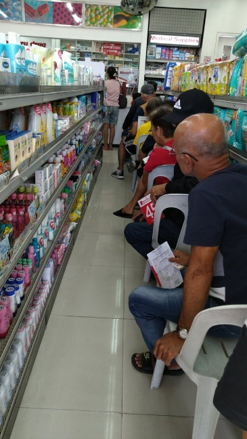
A leading drugstore chain in the Philippines was getting flak on social media for only having one (1) cashier at each of its branches. Netizens were complaining that whenever they went to any of the drugstore’s branches, they’d see two to three pharmacists at the prescription counter but only one (1) cashier. The complaining netizens posted there should be more cashiers so that customers wouldn’t have to wait so long to buy and pay for prescription medicines.
From personal experience, I had never had to wait long at any of the drugstore’s branches I went to. True, there were long lines in some branches, but I never had to spend more than fifteen (15) minutes waiting and paying for my medicines.
I also had identified branches where there’d likely be no long line at all. These would be branches which were in stand-alone buildings and away from nearby shopping malls. I would fill my prescriptions at these branches on Sunday mornings where there wouldn’t be many people. I would be in and out of these branches in about five (5) minutes.
The owners of the drugstore chain apparently adopted a strategy of having as many branches as possible to cater to customers in just about every neighbourhood. It’s a strategy that seemed to have been successful as the drugstore chain is the leader in the Philippines’ pharmaceutical retail industry.
It’s not a unique strategy. Other service retailers like banks, supermarkets, convenience stores, fast-food restaurants, and gas stations also put up as many branches as they could. The leaders are those with the most number of branches.
Having many branches, however, does not necessarily result in quicker turnarounds for customers. That’s what I observed from the drugstore’s branches. One branch would have longer lines with subsequently longer queue times while another would have almost non-existent queues with customers hardly spending any time waiting.
The netizens’ criticisms regarding branches having only one cashier versus three to four pharmacists were originating from impatient customers who felt they were spending too much time in line at some branches.
And what did the drugstore say in response?
Nothing. The drugstore never replied to the complaints.
And why should they? Sales continued to grow. Profits had been increasing. Why hire more cashiers and incur more costs? The drugstore’s many branches were serving just about every corner of the country, and its customer base continued to grow. Its market leadership was solid.
When customers become impatient, the seemingly logical response is they will leave and find another drugstore to buy their medicines. But with the drugstore’s branches just about everywhere, it’s more likely that impatient customers would go to another of the drugstore’s branches which would have fewer people and shorter wait times. The drugstore still wins.
Is there any merit, therefore, for the drugstore’s management to productively improve service processes and reduce waiting times at their branches?
Queueing theory presents several factors that impact the wait times of customers. These include at what time customers arrive at a service point (e.g., a drugstore’s branch), how many other customers arrive at different times of the day, how many available servers (i.e., pharmacists & cashier) are there, and how fast servers work. Having only one cashier is just one factor to why wait times may be long.
If one drugstore branch shows that most customers arrive at about lunch hour (12:00noon to 1:00pm) and that two out of three servers at that same hour go on lunch break, then one could imagine the long queue and wait time at that hour of the day. Common sense would dictate that the branch supervisor should stagger lunch breaks outside the 12:00noon to 1:00pm period.
With more sophistication, the drugstore’s management could compile more details on the arrivals of customers, the lengths of time they waited in line, and how long servers processed customers’ prescriptions & payments. Drugstore managers could also investigate why some customers take so long to have their prescriptions filled versus others.
Data from queueing experiences could be helpful in justifying changes in how the drugstore serves its customers. For example, the data may show a correlation of long service times with customers who not only have multiple medicines to purchase but also who make up a larger share of a drugstore branch’s revenue.
The drugstore could study setting up special service lanes for customers buying high amounts of medicines which would thereby attract a greater share of a more lucrative market.
Casinos already do this with so-called ‘high rollers,’ customers who gamble high stakes. Some banks also have departments who cater to wealthier clients. Hotels & airlines have special web portals & check-in lanes for higher paying travellers. Such services spare some customers from long wait & process times via such ‘exclusive’ services and at the same time contribute revenue to businesses.
Queues are a fact of life. Every service entails a time to wait and a time to be served. Reducing either is not that straightforward as there are factors to be considered from how many arrive at a certain time of day to how many servers are there available. The enterprise who is doing the serving may not see any outright benefit at the onset but with some studies, it could find new sources of revenue from improving the speed of service and the reduction of waiting time.
And one more thing: customers would be happier if they waited less and are served faster. An enterprise has nothing to lose and much to gain from happy (and not impatient) customers.


