It’s a commonly asked question from business leaders. ‘How can we reduce costs?’
Answers arrive almost immediately.
Reduce head counts.
Buy cheaper stuff.
Cut overtime.
Save energy.
The list goes on.
A large multinational corporation initiated a ‘cost improvement program.’ Departments were asked to submit reports on cost improvement projects they initiated and implemented. Those departments whose projects resulted in the largest savings were awarded trophies. A committee made sure that the savings from projects were real. The corporation claimed millions of dollars in annual savings.
Yet, unit costs of products sold continued to rise. To maintain profit margins, the corporation increased prices yearly.
Much of the savings from the corporation’s cost improvement program were cost avoidance, that is, they were higher expenses project proponents were successful in preventing.
Some cynical critics commented that the ‘cost avoidance’ projects weren’t rooted in anything innovative but stemmed more from what was already being done. For example, one project claimed savings from locally fabricating spare parts instead of buying more expensive brand-new imported components. Local fabrication had already been a common practice of the department who submitted it anyway as a cost improvement project.
Executives, however, stuck with their beliefs that the corporation’s cost improvement program was a success. They blamed uncontrollable economic inflation for higher prices leading to rising costs but continued to praise departments for their ‘cost improvement’ zeal.
Context matters when it comes to cost reduction.
Are you looking to reduce costs or avoid costs? Or are you seeking to maintain profit margins?
Are you trying to reduce costs to ensure business survival? Or are you trying to psyche your organisation to have a cost-reduction mindset?
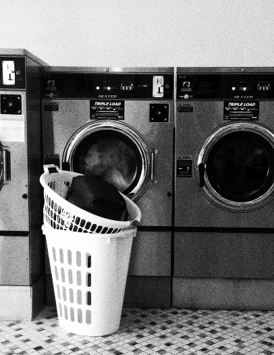
The owner of a start-up laundromat was worried she wouldn’t be making enough money from her business.
The owner leased a small space at the basement of a residential building and bought & installed two (2) washing machines & two (2) dryers.
From the first day of her business, her washing machines & dryers ran almost non-stop twelve (12) hours a day. Customers kept arriving and paying to use her laundry machines.
At the end of every month, however, she saw that profits were barely above her costs.
The owner employed one (1) attendant and paid electricity & water bills. She saw no means to reduce expenses and instead, was anxious that mandated increases in minimum wages and increasing rates in utilities would overtake her profits.
When she asked me for advice, I broke down her costs and told her that she shouldn’t look for reductions in wages & utilities. She should look for how much overhead she was paying.
Overhead is the fixed costs one pays regardless of how much volume or revenue one’s business is earning. In business, the idea is to sell more than the fixed costs or earn above the ‘overhead.’
In the case of the owner and her laundromat, the attendant’s wages and the lease or rent of building space were her overhead. Maybe the owner can’t control wage costs rising, but maybe she could do something about the rent. The owner could find a cheaper place to rent, or she could buy the space in the building.
The other option was to buy more washing machines & dryers and that’s what the owner did. The owner’s business improved as her revenues doubled as more customers arrived to use all her machines every day.
Sometimes the best starting point to reduce cost is to not to find what to eliminate but to overcome the overhead by selling more or investing in additional capacities.
Cost reduction is not the problem. The context behind it is where to look for where the problem really lies.

