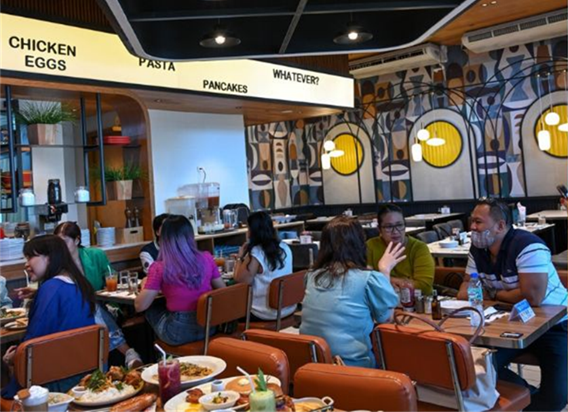
“Where’s my order?” I heard the lady say to the server at the diner.
A family of four had been waiting for their food. Their appetizers and some entrees arrived but not all. The lady who was apparently the wife and mother of the family was impatient.
“Please cancel the order if you cannot serve the dish,” the mother firmly but politely said to the server.
“We’ll follow up,” the server replied.
Within a minute, another server arrived with the delayed dish.
I noticed that there were only two (2) servers and a busboy attendant (one who brought the food and cleared the tables after customers left) at the diner which was fully occupied with hungry patrons. The servers also did the billing and receiving of payments on top of taking orders and communicating them to the kitchen.
But the lady and her family could care less. What mattered was they got what they asked and will pay for.
It’s a scene repeated in many restaurants, in retail stores, and in other service firms as well. Customers make orders. Orders don’t get delivered. Customers threaten cancellation. Establishment is understaffed.
Customers don’t notice or care if service firms have enough people or capacity to take and serve orders. It’s not their problem. They assume that because service providers are open for business and selling to make money, they deserve the products & services as they demand them.
The last thing you want is for your customers to forward their frustrations such as in posting negative social media stories and even legal actions. Yet, many business owners hesitate to add capacity or hire more staff to ensure better customer services.
Why do business owners not spend more to hire people or invest more in improving services?
Because they’re afraid the costs would diminish profits. They fear that they won’t get any more added revenue. Would the diner earn more money with more staff if the dining seating capacity remains the same? The diner owner wouldn’t know for sure.
What’s certain, however, is if the diner doesn’t serve its customers to the level they expect, they are more likely to not come back. Patrons would post or feedback by word-of-mouth that the diner’s service is not up to par. This would constitute a threat to sales.
The owners of the diner would frown if they hired extra staff only to see them busy only during mealtimes and not in between. Many business owners don’t, after all, want to pay people who wouldn’t be working all the time.
The diner’s owners would also prefer not to prepare pre-cooked food in advance in which although such could be served immediately, would risk of being thrown away customers don’t order all of them. You don’t want to produce too much that would just end up in the trash can.
Serving customers is what enterprise owners pursue in the basic course of doing business. Rather than dwell on the uncertainty of whether we’ll make more money by improving customer service, we should not cut costs knowing the certainty that customers won’t be happy with our services.
Running a business that sells and deliver products is complicated. It gets more challenging when the products we sell rely on raw & packaging materials we’d need to buy, on manufacturing operations to convert & pack the materials into saleable items, and on a logistics network to convey them to customers who could be next-door or half a world away.
We’ll never be 100% certain about procuring, making, and delivering the merchandise we need. Supply chains are far from perfect and just about everyone has experienced failures such as out-of-stock, off-quality items, and tardy deliveries.
But it doesn’t mean we can’t do something. Upping service by boosting productivity has a better chance of counting for something. If the diner’s owner invested to ensure customers come out happy instead of disappointed, it would boost, if not at least maintain, the diner’s reputation as a place worth eating at.
Maybe we won’t reap an immediate tangible gain by spending more for service, but we’d earn a prospectively positive reputation to customers. And isn’t reputation just as much a priority than simply making a profit?
 Ellery's Essays