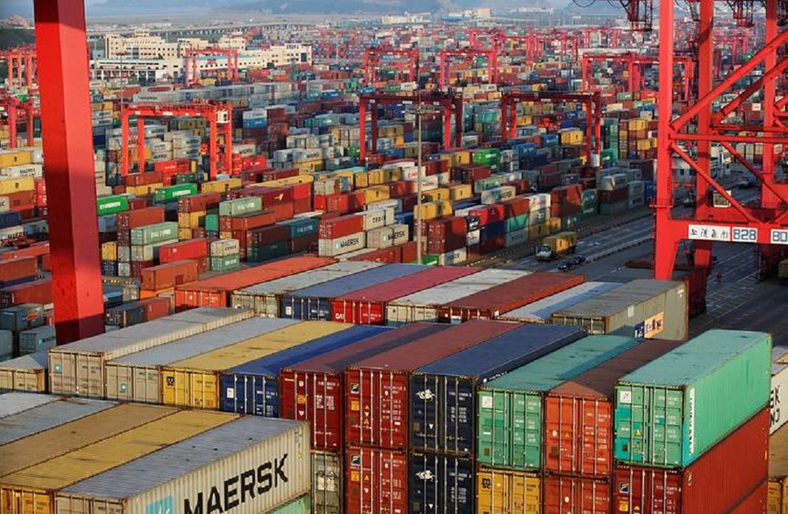
The year 2025 arrived and what many businesses dreaded came true. Newly inaugurated American President Donald Trump and his economic hawks swooped and threw global trade into turmoil.
Arguing unfair trade practices from many nations, President Trump imposed tariffs on billions of dollars of imports from Canada, Mexico, China, and the European Union (EU), with threats of more to come.
A lot more probably would happen in 2025 and beyond, but the crux of the matter is that adversities, not just from disruptive American economic policies, shall continue to challenge supply chains.
So-called industry leaders repeatedly preach resilience and cost optimisation. Some strongly advised renegotiation of supply contracts.
Some know-it-all self-proclaimed supply chain gurus say that enterprises should shift to importing ingredients & components instead of bringing in finished or fully assembled products in which the latter are charged higher duties. Others say vendors, enterprises, and customers should just share the costs from new tariffs.
All these knee-jerk messages have something in common: they’re no different from the ones we heard before (such as from the height of the CoVID-19 global pandemic to the Russian-Ukraine war) when supply chains virtually shut down due to lockdowns and border closures.
Many chief executive officers (CEOs) tell their operations managers to fix and improve supply chains without a clue whether it will make an impact or not (in most cast, they don’t). They look for quick solutions without first understanding and accepting what supply chains are.
And what indeed are supply chains?
Supply chains are made up of relationships. They’re not ecosystems. They’re not information networks. They’re not limited to just the procurement & logistics operations within enterprises.
Supply chains start from the very resources we mine or harvest. From there, materials and merchandise flow through various processes such as conversion, transportation, and storage & handling before we sell them as products finally served, used, or consumed.
Every supply chain is unique. Not one is identical to the other although some share or overlap their activities with others.
We manage both the internal operations of our enterprises and relationships we have with our partners (i.e., vendors, service providers, and customers) for the purpose of making our supply chains productive. Because we share similar priorities between us as stakeholders and our partners, we strive to perform up to or above par to achieve our aims. Productivity is the overall virtue we work and measure ourselves in supply chain performance.
Every supply chain, however, is subject to risk and adversity. It is because of risk and adversity we put a lot of attention on our supply chains. We have learned that many things could and do go wrong with supply chains. We suffered losses, wasted resources, and lost opportunities because adversities affected our supply chains’ productivities.
We made and continue to make mistakes in how we manage our supply chains. We don’t realise that we shouldn’t only be managing supply chains but rather, engineering them. And we don’t realise that the goal we should look for in improving them is productivity.
Whatever strategy we undertake to improve supply chain productivity would likely not be easy, however. Supply chains are broad and go beyond our businesses’ borders and we’d need to work together with our partners (vendors, customers, service providers). We cannot solve supply chain problems just by managing our businesses’ operations.
In taking on supply chain challenges, we also need to accept that we should not see ourselves as dominant protagonists. We are no more than peers or equals with the vendors and customers we do business with. (We can try just as Walmart does with its vendors, but sometimes it does not come out beneficially: Chinese officials repudiated Walmart executives for hinting vendors should lower prices to mitigate the impact from US tariffs).
Whereas we measure our operations’ performances differently than others, we can gauge the common thread of productivity running to and from between enterprises.
Productivity encompasses key elements such as quality, cost, and reliability. We can index productivity via measures like these or simply monitor and act on each individually. How we work together with our partners and perform towards improving these measures will define our productivity progress.
Supply chains are subject to relentless adversities. We have been on the defensive combating them as we make the same mistakes in thinking we can just manage supply chains instead of engineering them for productivity improvement.
Productivity is the common aim of organisations along the supply chain. When we pursue it, when we focus on it, when we and our partners collaborate towards it, we can overcome adversity and mitigate risks.
 Ellery's Essays