In the 1980’s, Procter & Gamble had a cost improvement program dubbed “Deliberate Change.” The purpose of the program was to tap all levels of the P&G organization to find ways to reduce cost.
The Deliberate Change program encouraged P&G employees to look for ways to reduce costs. There were extensive training programs focused on “creative problem solving” which encouraged brainstorming and using the right criteria for solutions.
All in all, the Deliberate Change (later renamed the Cost Improvement Program) helped save P&G millions in dollars worldwide and boosted P&G’s efforts to double its business by the end of the 1980’s.
P&G rewarded cost improvement teams which came up with innovative and effective cost reduction solutions. This motivated employees to seek out problems and solve them. At one point, teams were claiming so many cost improvement solutions that the company had to have steering committees actively screening the ideas to make sure they were indeed contributing real and effective savings.
The cost improvement program became an integral part of P&G’s culture of innovation and entrepreneurship. People who left P&G brought the “problem-seeking” mindset to other organizations and contributed effectively to companies’ bottom-lines.
The success of the P&G Deliberate Change program was in getting employees to seek problems, study them, and solve them. It is quite unheard of today in many companies for managers to tell employees to find problems. It is more of a rule that managers tell employees to avoid problems; employees instead should try to prevent them or find quick-fix solutions. Some companies would only go as far as putting up suggestion boxes for employees to contribute ideas where often, the suggestion boxes would remain empty or if there’s any, the suggestions would just languish in the boxes without anyone bothering to read them.
Many successful entrepreneurs start with a problem than with a solution. Netflix began when founder, Reed Hastings, sought a better way to rent movies.1 Uber started when founders, Travis Kalanick and Garret Camp could not find a taxi one night and decided to find a more convenient way to go from one place to another.
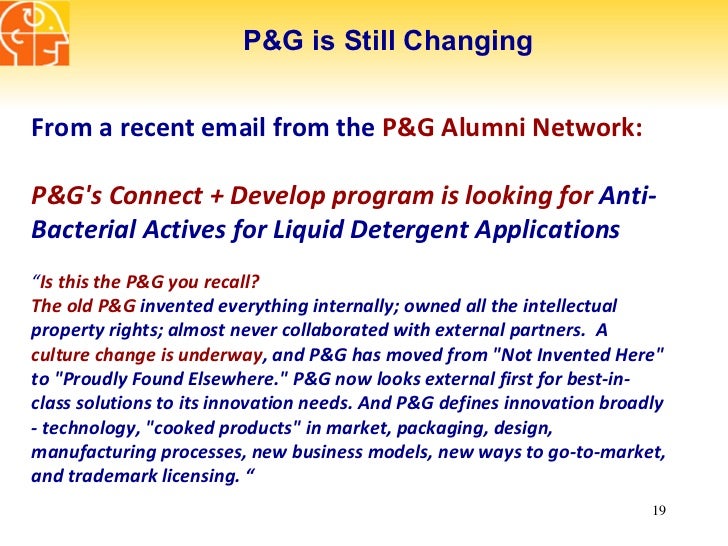
But as much as success comes from solving a problem, being continuously successful happens when one does not stop looking for problems. P&G’s Cost Improvement Program has evolved to one where the organization searches the outside world for innovative ideas.
But as much as ideas drive success for most enterprises, it is how well problems are solved that an idea becomes successful.
But it has to start with recognizing there’s a problem to solve. And before one recognizes a problem, should one wait for it to arrive, anticipate its arrival, or seek it out even if there is no urgent need of one in the first place?
Successful organisations solve problems. Successful entrepreneurs develop ideas that anticipate and solve problems. Continuously successful people look for problems to solve.
This essay was originally written on Januar 18, 2019
1 Adrian J. Slywotsky, Demand, (New York: Crown Business), page 2
 Ellery's Essays