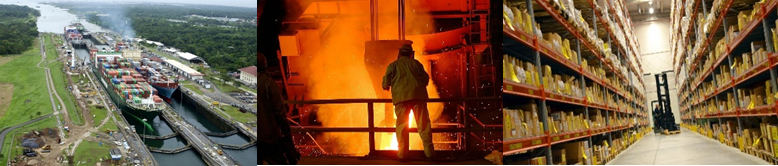
When a parcel arrives at my doorstep, I see myself at the end of a supply chain process—a process which involved multiple operations from procurement, manufacturing, to logistics.
But I could care less. What mattered is I got my parcel and the items I ordered.
The individuals in the respective supply chain processes which enabled the delivery of my items could care less too. What mattered to them was that they did their jobs, got paid for it, and were moving on to delivering their next order.
Many a mission of supply chain managers is to deliver products & services at the right time, at the right quantity, at the right quality, and at the least cost. Supply chain professionals deemed their jobs done as soon as they finish delivering the orders of their respective enterprises’ customers.
Unfortunately, the adverse events of the 2020s taught me that this mission was flawed. The mission was too limited in scope in that it did not consider the many processes which laid outside the boundaries of individual enterprises.
A first reaction would be that supply chain managers should work with their partners, i.e., vendors, service providers, & customers. It, however, went deeper than that. Supply chain managers had look at not only those who were next door to them but also at those who were further before or after the vendors & customers of their enterprises. Supply chain managers needed to work with partners to improve the productivities of all the connections of the supply chain from the sources to the end-users.
That was a tall order to ask, as a lot of work would be required just to establish the relationships between all the members of the supply chain.
But it was becoming necessary because of the adversities.
Adversities are unfavourable situations which arrive in untimely fashion. They not only disrupt the operations of enterprises but also entire supply chains as well. They can be natural or man-made such as earthquakes, weather disturbances, epidemics, wars, trade barriers, or a groundbreaking app invented by an entrepreneur. They can originate from outside or inside enterprises and the disruptions they cause could be far from predictable.
Adversities had become fiercer as supply chains went global and became more complicated. Selling to global markets and sourcing from locations halfway around the world came with compounded risks. Enterprises had not adapted or anticipated these risks.
Unprecedented adversities, thus, buffeted supply chains at the onset of the 2020s. Executives found themselves at a loss as they had no influence or upper hand over the adversities. They did not know what to do as disruptions made demand & supply more uncertain.
Executives complained to government leaders which was futile since many politicians were just as much as the reason for many adversities in the first place.
Executives preached resilience but what did that even mean, other than hunkering down and weathering through storms?
Some hoped that benefits of new breakthrough technologies like Artificial Intelligence (AI) would outweigh the impacts of adversities setback. But then again, many executives could not comprehend what AI was or how it could be applied. AI wasn’t a know-it-all computerised oracle which could solve any problem.
Supply chain managers resorted to traditional playbooks to seek ways out of adversities.
They looked for alternative suppliers, preferably nearer to their manufacturing & logistics locales, and thereby closer to customers.
They attempted to re-negotiate contracts with existing vendors & service providers, especially those their enterprises could not quickly switch away from.
They asked for help. They argued with legal teams to lobby for government relief (like Apple asking the American administration to defer tariffs on smartphones & other computer equipment). They requested chief finance officers (CFOs) to allocate more working capital to build inventories. They worked with human resource managers & labour union leaders in seeking concessions to optimise head counts & payroll expenses.
But the playbooks could go only so far (if they didn’t fail outright).
Supply chain managers had to face reality. The traditional playbooks were no longer useful in overcoming adversities especially those which affected entire supply chains. Managers needed new methods to solve problems pertaining to the overall supply chain than to operations within the walls of their respective enterprises. They needed to change the systems & structures that underlie the supply chain.
Supply chain managers had to first embrace productivity as their aim. It was no longer about respective enterprises delivering the goods at the right quantities, right qualities, right times, at lowest cost to the next direct link on the supply chain. It was more about adding value to the merchandise & services which flowed through the supply chain. Productivity was the aspiration to bringing about more value or worth to every linked enterprise in the supply chain.
Supply chain management by itself won’t be enough in bringing about productivity improvement. Supply chain managers needed supply chain engineers.
Engineers build systems & structures that enable supply chain operations. Managers oversee operations. Engineers build or change them.
Managers plan, organise, direct, & control resources & people. Engineers design, experiment, test, and commission systems, structures, & equipment.
If enterprises were to work together to boost the productivities of the supply chain they belong in, they’d had to adopt engineering principles and methodologies.
Industries had become global in the 2020s and in the territories where enterprises set up shop, adversities became more severe. So much so that enterprise executives were dumbfounded on how to mitigate the risks and tackle the disruptions. Supply chains needed to change and supply chain management wasn’t the means to do so. Organisations needed supply chain engineering.
The good news is that supply chain engineering (SCE) stems from industrial engineering (IE), a field that has been around since the end of the 19th century, right before the height of the Industrial Revolution.
The bad news is that many executives and engineers themselves are not familiar with SCE and some have very little recognition of IE itself.
Nevertheless, executives are slowly recognising the need to communicate & collaborate with their partners & linked enterprises along the supply chain. Many businesspeople had experienced the disruptions of entire supply chains but don’t know what to do afterward.
The answer is to boost productivity and to do this via supply chain engineering.
 Ellery's Essays