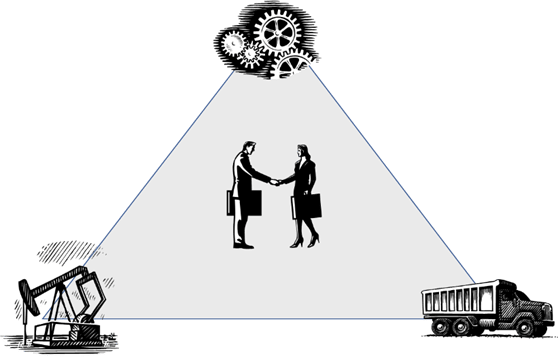
Supply chains are models of the relationships within and between enterprises which govern the flow of merchandise and services from their sources to end-users.
We build our supply chains based on these relationships. The systems and structures of our organisations and with the enterprises we do business with stem from strategies and policies resulting from our relationships.
Our policies on inventory and customer service, for example, reflect the levels of relationships we have with individual suppliers and with our customers. We keep more buffer stock if we don’t fully trust the delivery reliabilities of vendors. We produce and deliver in small batches to ensure we deliver in accordance with agreed customer order schedules & quantities.
Relationships are what supply chains are made of.
For the longest time, even before we coined the words “supply chain management,” we have managed these relationships. How we set up our relationships varies from one organisation to the next. Some of our enterprises base relationships on hierarchies and departments; we focus on functions and make sure they each perform to their exclusive targets. Some of us work in teams that include members from different disciplines. We collaborated with some vendors and customers to smoothen the stream of demand and supply of merchandise.
We have shuffled our organisational charts to accommodate our relationships. We invested in sophisticated information systems to enhance data communication and integrate transactions. We built factories and distribution centres closer to vendors and customers respectively. We engaged with couriers and 3rd party logistics providers to transport our goods faster. We have grouped and re-grouped the reporting lines of our operations and we wrote & re-wrote job assignments to cater to changes in our relationships.
We had, therefore, re-engineered our supply chains based on our relationships.
We essentially want our supply chains to be productive, in which we reap the maximum benefits at least cost aligned towards our objectives. We, therefore, are constantly negotiating with the different connections of our supply chains, whether they are the operations next door to us or with faraway suppliers & customers.
Much of our negotiations focus on price and performance. We try to fix the costs, conditions, & margins of future purchases & sales. We haggle to determine payment terms, accountabilities for risk, quotas, acceptable quality levels, and scopes of work.
The formal agreements we make become the bases of our relationships and how we plan to set up our supply chain operations. We build new systems & structures or adapt existing ones to the developing relationships.
Supply chains, thus, are constantly changing as our relationships within and beyond our enterprises evolve or alter.
How we establish and manage our relationships determine how successful our supply chains become.
 Ellery's Essays
2 thoughts on “Relationships are What Makes Our Supply Chains”