Many of our enterprises do Sales & Operations Planning (S&OP).
And each of us does it differently.
Because we each have our own way of doing S&OP, the results vary from one organisation to the next.
It’s no surprise, then, that there would be criticism over S&OP. The absence of uniformity drives us to compare how one enterprise plans versus another. This is compounded when there’s no working integrated platform (i.e., Enterprise Resource Planning [ERP]). Planners would set up their own systems, most of which are spreadsheet-based (i.e., Microsoft’s Excel). When planners change, the individual planning programs likely change too.
But is this a problem? What’s wrong with planners having their own way of submitting production and material requirements to respective operations?
When planners have their own systems down pat, it’s hard for them to switch, especially if they’ve grown comfortable with what they’re working with and they feel they are delivering to their superiors’ expectations.
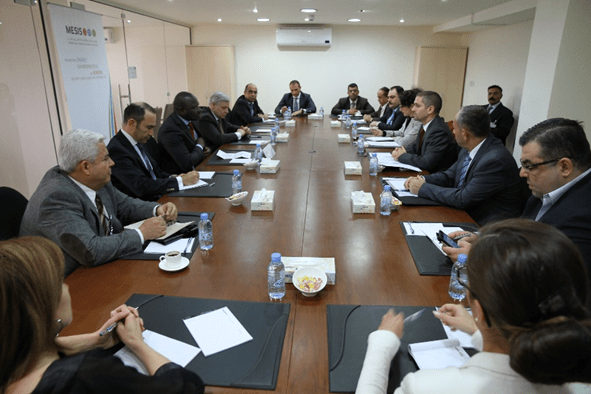
Sales & Operations Planning (S&OP) is one step in the planning process of enterprises, but it is an important, if not the most important, one. It is in S&OP where managers from Sales, Marketing, Finance, and Operations share information and align on what to do next, that is, figure out how much in customer orders to gather, what & how much items to produce, how much of inventories to stash, and how much should be shipped. It is here where targets are set, any issues or concerns resolved, and selling & operating plans are agreed upon unanimously.
S&OP involves people from different places in the organisations working together and this is where the problem usually lies. Getting people to work together has been an age-old problem in all organisations; S&OP is no exception.
Thus, it comes to no surprise when S&OP fails because:
- The chief executive (CEO) of the enterprise delegates S&OP to a lower-level subordinate.
The executive vice-president (EVP) of a manufacturing firm initiated a weekly S&OP meeting. The senior managers of finance, sales, and supply chain operations including support staff were compelled to prepare and present their plans in these meetings. The president & CEO, however, chose not to attend, instead leaving the agenda and chairing of the S&OP meeting to the EVP.
Whenever the EVP conducted an S&OP meeting, the CEO at the same time would be calling field sales and logistics to prioritise deliveries. Whatever plans were agreed in the S&OP meeting would be superseded by the CEO, rendering the S&OP useless and a waste of time. After a few weeks, the S&OP meetings stopped.
When CEO’s delegate S&OP away to other people, it at once indicates the executive’s disinterest in the enterprise’s departments working together to align towards a common sales & operations plan. As much as it may continue among middle managers, S&OP loses its importance.
- S&OP meetings become battlegrounds of division instead of venues for consensus.
Different heads and staff representing at least finance, sales & marketing, and operations should participate in the S&OP process. The objective of participation is to work together toward common plans to sell and deliver merchandise & services for the attainment of strategic goals.
In several S&OP meetings at a consumer goods multinational corporation, sales managers would accuse logistics staff of not delivering their orders. Logistics managers would pointedly shoot back at poor sales forecasting as the reason for unserved orders. The chief finance officer would scold sales for uncollected receivables from customers and chastise supply chain managers for overstocked items. Meetings would end with bitter ill feelings between department personnel. Instead of alliances, the organisation became rife with rivalries. After a few months, people would find excuses not to attend S&OP meetings or even prepare for them, as they rather not be in the same room with people they’ve come to dislike.
- S&OP becomes a one-sided process of instruction than one of shared discussion of data, issues, & recommended solutions.
In that same consumer goods multinational corporation as mentioned above, a new expat who was just assigned CEO declares at the start of a S&OP meeting that he wants shipments to reach 1,000,000 cases that current month. No questions asked. At that moment, the S&OP meeting ended.
When the S&OP becomes not a meeting but a one-sided affair where the CEO is the only person who has the floor, then it is good as dead.
The consumer goods corporation reached its 1,000,000 cases that month. Six (6) months later, customers were returning 10% of those cases, citing various reasons from expiration, inability to sell, or plainly just being unable to pay.
S&OP is important for our enterprises in the planning of how much we will sell and deliver. But it requires we of different backgrounds & disciplines work together to make & execute those plans.
Yes, we as planners must have the right tools (e.g. software). Yes, planners must have some leeway or autonomy in how they will plan. Integrated systems such as ERP are nice but if the system isn’t simple to use, planners will just revert to what they would be most comfortable with.
But what planners use is the tip of the iceberg in getting S&OP to work. The bigger task is to break down the walls between departments and getting them to work together to plan together.
 Ellery's Essays