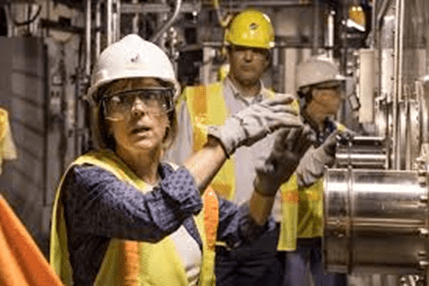
Some of us may remember Management by Walking Around. It was a buzz phrase from the 1980’s, credited to Hewlett-Packard executives and made popular from the book, In Search of Excellence, by Tom Peters and Robert Waterman.
Management by Walking Around (also known as Management by Wandering Around) or just MBWA for short, is essentially making time to roam around one’s facilities and talk to people who are on the frontlines of our businesses. We watch & talk with workers. We spot things that need immediate action. Or we just observe and update ourselves to what’s going on whether at the shop floor or within our own offices.
In our world where even though remote surveillance technology has become mainstream, MBWA is good advice for supply chain managers and more so for property managers & building superintendents.
I must admit I hadn’t done MBWA since I was a junior manufacturing operations manager at P&G in the 1980s. I decided to revive the idea as a property manager of my family’s business (45 years later!).
What inspired me at first to walk around wasn’t the needs of the business but the necessity of health. My doctor said I should move around more as I grew older. So, one early morning I decided to do a short walk around my family residence.
Being responsible for the maintenance of the place, I inspected the premises as I strolled. Little things I’ve never really noticed came to the fore. Tree branches needed pruning. An eave on the house’s corner required minor repair. The gardener was doing a good job keeping the yard clean and taking care of my mom’s orchids (we took his job too much for granted, it seemed).
I then started doing MBWA at the family’s warehouse compound a few kilometres away. I noticed more things than I would have otherwise as I wandered around the perimeter of the less-than-a-hectare storage facility. The outdoor passage from the fire exits was rocky, which could impede quick evacuation in case of an emergency. The fire exit doorknob didn’t look right; I should have it checked. Vegetation was growing and hanging over the wall toward our neighbours’ properties. A gate leading to the back of the warehouse had broken hinges and looked like it could collapse any minute. I also saw several blind spots in the warehouse’s closed-circuit television (CCTV) coverage which could be taken advantage of by nefarious characters.
I took several photos and asked the manager in charge to look at the “deviations’ himself and if necessary, schedule rectifications. Most would be done speedily and without much investment, but which if continued to be ignored could spell potentially unwelcome results in the future. It’s always better to be safe than sorry.
MBWA as a management routine waned at the turn of the 21st century, as managers embraced performance measuring concepts such as the Balanced Scorecard and remote management (overseeing operations from afar by watching CCTV cameras streamed via the Internet). As businesses expanded globally, we found it more efficient and of course, more convenient to ask subordinates to set targets, report performance, and provide their action plans. And we did this via virtual conferences from our offices or homes, without having to travel to faraway locations.
Business, after all, had become more complicated as our portfolios and our scopes of oversight expanded, not to mention the baggage of additional regulations stemming from evolving political climates.
We have so much on our plates. We tie ourselves up conducting meetings and writing reports in the hope we’d find quick-fix resolutions or answers to whatever pressing problems. We had forgotten the value of information gleaned from the old-fashioned act of observation of what goes on in our workplaces.
On the bright side, many organisational leaders regularly practice MBWA.
The late Henry Sy Jr., founder of Philippine-based SM retail chain conglomerate, for instance, made it a point to visit at least one of his dozens of department stores once a week. Mr. Sy, with his adult children in tow, would examine the shoes at the footwear department, which was his initial business at the start of his entrepreneurial career.
I remember the Jesuit director of my school walking the corridors peeking and waving to the teachers and students in classrooms, every year of his long stint which covered my entire educational history from kindergarten to senior high.
There are some executives who do MBWA more for show, however. For example, a government official takes a one-time bus ride with his media entourage to demonstrate his empathy with the commuting public’s daily ordeal with traffic (and campaign for votes in a coming election).
MBWA encourages MBTP, Management by Talking with People. We meet people when we walk around and in so doing, we converse with them. A variation of MBTP is MBSUL, Management by Shutting Up & Listen, in which we hear people out rather than making speeches or sermons to subordinates. We don’t meet people on the frontlines to finger-point or find fault. We’re there to get their feedback, understand what’s happening, and fill in what we are missing in our day-to-day situational oversights.
Executives of global companies may find it difficult to do MBWA of facilities halfway around the world, but even if they could do it a once or few times a year, I think there would be some benefits in seeing what’s happening in person and having face-to-face conversations with the people they don’t see often.
MBWA is a simple concept, one that requires the investment of time. But if the results of spending that time consist of knowing what’s really going on and understanding what frontliners are experiencing, wouldn’t it be worth it?
 Ellery's Essays