One of the most irritating things in supply chain management is handling returned items from customers. We spend plenty of our precious time & resources trying to get rid of them.
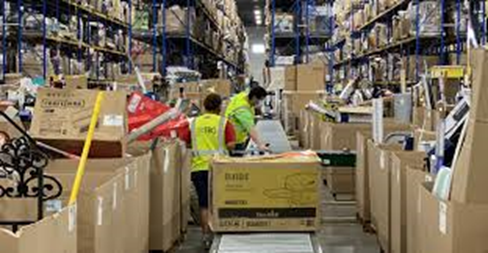
‘Bad orders’ or BO for short are otherwise known as unsaleable merchandise or trade returns. BO is a commonplace term in the consumer goods industry in which retailers return millions of dollars of products to their suppliers.
BO isn’t limited to consumer goods, however. Businesses in other industries face trade returns as well. Customers return pharmaceuticals, toys, tools, and even cars.
Reasons customers return products are varied and many; some of which include:
- Damaged items
- Wrong items delivered
- Customer has no space
- Delivery arrived too late (or too early)
- Expired product
- Obsolete product
- Customer can’t pay
Businesses try to impose policies on trade returns. In most cases, they don’t work. This is because many customers will not agree to them. Customers don’t want to keep trade returns; they want to get rid of them and get their money back from the suppliers who sold the items to them.
A large consumer goods multinational, for example, told its wholesaler customers that it won’t accept trade returns. The multinational firm told wholesalers it would neither retrieve unsaleable products nor transact refunds for them. Wholesalers, in turn, told their downstream retail customers they also won’t accept returns. The retailers responded by switching their purchases to the multinational’s distributors, and then telling the distributors to retrieve their unsaleable merchandise when they delivered orders. The distributors had no option but to get the items, otherwise they won’t be paid. The distributors then brought back the items to the multinational who found itself back to square one with BO’s it doesn’t want.
Supply chain managers label the retrieval and handling of trade returns as reverse logistics. It involves setting up systems & structures to retrieve, re-process, and/or dispose of returned items. As in every organisation, managers need to justify the viability of such systems & structures. The challenge is how to convince executives to invest in such operations, which add expenses to already losses in sales.
The ideal solution in managing BO’s is to prevent them in the first place. But because, as mentioned earlier, there are multiple root causes for BO’s, reaching a no BO scenario would take time and a lot of work.
But we aren’t alone in our endeavour to eliminate BO’s or trade returns.
The trade returns problem is a supply chain issue. Our suppliers & customers just as much have a stake in solving the problem as our businesses do. We, therefore, should work with our suppliers & customers if we are to reduce trade returns.
We can set up a reverse logistics system in partnership with our customers & suppliers. An initial purpose of such a system would be to retrieve unsaleable items as soon as the customers ask. Likewise, our suppliers would do the same in taking way unsaleable materials when we request them to do so. We would negotiate both with our suppliers & partners on how to account for the unsaleable items retrieved and the amounts to be refunded. We would need to negotiate on the value of items to be refunded given the costs we and our suppliers & customers incur in the processing (e.g., disposal, storage, salvage) of said items.
As we gain experience with our reverse logistics system, we together with our suppliers & customers can identify root causes and work to address them. We can work, for instance, on repackaging goods to avoid damages in handling or reformulating materials to lengthen shelf lives.
Bad orders, unsaleable merchandise, or trade returns are pains for all supply chain operations managers. We don’t like them; we want to get rid of them as soon as we could at least expense.
We try to manage trade returns via setting up reverse logistics systems & structures. Seldom, however, has such systems & structures been successful in stemming BO’s given the myriad of root causes for trade returns.
The reason reverse logistics systems fail is because we try to impose them on our suppliers & customers. Trade returns is a supply chain problem. It requires we working together with our suppliers & customers to solve it.
We can, therefore, get underway with a reverse logistics system in which we set it up together with our suppliers & customers. We can plan to have an efficient system that not only gets rid of items from our operations but also have one where we identify and address root causes.
The underlying principle in working with our suppliers & customers is mutual benefit. When we and our partners, i.e., our suppliers & customers, adopt it, we will have made headway in minimising the scourge of bad orders.
 Ellery's Essays