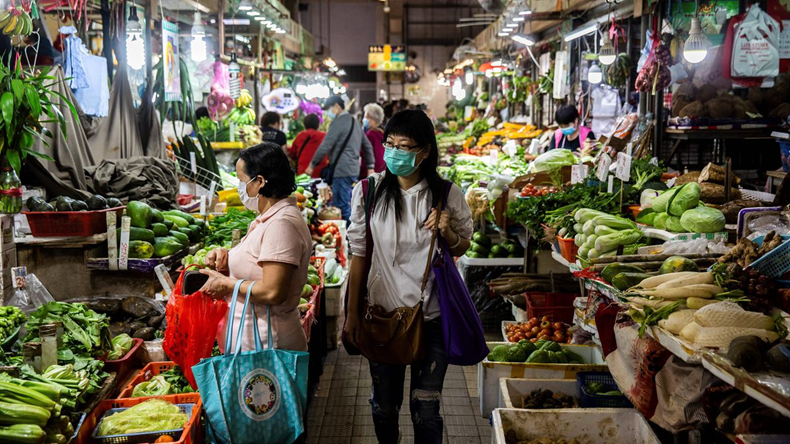
On a typical early morning at any wet market in the Philippines, groups of housewives & domestic helpers would be seen moving from one vendor’s stall to another to buy fish, vegetables, poultry, & meat. Most of what the stall vendors sell are fresh, or just delivered via dealers or transporters who retrieved the products from provincial farms, fisherfolk, and cooperatives not more than twenty-four (24) hours before. The vendors are familiar with most of the housewives & helpers, and they are often prepared with the items they know their regular customers will buy.
The vendors tag their regular customers as “suki.” A suki is a Filipino term for “regular customer.” It is said to have been derived from the Hokkien Chinese phrase “tsu kheh” (meaning: “primary guest”). One is called a “suki” because of the frequency of their patronage.
Suki customers are not limited to Philippine wet markets. We see them in just about every trade segment such as retailers, dealers, wholesalers, fabricators, & import-export businesses. Suki relationships are quite more visible in small enterprises, as many owners rely on regular customers for much of their sales.
The suki customer relationship isn’t a new thing; it’s been around since ancient history as in when individuals began trading with one other. We like to buy from whom we are familiar with and likewise, the same to whom we sell to.
Malls, department stores, and niche retail chains had changed the business landscape in the 20th century and had grabbed many customers from the traditional mom & pop retail stores, forcing many to close. It didn’t help that the CoVID-19 pandemic from 2020 to 2022 also compelled many customers to purchase from online traders as most brick & mortar retailers had to shut their doors due to mandated restrictions against face-to-face transactions.
Despite the adversities, many small enterprises persisted in the suki way of doing business. And many of these small businesses not only survived but flourished.
Small businesses innovated with the times such as by regularly communicating with their suki customers via online messaging, smartphone texting, or by simply calling them on a traditional landline telephone. Wet market vendors during the CoVID pandemic, for example, would deliver to their suki customers after receiving screenshots of the latter’s handwritten items-for-order lists. Customers would pay either in cash or via smartphone wallet transactions.
The suki customer relationship inspires us to the following insights as to what supply chain excellence is all about.
- Not only customers but vendors & service providers are key to supply chain success.
We’ve heard the line that “customers are number one.” Or that our businesses should be “customer-centric,” or “customer-focused.” Just as much as there is some truth in these terms, we should place just as much emphasis on how we deal with our vendors & service providers, those we buy our materials or procure services from. The quality of what we input into our supply chains determines how good our output will be to our customers. “Garbage in, garbage out” is a phrase we should remember if someone believes we should take our vendors or service providers for granted.
2. Communication counts.
We invest a lot in information systems, as in state-of-the-art computers and software. But how much do we invest in setting up lines of communications between ourselves and our vendors, service providers, & customers? The irony is that we don’t have to invest that much if all it takes is to regularly pick up the phone and call our partners to ask them what they will buy, to inquire regarding the availabilities of needed materials, or to schedule services.
3. Supply chains rely on relationships.
It’s not enough that we preach policies of friendliness with our partners, or we establish lines of communication. We should set into our supply chain strategies the building of relationships with those we do business with. Relationships are what supply chains are made of and we should value them.
4. We should treat every vendor, service provider, and customer with equal respect.
Our supply chain strategy shouldn’t be about narrowing down our relationships to the few customers who buy the most from us, or those group of vendors whom we buy the most important items for our operations. As much as it’s worth to work with a few, we should aim to have equally prosperous win-win relationships even with the customers, vendors, & service providers who don’t have the majority share of our businesses. The rationale for treating every vendor & customer equally is that we boost the growth opportunities of our relationships. Every relatively small customer or vendor are seeds that we can reap potentially huge harvests from.
5. We should not stop seeking continuous improvement not only in our operations but also in our relationships.
As supply chain professionals, we tend to focus inward when there is pressure to do better in our operations. What we should do instead is to look outward, with our partners, in seeking better results. Working with our partners is a first step and not one that comes after working on our internal operations. Supply chains encompass the processes from source to the final end-user and go beyond the borders of our enterprises. Improving our relationships benefits the overall supply chain and our enterprises as well.
6. The ideal supply chain thrives on partners working together towards common goals.
The informal relationships between enterprises and their suki customers arise from common ground between each: a rewarding win-win business.
Many enterprises, especially large corporations, do a lot of organisational development within and between departments. Many hardly work with their vendors, service providers, & customers. Small businesses can exploit this oversight of larger firms by simply treating every customer as a suki, and offering to be one for vendors & service providers.
Mogu Mogu is a product line of nata de coco beverages & snacks from Thailand. When the Philippine dealer introduced Mogu Mogu to Filipinos in 2008, it “started out with distribution in schools, events and some major chains, growing year by year. In less than five years, the company was able to complete the map, and have placements in all regions of the country.”
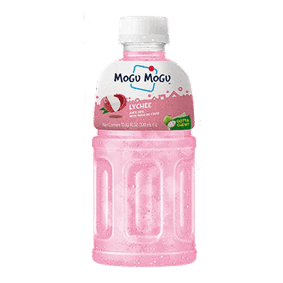
I witnessed how the young chief executive of the Philippine distributor would sit with customers and talk about the Mogu Mogu brand with them, ranging from prices to product placements. The owner treated every customer, as in every individual retailer, like a suki. He didn’t stop at a retail chain’s executive offices but instead made the effort to visit individual stores or branches to talk to proprietors. Because he made himself available and regularly communicated, retail stores would be well-stocked with Mogu Mogu items. More than fifteen years later, Mogu Mogu is a multinational brand available in just about everywhere in the Philippines as much as it is globally.
Mogu Mogu overcame obstacles from established beverage & snack multinationals simply by treating customers like their suki. They did likewise with their service providers—their dealers & distributors—who placed Mogu Mogu items in groceries, supermarkets, and mom & pop sari-sari stores (corner stores located mostly in small villages).
The traditional suki relationship offers lessons for supply chain optimisation. Simply, it tells us that our relationships with partners, i.e., vendors, service providers, & customers, are not only important in principle but also worthy of cultivating in terms of communication and investment in collaborative improvement. And it’s not only just a focus on a few but an emphasis on all—every vendor, customer, & service provider deserves our attention.
The benefits may not come instantly but when they do, we would not regret it.
 Ellery's Essays