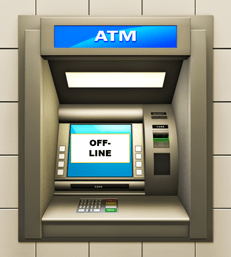
I went to the bank to cash a check. The teller said there was no cash available. She also said the automatic teller machine (ATM) also had no cash and was off-line.
The teller, however, told me to wait. She then left the bank, went next door to a rival bank, and withdrew cash from a personal account she had there. She returned and deposited the cash into her account in the bank I was at. She used the cash she now had to cash my check.
The teller’s boss, the branch manager, told me that the armoured car which delivered cash daily was late. The amount the armoured car delivered the day before also ran out due to high demand from clients.
The bank does not keep much cash and relies on armoured car deliveries the bank’s main branch dispatches daily. Cash withdrawals had outstripped cash deliveries, however, such that the bank runs out of cash periodically. Deliveries of cash from the supplier, the central bank (known as the Bangko Sentral in the Philippines) also are sometimes haphazard, leading to shortages of currency bills and coins.
Just like merchandise, there is a supply chain for money. And just like with many other supply chains, shortages occur. There are times when the bank has no money or too much cash. And sometimes, the bank has too many of one denomination (e.g., 100 peso bills) and none of others (e.g., twenty [PhP 20] peso coins).
The causes are not too far off from those of other industries. Production & transportation delays, not enough trucks, late arrival of raw materials to bill printing or coin manufacturing facilities, are some reasons.
The difference observed between banks and enterprises selling products is that the former tends to deny the need for supply chain improvements. Banks insist they are financial institutions; they haven’t fully accepted they are just as much involved in operations like procurement, manufacturing, and logistics, especially when it comes to cash.
Supply chains are everywhere, even at banks.
 Ellery's Essays