A large property management company set up a uniform accounting system for all the buildings it manages. The accounting system utilized a customized software program in which each building’s bookkeeper is required to use. The software allowed the bookkeepers to enter invoices and vouchers and update the building’s books of accounts in real-time.
The customized software, however, did not allow for exceptions or revisions. The system was rigid in terms of how transactions were entered. Bookkeepers needed approval from the property company’s corporate accounting department if they wanted any change in the system.
A competing property firm, on the other hand, delegated the set-up of an individual building’s accounting system to the respective bookkeeper. The bookkeeper was given flexibility to tailor-fit transactions and reports to the specific accounting needs of the building. The different systems among buildings, however, made it challenging for the property firm’s accountants to audit each bookkeeper’s records given the absence of uniformity.
For both property firms, their goals were similar but the approaches were different. Both wanted bookkeeping systems that would facilitate transparency in transactions and reports. Both had real-time updates in their accounting records. But as one firm wanted uniformity, the other stressed customization.
Which system was better? There was no apparent answer. Each company applied a different strategy. Each system came with advantages and disadvantages. Some buildings may have been satisfied with one system, while others may have not.
One judges a system by its productivity and results. A system is considered good if it delivers results as specified at the time needed and at the lowest cost. In other words, it should be reliable and it should be optimal.
The enemy of any system is uncertainty. Uncertainty comes in many forms. One form of uncertainty is customer demand. This is manifested, for example, in high sales one day and low sales the next.
Another form of uncertainty is laws and regulations. Governments, for example, may increase taxes and release new rules in how taxes are paid, which would require tax-paying businesses to modify their businesses to comply.
And then there is uncertainty in competition. An established consumer goods company that has been successful for years may suddenly confront an entrepreneur who markets products more effectively via a web-based ordering system. The established consumer goods company’s supply chain system proves no match to the entrepreneur’s efficient e-commerce technology.
Some companies work to have systems that are agile and nimble, while others settle for systems that are rigid but resilient.
An agile and nimble system is fast and quick to adapt. A rigid system emphasizes strict protocols in how things are done. Either kind of system may work successfully or simply fail in the face of uncertainty.
For example, Toyota banked on agile and nimble systems to become a globally successful automobile manufacturer. From marketing to delivery, Toyota developed a system that produced cars in sync with customer demand. Toyota’s Production System has become a model for business enterprise around the world.
On the other hand, the Roman Catholic Church has probably the most rigid religious governing system in the world. The Church has steadfastly practiced Catholic dogma via a system of catechism virtually unchanged for 2,000 years. Despite opposition and challenges to her rules, the Church remains an admired global institution with a billion followers.
What kind of system to set up, especially in an uncertain environment, undoubtedly would require comprehensive study. But any such study, no matter how comprehensive, will almost always lead to decisions that will involve risk.
The design of a system starts with defining what one’s goals are and what are the means to attain those goals. This may be what is known as strategy which becomes the basis of how resources will be managed.
Structure comes after strategy, not before. Some companies make the mistake of setting up structures and then strategically planning their systems to conform to the structures. It should be the other way around because systems are planned to directly take on uncertainty. Structures are just the supports.
One should design a system for the beneficiary. Determining who (or what) the beneficiary is and what the benefits are can be more tricky than it seems.
For instance, business firms would design systems to benefit their customers. But who exactly are the customers? Is it just the ultimate end-users or should it not also include middlemen, brokers, and stakeholders? Beneficiaries may not necessarily be people but other businesses, as in what business-to-business firms (B2B) target.
And what benefits should the business firm pursue? Is it customer satisfaction in the form of positive feedback? Or should it be an overall positive customer experience that manifests in higher market share?
From another viewpoint, other organizations may believe that benefits should come in the form of what’s for the good of the recipient. Hospitals and clinics, for example, may stress strict and expensive medical procedures that focus on curing patients despite apprehensions about confinement, painful therapy, and potential side-effects.
Determining the beneficiaries and the benefits lays the foundation of the system’s design. It becomes the basis for building a productive system. What is meant by productive is that the system should deliver benefits at optimal efficiency and effectiveness.
For most businesses, a productive system is one that delivers benefits at a competitive advantage. Non-profit institutions, on the other hand, would probably favour a productive system that delivers benefits successfully to a targeted group or community.
Building a productive system is similar to building a house. There has to be plans. There has to be a sequence of steps that starts logically with the setting of the foundation. There has to be specifications and clear details on the scope. There has to be a timeline for each step of the construction. And when it is done, one has to inspect and test the system if it is working properly.
A good system starts with a clear end in mind: who benefits, what are the benefits, and how productive should it be. A good system that has clear answers for what it will deliver would have a strong grounding to take on the challenges spurred by uncertainties.
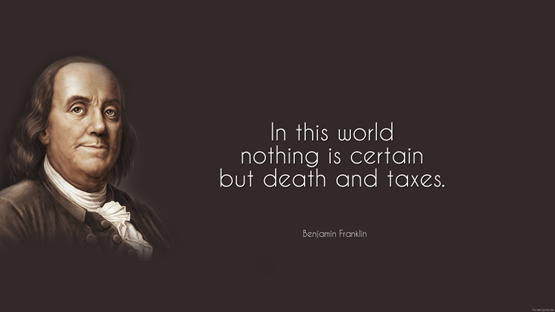
After all, when it comes right down to it, everything is uncertain.
Except maybe for death and taxes.
 Ellery's Essays