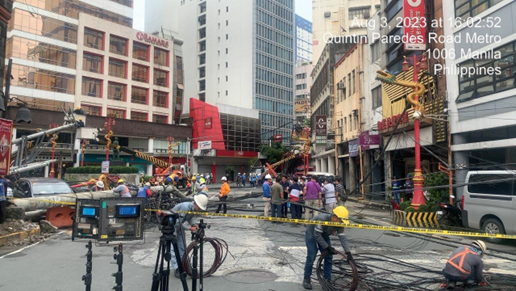
Eight (8) utility posts fell on a busy street at Manila’s Binondo Chinatown district. The posts damaged cars and caused a power failure to commercial establishments. The power utility company, MERALCO, however, immediately removed and replaced the fallen posts. Power was restored within hours. Business on the street returned to normal.
That wasn’t enough for a Manila city councilor, however. The councilor suggested a feasibility study to phase out electric posts in Manila’s Chinatown and replace them with underground cables. A Philippine lawmaker also proposed the laying of underground cables all over the country. “This multiyear undertaking is, I believe, the appropriate solution to end the repeated isolation of coastal towns and remote islands often in the path of typhoons,” the lawmaker said.
We, not only politicians, have a penchant for proposing quick solutions whenever an issue crops up. We then suggest experts, such as engineers, study and carry out whatever the solution would be.
We as humans have two (2) common tendencies:
- We immediately find answers to questions or solutions to problems, never mind if we didn’t really examine the question or problem thoroughly beforehand.
- We justify our answers and push our solutions but we delegate other people, like engineers, to make whatever the idea into reality.
We don’t ask enough questions when an issue arises or whenever we think we have a good idea. The idea is ‘good’ because we think it’s so. It makes sense. It’s creative and innovative. We should do it.
But does the so-called ‘good’ idea resonate with your criteria or priorities, or with what are important for the people the good idea is supposedly for?
The Philippine Department of Natural Resources (DENR) led construction of an artificial beach on Manila Bay on August 2020. From the Cebu island hundreds of kilometres away, the DENR dumped sand & crushed dolomite by the bay’s seawall. The beach was opened briefly on September 2020 but the DENR delayed completion until the end of the year. Typhoon and trash kept the DENR busy working on the beach for months after. Tourists visiting the beach are not allowed to swim, only to stand on the beach. The DENR argued that the beach was meant to be part of a coastal defence and environmental restoration project. Critics say it’s a waste of taxpayers’ money, not to mention the damage done to the environment where the dolomite was mined from.
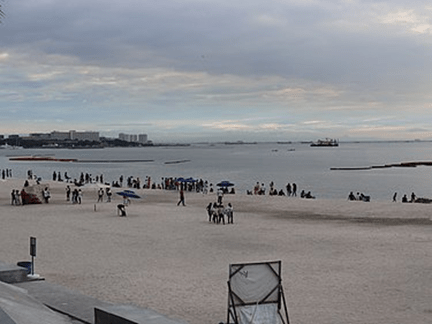
The dolomite project is an example of a solution that didn’t solve a defined problem especially one which would be consistent with the government’s priorities. The proponents apparently didn’t give enough study to what the environmental problems of Manila Bay, instead implementing ideas which turned out to be questionable.
The dolomite controversy is an example of why it doesn’t hurt to ask more questions whenever we face an issue or we start work on a problem. The problem-solving process starts with understanding what the problem really is about. What are we experiencing from this problem? Where is it coming from? What’s causing the symptoms we are observing? What data should we collect? What does our analysis say?
Understanding a problem leads us to better defining what we believe would be the true problem. We can define a problem by posing it as a question, such as, for examples:
- ‘In what way can we prevent utility posts from collapsing without warning?’
- ‘In what way can we mitigate the symptoms of this disease?’
- ‘How can we better secure and protect vehicles on city streets?’
- ‘How can we respond faster to accidents in our city?’
- ‘How can we improve the environment of Manila Bay?’
We need to remind ourselves, however, that whatever definition we make of a problem, we should be prepared to edit it as we gather more information and weigh it versus our criteria, as well as that of who would most benefit, if not would be most affected, from it.
We also don’t delegate solutions to experts, like engineers. Engineers are not executioners, they are problem-solvers. If we are to seek help from engineers, we must enrol them at the very first stage of the problem-solving process: understanding the issues.
We engineers work best when we participate in any problem-solving process from the beginning. That’s what we engineers do, after all; we solve problems. As much as anyone can have a good idea, we utilise a fraction of our talents when we simply are asked to make any idea into reality.
We engineers study problems first before entertaining ideas as possible solutions. We ask questions, we assess, we understand, and we define the problem. We check if the problem has bearing with the criteria and priorities of stakeholders or clients. And only after all these, do we begin seeking and examining ideas.
We all have what we believe are good ideas. We see a few entrepreneurs succeed and make lots of money from their ideas. We want to be like them so we try to promote our ideas too. Because we think our ideas are good, we push them for acceptance and when we think we have it, we delegate them to experts like engineers to execute them.
For every so-called good idea that succeeds, there are likely many that have never gotten off the ground or failed at a later stage. And this is because:
- We didn’t ask enough questions to define clearly what problems we are solving and what would be their worth solving them.
- We don’t involve experts, like we engineers, at the very start of the problem-solving process.
Let’s not be afraid to ask more questions. And let’s not hesitate to enrol the expertise of others at the very beginning of solving a problem.
 Ellery's Essays

