The workout app said my morning exercise routine won’t take more than 60 minutes. It’s right; from when I start my first weightlifting set to my last, it’s about an hour. However, if I include the time to change to & from my gym attire, setting up & putting away my equipment, and the showering, I use up as long as 120 minutes. I need to allocate at least two (2) hours every time I exercise. No wonder, many people say: “I don’t have time to exercise.”
The traffic mapping app said the drive from my home to my employer’s warehouse says the drive would take twenty (20) minutes. It’s right, unless we include the unpredictable waiting times at intersections manned by traffic cops. Waiting time at an intersection can last from a minute to as long as twenty, which via the latter potentially doubles my travel time.
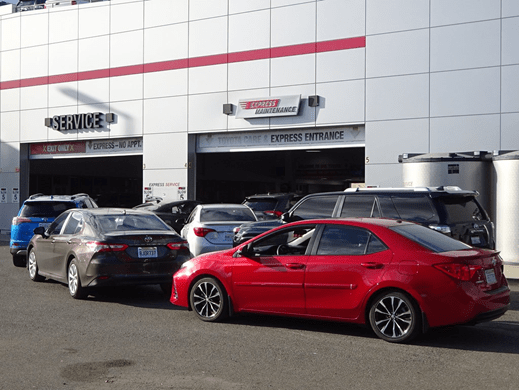
The automobile maintenance shop advertised that it could change my car’s oil in thirty (30) minutes. But if I include the time waiting in line to register my car and the time paying for the service, I’d need at least two (2) hours.
Meetings are always longer than they should be because there’d be introductions, small talk, waiting for one’s turn to speak up, and the speech; not included would be time spent for preparing presentations before going to the meetings.
It always takes longer to do any task. In whatever we get into, we’d need to factor in steps that have nothing to with the tasks themselves but are nonetheless necessary to their completion.
Steps or activities are either value-adding or non-value-adding. When we do something that directly leads to a benefit or progress towards a goal, it’s value-adding; anything else that does not is non-value-adding.
Doing a weightlifting set during my workout is value-adding; changing to gym attire and showering are non-value-adding.
Driving our cars adds value as we progress towards our destination; waiting at a traffic light, however, does not add value.
The actual changing of the oil of our cars at the shop is value-adding; the registering & paying are not.
Believe it or not, many of us put more effort in reducing the time of value-adding steps than shrinking the time we waste in non-value-adding activities. We tend to target activities which take up most of the time of a process, and we assume value-adding steps are those that are ripe for reduction.
But careful study of many processes show that non-value-adding activities consume as much time as value-adding ones. We don’t recognise this reality immediately because the time consumed by many non-value-adding activities are not fixed or predictable, or we bundle non-value-adding-activities together with value-adding activities and don’t realise they’re there hidden within various tasks.
Many of us try to optimise tasks one at a time, thinking that whatever improvements we do from each would add up to a more efficient whole. We, for instance, manufacture different items in the largest batch sizes possible, with the hope that we could maximize the efficiencies of our equipment. We don’t realise that the production of large batches results in many items languishing longer in storage, which in itself is a non-value-adding step. Many enterprises streamline the efficiencies of their value-adding activities but ignore the trade-offs that result in terms of longer non-value adding activities.
Why do we neglect doing anything about non-value adding activities? One reason is our mindsets that many non-value-adding activities are uncontrollable, steps which we cannot do anything about and must live with. Or we think non-value-adding activities won’t yield much benefit if we do improve them; they’re not worth the trouble.
We also neglect non-value adding activities into our scheduling. I find myself rushing through a shower after a workout because I didn’t factor it in my morning schedule. I speed through streets because I gambled that I wouldn’t be waiting too long at intersections manned by fickle traffic cops. I cram crafting presentations at the last minute before meetings.
I am a very bad estimator of time. What I think takes an hour to do more often takes double or multiple times longer. My accuracy in estimating time is as bad as my accuracy in forecasting the weather. I’m always wrong.
We should evaluate whether whatever we do adds value. We should reduce if not eliminate any work that doesn’t.
Enterprises that focus on reducing or eliminating non-value-adding activities tend to be more successful than rivals. Toyota defines non-value-adding activities as waste and its decades-long efforts to reduce inventories and production cycle times had helped propel it to become a globally successful automotive conglomerate. Southwest Airline’s strategy to cut the turnaround times of its planes had enabled the airline to better utilise its fleet of planes and make it the low-cost favourite of the flying public.
I set a schedule to ensure enough time not only for my workouts but also for the activities before and after them. I drive to my warehouse on Sundays, when vehicular volume is at its lightest and traffic cops are on their day off. And I make sure to draft presentations at least a week before.
I also call a mechanic to change the oil of my car at my residence instead of at a shop. With a good mechanic, I get the same job done at the same quality, lower cost, and at very much without entailing the non-value-added time of having to pay & register at a shop.
Optimisation of any process best begins with value-stream mapping (VSM), the laying out of the flows of activities and identifying steps as either value-adding or non-value-adding. By making value-adding and non-value-adding activities visible together with their links, we would be able to tackle each one by one while keeping an eye on the resulting impact on the process itself.
Any task always takes longer than what it entails. There’re steps before and after that need to be done, and usually they are non-value-adding. We often focus on optimising the value-adding task without realising we can reap more productivity by reducing if not eliminating the non-value-adding ones. It’s been proven that reducing the waste of non-value-adding activities has helped organisations become more successful.
Mapping, specifically value-stream mapping (VSM), is the suggested first act to productivity improvement and in making things less longer than they should.
It always takes longer.
 Ellery's Essays