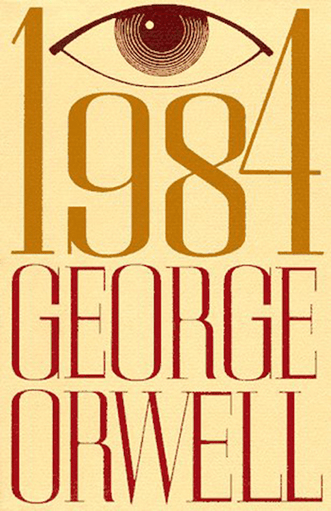
George Orwell wrote about a dystopian future in his book, Nineteen Eighty-Four (1984). 1984 was Orwell’s last novel and it was published in the year 1949. Seventy-five (75) years later, in 2024, 1984 doesn’t seem far off.
In the novel, an authoritarian government led by a character named Big Brother monitors its country’s people via an omnipresent surveillance system. Big Brother’s government via its Ministry of Truth carries out propaganda and persecutes anyone who challenges it. Citizens are not allowed to express outright their personal beliefs. If they did, they were subject to prosecution and penalties (e.g., torture, imprisonment).
We breathed a sigh of relief when the actual year 1984 passed. Nowhere near was our planet Earth to Orwell’s tragic world. In 1984, communist totalitarianism was waning with the crumbling of the Soviet Union and democracy was the predominant political order. Nations were embarking on economic paths of prosperity leading to pacts like the Asia-Pacific Economic Cooperation (APEC) and the European Union.
In 2024, however, times had changed. The world is more divided. Many countries, from First World to Third World, have eschewed democracy in favour of more authoritarian policies. Organisations, whether government or private, watch corporations and individuals for any possible wrongdoings, which not only may be illegal acts but also for any behaviour deemed offensive to whoever is watching.
Thanks to the proliferation of portable devices (e.g., smartphones, tablets), anyone can record anybody and upload images, videos, & audio to online public domains in real time. We can search historical records to obtain snippets of someone’s past. We can accuse politicians or celebrities of racism, for example, if we capture them making comments about a person’s colour, never mind if it was taken from a private conversation five minutes or fifteen years ago.
Surveillance equipment, i.e., closed-circuit television cameras (CCTVs), are ubiquitously found anywhere such as every street corner, shop, bank, restaurant, airport, train, bus, & ferry terminal, office, & clinic. Whoever are the so-called authorities can track down anyone they suspect as terrorist, troublemaker, or dissident.
In 2024, cruel people bully others for what they stood for or for just how they looked. We think twice about posting anything in public not because we fear criticism but because we dread the possibility of insults & accusations in which even if they were unwarranted, gullible people could believe and judge ill of us. We don’t need the stress, so we hesitate to express, or at least we opt on the side of caution before we post or communicate.
In 2024, it has come to the point where anyone can jump to conclusions about our behaviours and appearances from our public online profiles. People can judge us not even by searching for us or meeting us in person, but by relying on artificially intelligent (AI) software
In 2024, organisations had begun delegating basic decisions to AI algorithms. Security professionals, for example, used AI-powered video surveillance during the 2024 Summer Olympics in Paris. AI surveillance systems flag authorities whenever they detect unusual scenes or suspicious individuals.
AI has become the tool of choice of not only security agencies but also human resource (HR) departments, scientists, engineers, marketing & advertising professionals, and government groups. In short, just about every organisation is finding use for AI.
Never mind what the doomsday extremists say, AI isn’t poised to become an independently thinking individual which will end humanity; it’s just software that has the capability to use data to make decisions based on programmed criteria. AI can draft email, automatically text SMS messages, & write books, and it is not far from searching the worldwide web without asking it to, operating appliances autonomously, re-programming industrial robots on the fly, diagnosing our health in real time, and experimenting to discover the optimal chemical formulae.
AI is becoming an instrument which not only alerts us if we stray from our routines but also to prevent deviations. As much as it can warn us, it can also notify not only us but other people if it notices digressions in behaviour. And if it can do that, what would stop it from informing anyone, even others whom we did not even program it to not know?
And what would stop it from expanding its scope to not only know how we behave but also what we feel, think & express?
Via CCTVs and smart personal devices, AI could also survey what we eat, how we sleep, where we go, what we read, watch & hear, and whom we regularly contact. CCTVs, social media, and AI by themselves can become the instruments of wannabe Big Brothers.
Many of us, of course, are aware of this possibility and we actively gatekeep what we share to anyone whatever the media. We challenge any attempt of any authority to pry into information we consider secret or private.
The trend, however, remains as AI and surveillance technologies progress. Some democratic nations still side with their citizens’ privacies but some not-so-free countries have gotten the ball rolling to an Orwellian 1984 future.
We are partly to blame for heading towards a 1984 future. When we gang up (troll) other people in chat rooms, use our devices to record events, and allow AI into our social media software, we prop up the progress toward a Big Brother future.
History is replete with governments and kingdoms aiming to steer their people in terms of their behaviour and beliefs. Religious sects had persecuted whom they called sinners, heretics, or infidels. Dictators jailed, tortured, and executed those they labelled disloyal to their regimes. Bureaucrats censored media and edited history books. Pyramid-scheme marketing organisations enrol people into doubtful selling tactics and ostracise members who question them.
You may think Orwell’s 1984 is still too far-fetched and an unlikely scenario, but this probably won’t stop ambitious megalomaniacs or populist politicians from trying nonetheless.
Influence has become a key work in the decade of the 2020s. How do we sway others to buy into our views, opinions, & ideas? How do we get customers to buy what we sell? How do we gather an audience of fans & followers? And how do we defeat our adversaries?
There really are two options to expanding our influence:
- Go to war; or
- Collaborate.
Some of us like going to war. In an international training session for senior managers I attended in 1993, one speaker preached Sun-Tzu’s Art of War. Marketing was about competitive advantage via waging war on rivals. The aim was to dominate markets; the strategy was to take market share away from the competitor’s products or better yet, put them out of business.
In war, we vanquish our enemies. We destroy the competition. We eliminate the threats. Going to war seems easy when we believe our world is black & white, that is, we discern those who are for us versus those who oppose us. Anyone who agrees with us is our ally; anyone who does not is our enemy. We, therefore, must unite to attack our enemies in the name of progress.
Or we could collaborate. Not everyone is our enemy. Whoever is not with us is not necessarily against us. We can form alliances via empathy and win-win negotiations.
But collaboration is hard. Empathy and negotiation require time and patience. And we don’t have unlimited amounts of both.
Empathy and negotiation are investments, and we can be innovative in how we use our time and resources just as much as we can be creative in waging war. In both options, we can use technologies to help us. As much as we can use AI to identify weaknesses, for instance, we can use AI to identify common grounds for mutual strengths.
In the year 1984, we laughed that we were nowhere near Orwell’s Nineteen Eighty-Four. In 2024, we realise we are closer to getting there thanks to nefarious parties exploiting surveillance, social media, and AI technologies.
We have a decision to make. Do we wage war or collaborate as we aim to expand our spheres of influence?
If we wage war, we could head toward that dystopian world George Orwell described in his novel. If we collaborate, we strive towards mutual beneficial relationships despite our individual differences; but it would mean hard work and an investment of valuable time.
The lesson is there is always a cost to whatever we opt for. We just need to understand what we can lose versus what we can win.
 Ellery's Essays