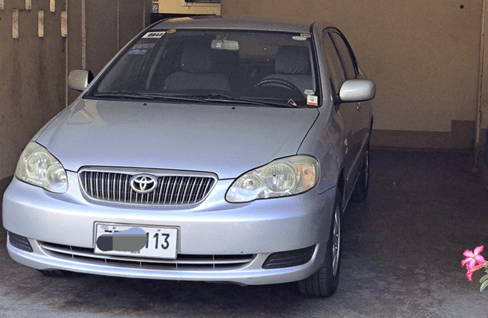
I work every day of the week. This comes from having several jobs or responsibilities, which is typical not only for myself but also for many Filipino workers, employees, and professionals who eke out what they can for a decent living.
True, there are some lucky people who don’t work as much. Many court judges, for example, work only during hearings or trials and leave much of the grunt work to clerks. Bank employees have weekends off. Some families of overseas workers simply sit back and wait for the hard-earned remittances of their hardworking foreign-based bread-winners.
Aside from these lucky people, there’s also my car. It has a day off at least once a week. This is thanks to the Metropolitan Manila Development Authority’s ordinance known as the Unified Vehicular Volume Reduction Program (UVVRP) or what people call the Number Coding scheme.
The UVVRP’s purpose is to reduce the number of vehicles on the road during daytime hours as a means to manage traffic in Metropolitan Manila. Private vehicles such as cars and vans are not allowed to use public thoroughfares one day of the working week, which is from Monday to Friday. The assigned day of the vehicle’s exclusion from the streets depends on the last digit of the vehicle’s license plate and the numbers assigned for that day. Cars with last digits of 1 or 2 are banned on Mondays, 3 and 4 are banned on Tuesdays, 5 and 6 on Wednesdays, 7 and 8 on Thursdays, and 9 and 0 on Fridays. My car’s license plate ends with 3 so I’m not allowed to use my car on Tuesdays.
The UVVRP ordinance has become quite complicated as cities and towns surrounding Manila adopt their own intrinsic rules. Some cities lift the UVVRP from 10am and 3pm but in Makati City, the UVVRP is enforced the whole day. The ordinance is suspended during holidays but cities like Makati and Pasay sometimes keeps the ordinance enforced, thus causing confusion to motorists, especially the ones who get caught.
I drive to work every day but because my car isn’t available on Tuesdays, I borrow my sister’s or uncle’s car to drive to work. Many families essentially buy an extra car to cope with the UVVRP because simply, they have to go places every day of the week. Cars get a day off but people don’t.
The UVVRP is, therefore, ineffective since people would find another vehicle to drive and work around the scheme. Despite calls to repeal the ordinance, the MMDA adamantly stands by the UVVRP. The MMDA instead insists that motorists take public transportation on days their cars are banned to help reduce traffic.
Several years ago, concerned citizens with the help of a few senators and congressmen loudly pushed for the end of the UVVRP. The MMDA refused and justified their position based on a study they conducted. The study consisted of counting the number of vehicles on the roads when the UVVRP is in effect and when it isn’t. The MMDA lifted the UVVRP for one week to allow its personnel to count the vehicles on the roads. When the UVVRP went back into effect, the same survey was conducted.
According to the MMDA, the study showed that the UVVRP reduced the daily number of vehicles by 20%, which was expected since the number coding scheme forced every car out of the streets 1 out of 5 days a week.
But the study was flawed. The MMDA survey when the UVVRP was lifted happened during a normal work and school week. The vehicle counting when the UVVRP went back into effect was done when schools are closed. It was obvious that the reduction in traffic when the UVVRP was back in place wasn’t due to the scheme but due to less traffic at schools.
Counts were also done haphazardly usually on one or two roads over a brief number of hours conducted by traffic enforcers untrained for the study. In other words, it was an un-scientific survey which wouldn’t pass any statistical test of significance.
A straightforward textbook application taken from the Operations Research field would probably have been more effective in seeing whether the UVVRP worked or not. This would involve identifying choke points, timing the waiting time at those choke points, surveying the volume of traffic, and comparing the data with and without the UVVRP on normal work and school weeks. Chances are the study would show that it’s the choke points where viable solutions can be found to unlock Metro Manila’s traffic, and not in a number coding scheme which probably didn’t have much of an effect.
The MMDA with the backing of Metro-Manila city mayors, unfortunately, would have none of any other argument and has kept the UVVRP running. So up to the present, my car gets a day off 1 day out of the week but I don’t.
The UVVRP illustrates a phenomenon where organizations such as government agencies implement rules that result in assets becoming idled for wished-for beneficial results that don’t not really come about in the first place. The price of reducing traffic, which is likely insignificant, is manifested in the cars and vans that sit idly in garages on days they cannot be used. For some economists, this might not be an issue; rather it probably can be construed as a benefit since as families buy extra cars, the purchases spur the local automotive industry.
But the UVVRP doesn’t just affect families. It affects as well delivery vehicles of small businesses and company cars used by people such as sales persons and real estate agents. Businessmen have to invest more in extra vehicles to ensure that deliveries are done every day and field personnel can conduct their daily business.
The MMDA argues that if the UVVRP is repealed, Metropolitan Manila will end up in a much worse gridlock as 20% more vehicles will be out on the roads daily. There likely could be a build-up but probably not as much as 20% more. There are after all only so many drivers in the city and they, like most human beings, will learn to adapt to the heavy traffic and find ways to beat it, which is what we are already doing every day anyway.
This essay was originally written on May 26, 2013
 Ellery's Essays